Global PV additions forecast to reach 638 GW in 2026
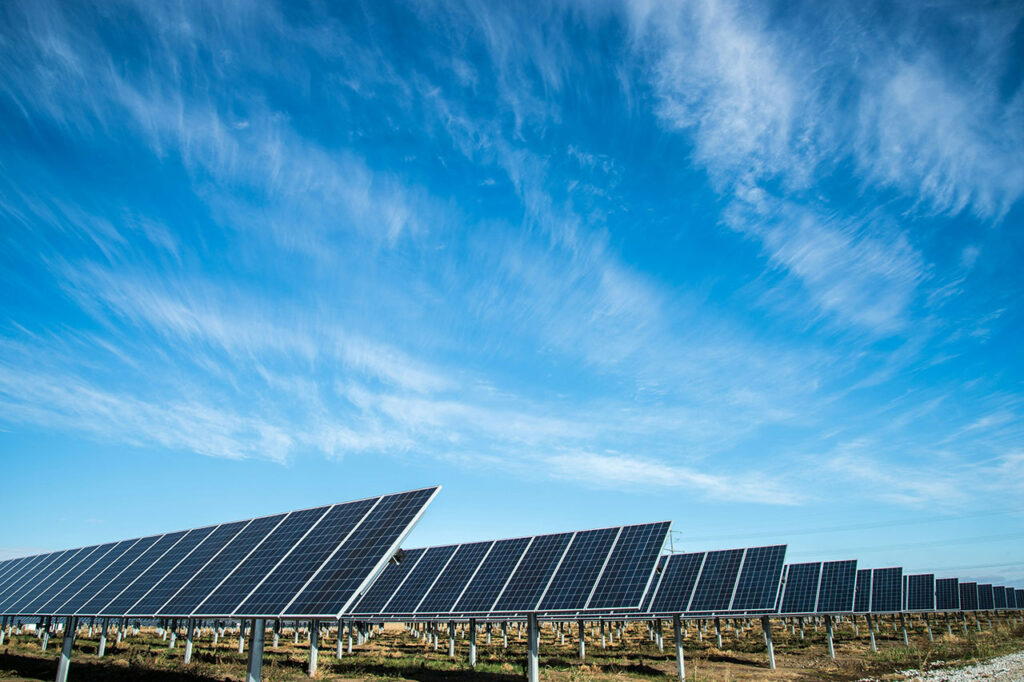
Global solar installations are projected to reach 638 gigawatts in 2026, according to the latest analysis from Intertek CEA, a solar and storage technical advisory firm. The company’s Q2 2026 PV Supply, Technology and Policy Report highlights a temporary decline in installations this year, primarily driven by market stagnation in China, while most other regions continue to see steady or accelerated growth toward 2030.
This year’s dip in global PV installations is largely attributed to challenges in China, where market conditions have slowed growth. However, Intertek CEA forecasts a rebound in the coming years, with solar capacity expected to expand significantly by the end of the decade. The report underscores a persistent structural oversupply across the solar supply chain, with manufacturing capacity far outpacing projected demand for 2026. Polysilicon production capacity, for instance, is estimated at approximately 2,034 gigawatts, while module capacity stands at around 1,908 gigawatts—both significantly exceeding the 638 gigawatts of expected installations.
Chinese module prices are anticipated to rise through 2027 as suppliers seek to expand profit margins and pass on higher material costs. Meanwhile, module prices in the United States are expected to remain elevated amid uncertainty surrounding tariff structures, particularly from the ongoing polysilicon Section 232 investigation. Indian module pricing is also projected to stay closely tied to Chinese input costs over the next two years. However, the report anticipates a decline in prices starting in 2028, driven by market maturity and stabilization of profit margins.
Regional production costs vary widely, ranging from under $0.12 per watt to over $0.37 per watt. In the United States, government manufacturing subsidies are narrowing the cost gap between domestic and non-Chinese production to just $0.01 to $0.03 per watt. The report also suggests that Indian cell and module assembly, as well as module assembly in Southeast Asia, will eventually align closely with Chinese price levels, differing by just $0.01 to $0.03 per watt. However, module assembly in the European Union is not expected to close its price competitiveness gap with other markets in the near term.
The oversupply conditions highlight ongoing challenges in balancing production capacity with actual market demand, which could influence pricing and investment strategies across key solar markets.
#SolarEnergy #Photovoltaic #RenewableEnergy #EnergyForecast #IntertekCEA #ChinaSolar #USMarket #SolarPrices
Comments (0)
No comments yet — be the first to weigh in.
Related Coverage

How Trump Allies Are Stifling America's Electric Drone Revolution
The FCC's proposed ban on foreign-made drones under a 'national security' guise could devastate small businesses, farming, and press freedom while enriching Trump-affiliated firms.

Vycarb Successfully Stores Low-Purity CO2 In Seawater
Vycarb, a Brooklyn-based startup, has achieved a major breakthrough in carbon capture and storage (CCS) technology by successfully storing low-purity carbon dio...

Methane Thermolysis in Hydrogen Production Faces Carbon Market Challenges
Methane thermolysis produces hydrogen and solid carbon, but scaling up faces market challenges due to the 3:1 carbon-to-hydrogen ratio, requiring robust downstream applications.

Top Chinese Solar Firms Report H1 2026 Losses Amid Market Challenges
Major Chinese solar manufacturers including JinkoSolar, Canadian Solar, and Trina Solar report first-half 2026 losses due to weak demand and price pressures, despite shifts toward energy storage.
Trending Now

Four Arrested in Connection with Boxer Zolani Tete's Murder in South Africa

Procam Launches 'HDOR - 100 Days of Running' to Foster Habitual Fitness

US Sanctions Italian Anti-Fascist Web Host A/I Collective as Terror Group
