Barclays Warns Next Commodity Shock Is Taking Shape: What You Need To Know
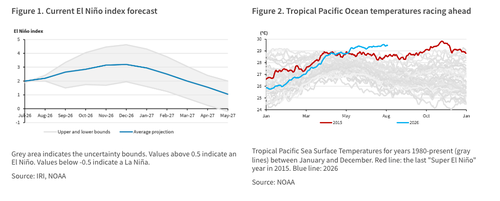
Barclays Warns of Potential Commodity Supply Shock Amid Historic El Niño Forecast
A strengthening El Niño in the tropical Pacific is raising concerns about potential disruptions to global commodity markets, according to a new analysis from Barclays. Commodities strategists at the bank warn that a combination of adverse weather, years of underinvestment, declining inventories, and China’s restrictions on key material exports could converge into a significant supply shock.
In a research note released Friday, Barclays’ sustainable investing analyst Craig Rye highlighted forecasts from the International Research Institute for Climate and Society, which project the El Niño index could peak near 3.2 degrees Celsius between late 2026 and early 2027. This would make it roughly 15% stronger than the 2015-16 Super El Niño, one of the most severe on record. The potential strength of the upcoming event increases the risk of supply chain disruptions across agricultural, energy, and industrial commodity markets.
Rye emphasized that weather-sensitive agricultural commodities face the greatest near-term risks. He forecasts potential price increases of 30% to 40% for palm oil, coconut oil, and rubber over the next 18 months. Robusta coffee prices could rise 20% to 30%, while rice may climb 10% to 20% due to drought conditions threatening crops and water supplies in Southeast Asia and parts of Central America.
The supply shock could extend into industrial commodities as well. Barclays expects aluminum and copper prices to gain as much as 20% over the same period, while thermal coal could surge 20% to 40%. Mining disruptions, reduced hydropower generation, and shifting electricity demand may amplify the effects of extreme weather across these sectors.
The bank identified several companies that could benefit from higher commodity prices. In agriculture, potential beneficiaries include Bunge and Archer-Daniels-Midland. For aluminum, Norsk Hydro, South32, and Rio Tinto could see gains, while Freeport-McMoRan, Hudbay Minerals, First Quantum Minerals, and Southern Copper may benefit from higher copper prices.
The warning from Barclays aligns with growing concerns from other financial institutions. UBS recently advised clients to position for a commodity upcycle as global scarcity becomes more apparent. Meanwhile, JPMorgan and HSBC have also cautioned about the potential for a global food shock, with wheat futures reaching three-year highs amid ongoing supply chain challenges.
The broader commodities market has shown increased volatility in recent weeks, with prices reacting to geopolitical tensions, weather patterns, and shifting demand dynamics. While some analysts remain cautious about the near-term outlook for precious metals, industrial commodities like copper and zinc continue to trade near record levels, reflecting persistent supply constraints.
As global markets brace for potential disruptions, investors and policymakers will be closely monitoring weather patterns, production levels, and geopolitical developments to assess the impact on commodity supply chains.
#Commodities #ElNino #Barclays #Copper #Agriculture #SupplyShock #Mining
Comments (0)
No comments yet — be the first to weigh in.
Related Coverage

Americans Revolt Against Flock License Plate Readers Over Privacy Fears
Grassroots opposition grows against Flock Safety's nationwide license plate reader network, with over 50 jurisdictions cutting ties amid privacy and misuse concerns.

X Busts Suspected Chinese Bot Farm That Could 'Manipulate Legitimate Debate' Over America's AI Boom
X, the social media platform formerly known as Twitter, announced Thursday it had dismantled a suspected Chinese bot farm consisting of approximately 200,000 ac...

Legal Liability for Rogue AI Agents: Who Is Responsible When AI Goes Wrong?
Explore legal accountability when autonomous AI agents cause harm or financial damage. Learn who bears liability under current laws and potential risks for users and developers.
Central Banks Risk Recession with Misguided September Rate Hikes
Analysts warn that September rate hikes by the Fed and ECB could deepen recession risks amid weak growth, imported energy inflation, and misplaced monetary tightening policies.
Trending Now

Four Arrested in Connection with Boxer Zolani Tete's Murder in South Africa

Procam Launches 'HDOR - 100 Days of Running' to Foster Habitual Fitness

US Sanctions Italian Anti-Fascist Web Host A/I Collective as Terror Group

