Why Land Restoration is Key to Climate Resilience and Food Security
Land degradation affects 3.2 billion people. Learn how UNEP's restoration initiatives, like the Great Green Wall, combat desertification and strengthen climate resilience globally.

Land degradation is emerging as one of the most pressing environmental challenges of our time, threatening food security, water supplies and global stability. According to the United Nations Environment Programme, led by Executive Director Inger Andersen, healthy land underpins survival for billions of people worldwide. Andersen’s early career in Sudan during the 1980s drought and famine highlighted how closely communities depend on fragile ecosystems. In western Sudan’s Kordofan and Darfur regions, she saw firsthand how acacia trees provided natural fertilization, gum Arabic for income and resilience against drought—until overharvesting for firewood left nothing but seeds. That experience shaped her lifelong commitment to environmental sustainability and land restoration.
Today, the stakes are even higher. The UN reports that land degradation now affects 3.2 billion people globally, with desertification impacting 45 percent of Africa’s land area. Approximately 95 percent of the world’s food supply depends on healthy soil, yet by 2050, water scarcity could threaten more than three-quarters of the global population. As climate change intensifies droughts, floods and extreme weather, the pressure on dryland communities continues to grow. Pastoralists, farmers and Indigenous groups, who have adapted over generations, now face systems pushed beyond their limits.
Healthy land is not just about agriculture—it is central to peace, migration and economic security. The UN Environment Programme and the Food and Agriculture Organization (FAO) point out that degraded landscapes deepen resource competition, increase displacement and limit livelihood options. In contrast, restored ecosystems strengthen resilience and stability. This understanding drives the World Restoration Flagships program, part of the UN Decade on Ecosystem Restoration, which highlights large-scale initiatives that combine science, local knowledge and international cooperation.
Key efforts include reintroducing traditional practices like *al-hima*, an ancient land-restoration system used in North Africa and the Middle East, and expanding water-harvesting techniques in arid regions. The Great Green Wall initiative in the Sahel, recognized as a World Restoration Flagship, demonstrates how long-term investment in healthy landscapes can prevent drought-related disasters. These approaches move beyond emergency responses to build lasting resilience.
A pivotal moment is approaching with the Rio Trio—a series of negotiations focusing on land, biodiversity and climate change. The first major gathering, COP17 in Ulaanbaatar, Mongolia, will focus on desertification, land degradation and drought. Andersen emphasizes that the solution lies in integrated action, where protecting and restoring land becomes the foundation for food, water and climate security.
Restoring land, Andersen argues, is not a luxury—it is essential for survival. From the acacia groves of Sudan to the drylands of East Africa, the blueprint for resilience already exists within communities that have lived on the edge. Investing in healthy land today is an investment in a stable, prosperous and sustainable future for all.
#LandRestoration #ClimateChange #UNEP #Desertification #SustainableLandUse #FoodSecurity #COP17 #IngerAndersen
Comments (0)
No comments yet — be the first to weigh in.
Related Coverage
 Environment
Top Chinese Solar Firms Report H1 2026 Losses Amid Market Challenges
Major Chinese solar manufacturers including JinkoSolar, Canadian Solar, and Trina Solar report first-half 2026 losses due to weak demand and price pressures, despite shifts toward energy storage.
 Environment
China Faces Stalled PV Consolidation as Overcapacity Persists
China’s solar module sector struggles to trim excess capacity amid weak domestic demand and geopolitical pressures, with government measures yet to curb losses.
 Environment
Machine Learning Boosts Irradiance Prediction for Bifacial Solar Panels
Research from Selçuk University compares machine learning models to improve plane-of-array irradiance predictions for bifacial photovoltaic systems using NREL field data.
 Environment
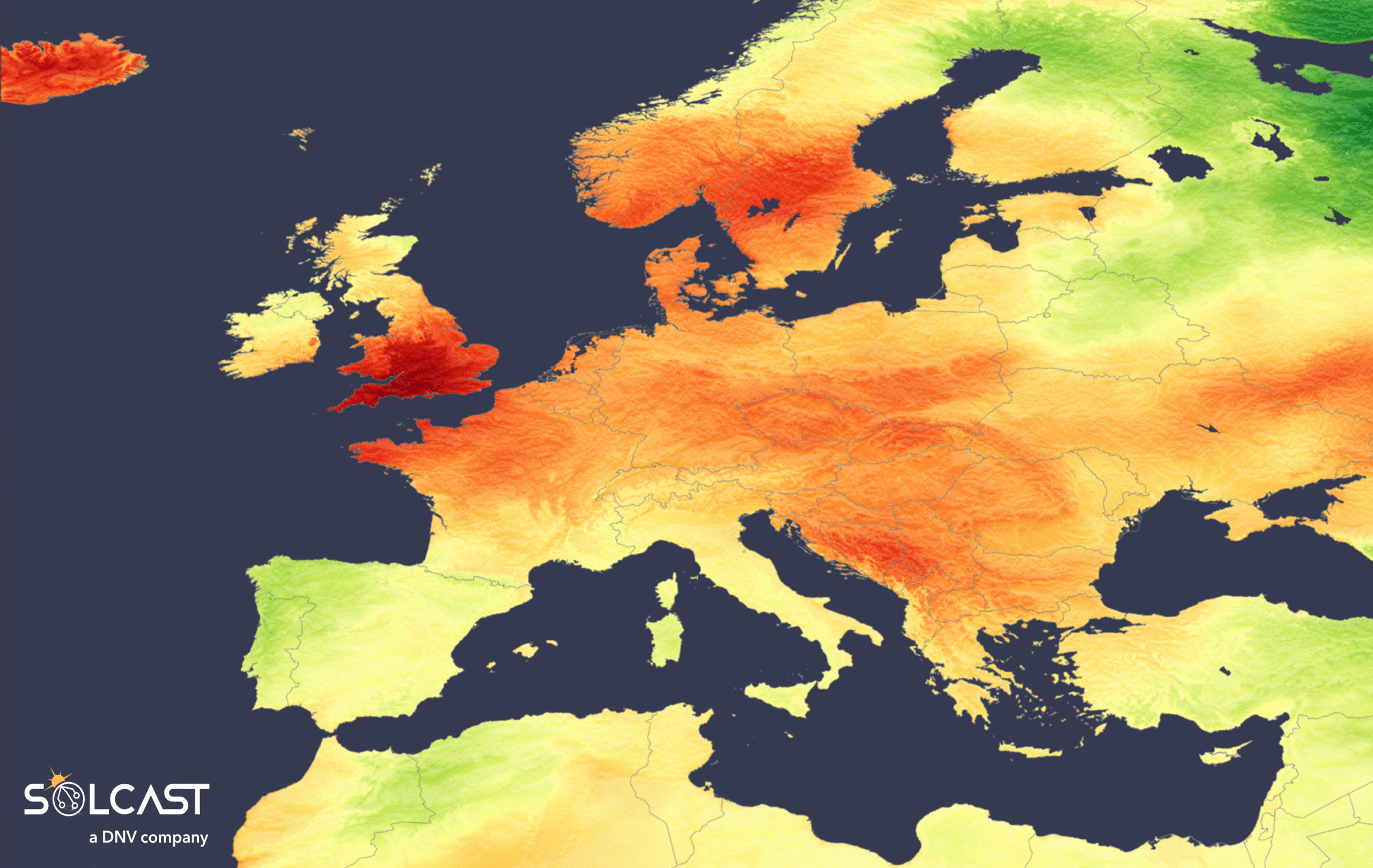
Europe’s solar resource surplus continues before late-August cloud shift
Europe’s solar resource surplus persisted across much of the continent in August 2026, with global horizontal irradiance averaging 5% above the 2007–2025 norm,...
Most Read

Harlequins Sign Zimbabwe Winger Edward Sigauke for 2024 Season

Norway bids farewell to King Harald as crowds gather at royal palace
Kacey Musgraves: How Country-Pop Crossover Shaped Modern Americana
Top Chinese Solar Firms Report H1 2026 Losses Amid Market Challenges