Europe’s solar resource surplus continues before late-August cloud shift
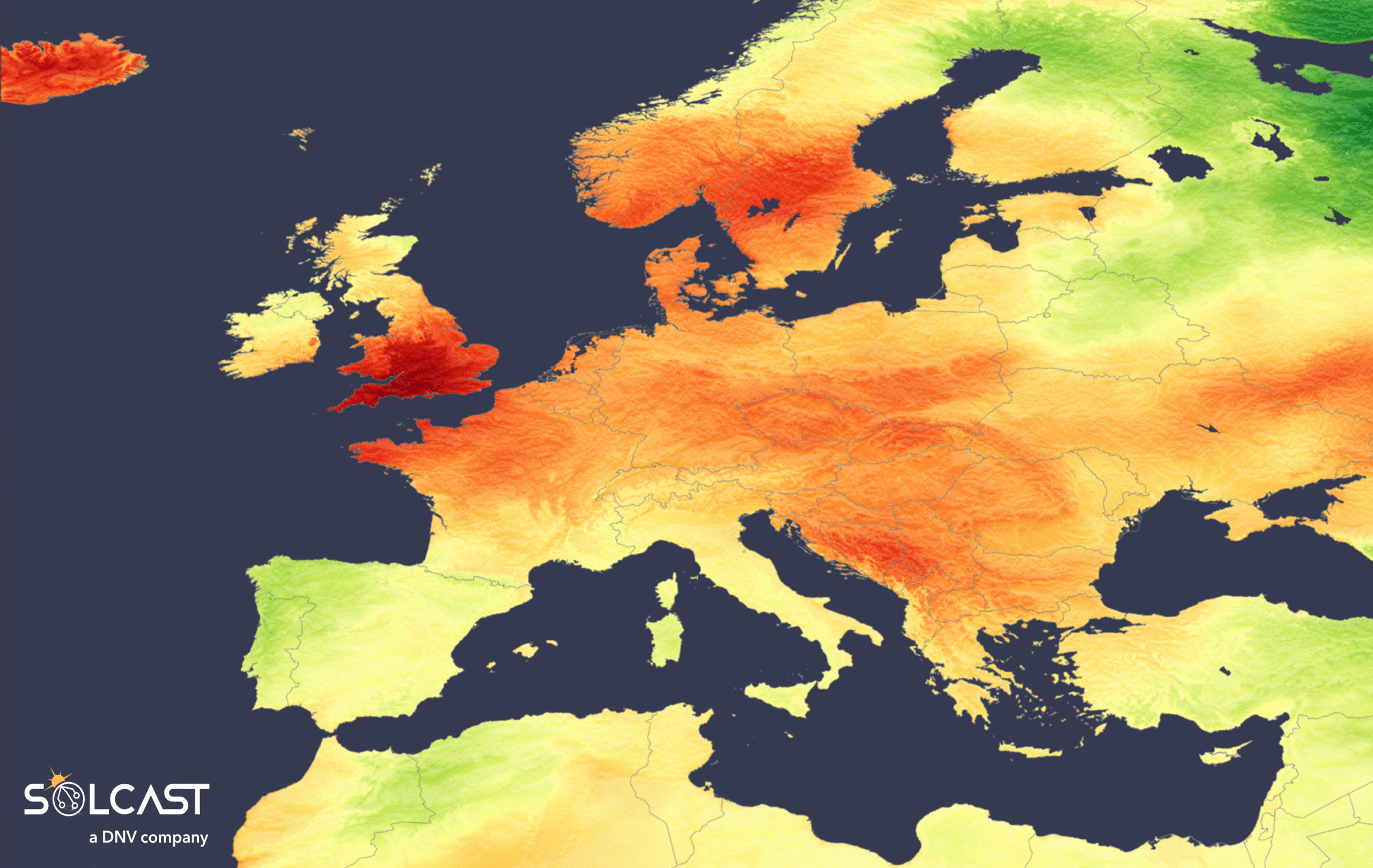
Europe’s solar resource surplus persisted across much of the continent in August 2026, with global horizontal irradiance averaging 5% above the 2007–2025 norm, according to data analyzed using the Solcast API. The elevated solar conditions followed similar trends recorded in June and July, as persistent high-pressure systems limited cloud formation and storm development. Nearly three-quarters of Europe experienced above-average irradiance, with southern England seeing the most significant positive anomalies—exceeding 20% above average—before weather patterns shifted in the latter half of the month, bringing cooler and cloudier conditions to western Europe.
The dominant high-pressure system played a key role in maintaining stable atmospheric conditions throughout much of August. Sinking air within the system suppressed cloud formation, resulting in extended periods of clear skies and irradiance levels that surpassed seasonal norms by more than 20% in some regions. While August is typically Europe’s second-sunniest month, the surplus marked a third consecutive month of elevated solar resources across western and central Europe. London recorded its highest cumulative global horizontal irradiance for this time of year, reinforcing the trend of unusually strong solar conditions.
The prolonged sunny weather coincided with severe drought conditions in parts of Europe. Southern England experienced 62 consecutive dry days through mid-August, breaking the previous record of 51 days. The European Commission’s Joint Research Centre reported critically low water levels on the Rhine and Danube, disrupting hydropower and nuclear generation and increasing reliance on alternative energy sources, including solar. In Birmingham, the dry spell reduced natural cleaning of solar panels, allowing soiling losses to accumulate before rainfall returned in mid-August.
The high-pressure pattern began to weaken in the second half of August, as a cold front moved in from the Atlantic. Temperatures in parts of western Europe dropped by more than 15 degrees Celsius after weeks of persistent heat and dry conditions. Increased cloud cover and rainfall reduced the earlier irradiance surplus as the front advanced into France and Germany. The impact varied across the continent, with central and eastern regions retaining more of their surplus, while southwestern Europe saw conditions return closer to or below long-term averages.
A closer examination of daily irradiance profiles in Porto illustrates the shift in southwestern Europe. Early in the month, irradiance remained relatively consistent, but several days around and after mid-August recorded significant daytime reductions due to increasing cloud cover.
Solcast generates these figures by tracking clouds and aerosols globally at a resolution of 1–2 kilometers, utilizing satellite data and proprietary AI/ML algorithms. The company’s irradiance models achieve a typical bias of less than 2% and provide accurate cloud-tracking forecasts. Over 350 companies, managing more than 350 gigawatts of solar assets worldwide, rely on Solcast’s data for operational and planning purposes.
#SolarEnergy #EuropeWeather #RenewableEnergy #Solcast #SolarIrradiance #EnergySurplus #DroughtConditions #WesternEurope
Comments (0)
No comments yet — be the first to weigh in.
Related Coverage
 Environment
China Faces Stalled PV Consolidation as Overcapacity Persists
China’s solar module sector struggles to trim excess capacity amid weak domestic demand and geopolitical pressures, with government measures yet to curb losses.
 Environment
Machine Learning Boosts Irradiance Prediction for Bifacial Solar Panels
Research from Selçuk University compares machine learning models to improve plane-of-array irradiance predictions for bifacial photovoltaic systems using NREL field data.
 Environment
Canada's Solar Energy Growth: Provinces Chart Diverse Paths to 2035 Goals
Canada's solar sector shows uneven growth across provinces, with incentives in Quebec and Ontario driving expansion, while others reconsider net metering policies amid US trade uncertainties.
 Environment
Latin America Energy Storage Forecast Jumps to 34 GW by 2035: Wood Mackenzie
Wood Mackenzie’s latest outlook projects Latin America’s energy storage capacity to surge to 34 GW by 2035, driven by regulatory frameworks and renewable integration needs. Key markets include Chile, Brazil, and Mexico.
Most Read


Aston Villa close to £65m deal for Chelsea striker Nicolas Jackson

Rahul Gandhi Demands FIR Over Uttarakhand 'Purification' Ritual After Kharge Rally
Group Chats as Modern-Day Community: How Digital Threads Keep Friends Connected