Zen, Poetry, and Nonduality: How Koans and Verse Break Dualistic Thinking
Explore how Zen koans, Huineng’s teachings, and modern poetry—like Twichell’s work—challenge dualistic thought, inviting readers into a nondual, unlanguageable experience.
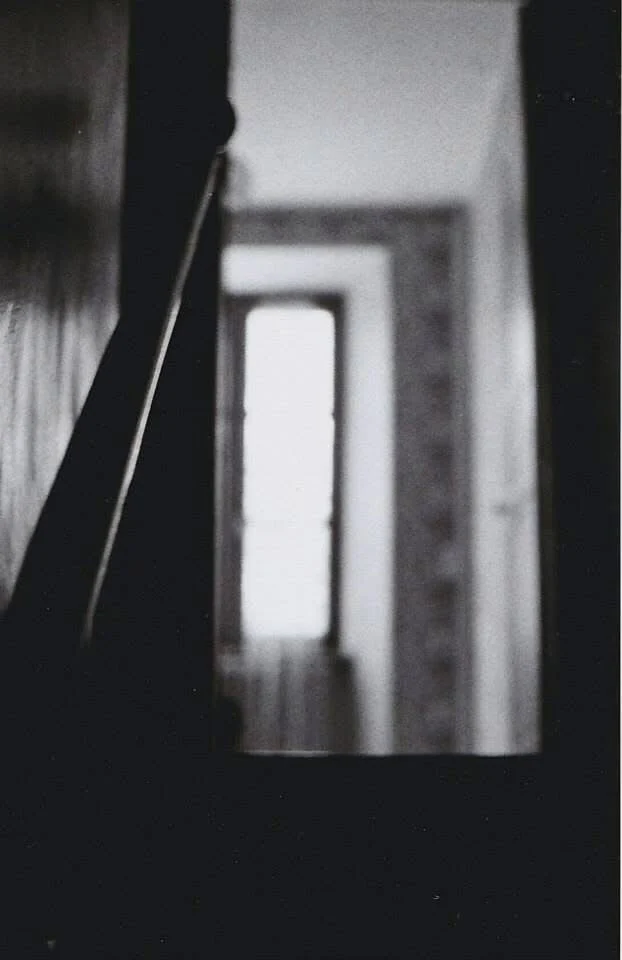
A young seeker’s encounter with Zen teachings in seventh-century China led to a lifelong transformation that continues to influence poetry and philosophy today. The story of Huineng, the illiterate woodcutter who became the Sixth Patriarch of Zen, illustrates how nondualistic thought—seeing beyond separation—can reshape perception. His journey began with a single moment of clarity after hearing verses from the Diamond Sutra in a chaotic market square, a scene that highlights the intersection of Zen Buddhism and poetic insight.
Born in 638 in Lingnan, now part of southern China, Huineng grew up in poverty after losing his father at a young age. As a teenager, he earned money by gathering firewood and selling it in the market. One spring day, while returning home with branches, he overheard a group of traveling monks reciting lines from the Diamond Sutra: “All conditioned phenomena are like a dream, an illusion, a bubble, a shadow!” The words struck him so deeply that he later traveled north to the Gunin Daiman monastery in search of the teacher who had spoken them. After days of walking and chanting, he was accepted as a novice, though initially assigned to grueling labor in the rice shed.
Huineng’s story is central to Zen tradition, particularly in the Platform Sutra, which recounts his sudden enlightenment. Unlike earlier patriarchs, he had no formal education, yet his insight into nonduality—seeing beyond apparent opposites—made him a pivotal figure. The term nonduality, derived from the Sanskrit *Advaita* meaning “not two,” describes a state beyond conceptual division, where self and world are experienced as one. This idea challenges Western assumptions about individualism and fixed identity, offering instead a view of reality as fluid and interconnected.
Poets and artists have long sought to express this unitive experience. The Italian poet Giuseppe Ungaretti’s 1917 poem *Mattina* captures it in a single line: “M’illumino d’immenso” (“I illuminate myself with immensity”). The phrase dissolves the boundary between observer and observed, echoing Zen’s rejection of dualistic thinking. Similarly, modern poets like Chase Twichell explore how language fails to fully convey experience, even as it gestures toward it. In her poem *Makeshifts*, she writes of a frozen waterfall and snow that shifts color with the light, before admitting that these images are merely “husks” of meaning. The poem disrupts the reader’s attempt to settle into a fixed interpretation, much like a Zen koan.
Koans such as “Does a dog have Buddha-nature?” with the master’s response “Mu!”—a negation that transcends yes or no—serve a similar purpose. They force the mind to abandon logical categories and rest in uncertainty. Poet John Keats described this as “Negative Capability,” the ability to dwell in mystery without demanding resolution. Both poetry and Zen, then, act as tools to break the “glass” of dualistic perception, urging us toward a direct, unmediated experience of the world.
Filmmakers like Michelangelo Antonioni have also embraced this challenge. His 1960 film *L’Avventura* deliberately subverts narrative conventions, leaving a mystery unresolved and drawing attention to the act of perception itself. Like poetry, the film refuses to provide the comfort of a clear answer, instead inviting the viewer to sit with the unknown.
Whether through ancient sutras, modern verse, or avant-garde cinema, the impulse remains the same: to point beyond language, to wake from the dream of separation. Huineng’s insight—born in a marketplace, tested in labor, and validated in silence—endures as a testament to the power of seeing the world as it is: not two.
#ZenBuddhism #Huineng #Poetry #Nonduality #DiamondSutra #ChaseTwichell #Lavventura #Advaita
Comments (0)
No comments yet — be the first to weigh in.
Related Coverage
 Entertainment
Yayoi Kusama’s Death Signals a Kind Fall for Art and Humanity
Hyperallergic reflects on the passing of Yayoi Kusama, Dolly Parton, and Sliman Mansour, while exploring loneliness, AI, and art's role in a changing world.
 Entertainment
Tessa Hulls on Her Graphic Memoir 'Feeding Ghosts' on Longform Podcast #571
Writer and artist Tessa Hulls discusses her graphic memoir Feeding Ghosts and the project she spent her life avoiding, on Longform Podcast #571.
 Entertainment
Derek Thompson on Longform Podcast: Solving Life's Mysteries Through Writing
Derek Thompson, Atlantic staff writer and Plain English host, discusses his career as a 'dilettante' and love for uncovering mysteries in his Longform Podcast interview.
 Entertainment
Rozina Ali on Longform Podcast #573 Discussing Her Career and Reporting
Rozina Ali, a New York Times Magazine writer and National Magazine Award winner, joins the Longform Podcast to discuss her career and latest reporting.
Most Read

Canada's Solar Energy Growth: Provinces Chart Diverse Paths to 2035 Goals
Autumn Hill Sentenced to 50 Years in Prison for Anti-ICE Protest: A Case of Political Persecution?

Hull City Secure 1-0 Away Win at Coventry, Maintain Perfect Premier League Start

DSM-6 to Integrate Biology in Mental Health Diagnosis for First Time