Yayoi Kusama’s Death Signals a Kind Fall for Art and Humanity
Hyperallergic reflects on the passing of Yayoi Kusama, Dolly Parton, and Sliman Mansour, while exploring loneliness, AI, and art's role in a changing world.
The global art world mourned the loss of three influential figures this summer as the seasons shifted from sweltering heat to crisp autumn air. Artist Yayoi Kusama, known for her infinite mirrored rooms and vibrant polka-dot motifs, died at 97 in a Tokyo hospital on August 14. Palestinian artist Sliman Mansour, celebrated for depicting the struggles of his people, passed at 79. Meanwhile, country legend Dolly Parton died at 80, leaving behind a legacy that transcended music into humanitarian work. These losses coincided with rising concerns over artificial intelligence displacement in the workforce, a gentrification crisis in Brooklyn’s Black neighborhoods, and the ongoing opioid epidemic in Vancouver.
Kusama’s death was confirmed by her studio and David Zwirner Gallery on August 26. Her avant-garde works, which blended psychology, mirrors, and infinite patterns, made her a global icon whose influence extended beyond traditional art circles. Mansour, a Palestinian artist whose work carried the weight of his people’s pain, died at 79. His passing was felt deeply in artistic and political circles, particularly among those advocating for Palestinian representation in global art. Parton’s death at 80 marked the end of an era for country music and philanthropy, as her charitable work through the Imagination Library impacted millions of children worldwide.
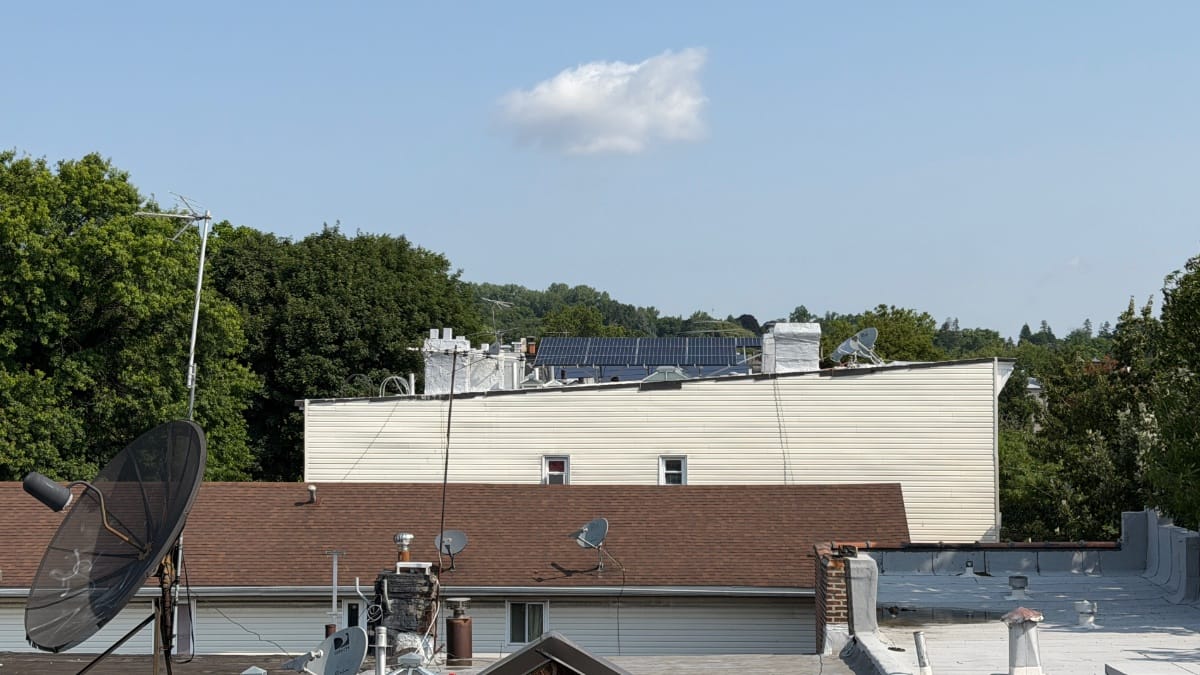
The art world also reflected on broader social issues this summer. In Vancouver, police raided an art gallery after a passerby mistook a sculpture for a person in medical distress, highlighting the city’s opioid crisis—a problem underscored by the growing number of overdoses in public spaces. Meanwhile, discussions about gentrification intensified in Brooklyn, where murals in Black neighborhoods like Bed-Stuy and Ditmas Park were juxtaposed against the backdrop of rapid urban transformation. A mural in Bed-Stuy depicted Malcolm X and Muhammad Ali, a reminder of the area’s cultural history amid its changing landscape.
Artificial intelligence continued to dominate conversations about the future of work. A businessman casually announced plans to accelerate AI adoption later in the year during a Zoom call at a Brooklyn café, raising concerns among workers who feared automation would replace their roles. This anxiety mirrored broader societal shifts, from humanoid robot competitions in China—where machines fought even after sustaining damage—to artists exploring AI’s role in creative processes.
As summer waned, cultural institutions prepared for the fall season. New York’s art scene geared up for exhibitions ranging from modernist masterpieces at the Guggenheim to contemporary works by artists like Arthur Jafa. Meanwhile, critics debated the terminology used to describe South Asian art, with some arguing against the Western label "miniature," which oversimplifies the collaborative and cultural depth of these works. In Santa Fe, the Indian Market showcased Indigenous artists reclaiming narratives beyond tourist expectations, emphasizing community-driven creativity.
From Brooklyn to Tokyo, the art world navigated loss, innovation, and social change this season, offering both reflection and resilience as the world turned toward autumn.
#ArtNews #YayoiKusama #SlimanMansour #DollyParton #Gentrification #BrooklynArt #AIinArt #VancouverOpioidCrisis
Comments (0)
No comments yet — be the first to weigh in.
Related Coverage
 Entertainment
Tessa Hulls on Her Graphic Memoir 'Feeding Ghosts' on Longform Podcast #571
Writer and artist Tessa Hulls discusses her graphic memoir Feeding Ghosts and the project she spent her life avoiding, on Longform Podcast #571.
 Entertainment
Derek Thompson on Longform Podcast: Solving Life's Mysteries Through Writing
Derek Thompson, Atlantic staff writer and Plain English host, discusses his career as a 'dilettante' and love for uncovering mysteries in his Longform Podcast interview.
 Entertainment
Rozina Ali on Longform Podcast #573 Discussing Her Career and Reporting
Rozina Ali, a New York Times Magazine writer and National Magazine Award winner, joins the Longform Podcast to discuss her career and latest reporting.
 Entertainment
Longform Podcast #574: Zach Harris
Zach Harris, a journalist known for his engaging profiles on unconventional figures, recently discussed his work on Rolling Stone’s latest piece, “Meet the Gen...
Most Read

Arunachal CM Unveils Vision 2036 for Youth Skill & Entrepreneurship Growth
KPop Demon Hunters Joins Criterion Collection: Why the Animated Hit Stands Out

Global renewable energy investments hit $327.5B in H1 2026, solar-plus-storage surges
Supreme Court Allows Trump’s Mail-In Voting Restrictions to Proceed: What It Means for Midterms
