US-Canada Trade War Escalates with 50% Tariffs: Impact on Consumers & Midterms
The US-Canada trade war intensifies with 50% tariffs under Smoot-Hawley Section 338, threatening consumers, businesses, and midterm elections amid rising tensions and retaliatory measures.
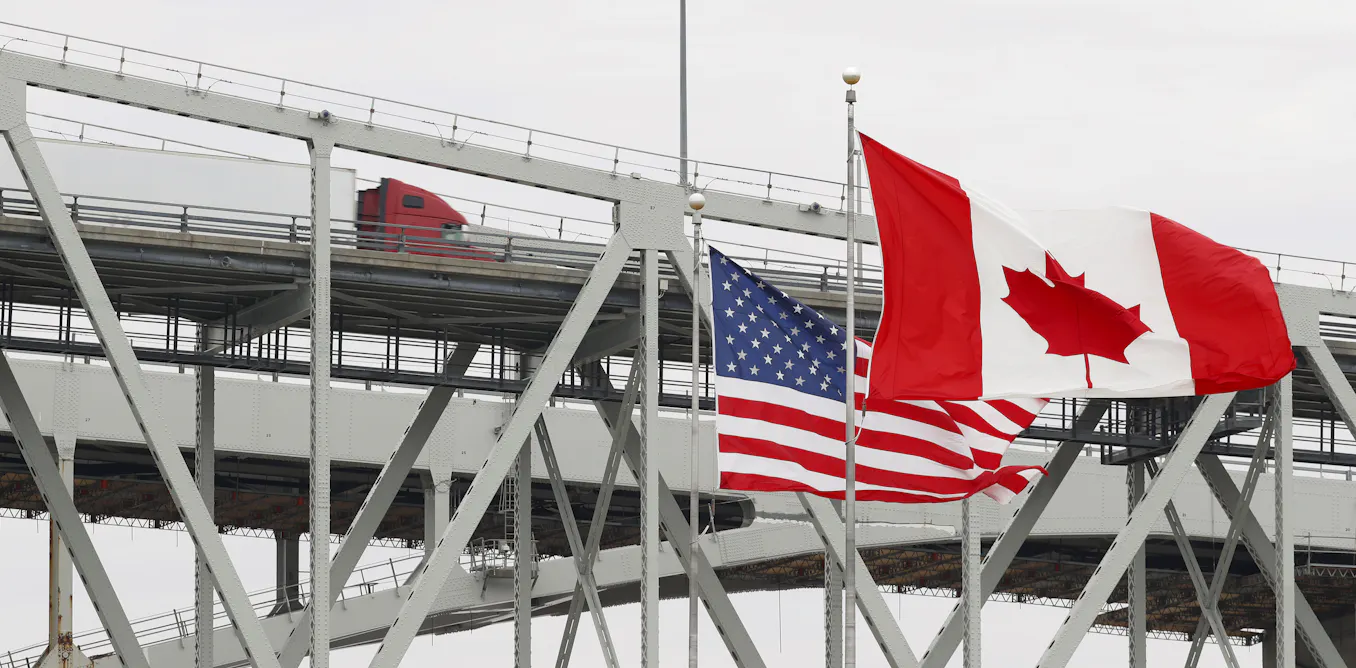
The United States and Canada, longtime allies, are now locked in a deepening trade dispute that has escalated into a full-blown trade war, with significant implications for consumers, businesses, and the upcoming U.S. midterm elections. On August 25, 2026, Canada imposed tariffs of up to 50% on hundreds of U.S. goods in retaliation for similar levies the U.S. had placed on Canadian products. The breakdown of trade talks followed a nearly completed deal, marking a sharp escalation in tensions between Washington and Ottawa.
The conflict centers on the U.S. invoking Section 338 of the Smoot-Hawley Tariff Act of 1930, a rarely used provision that allows the president to impose unilateral tariffs of 50% if a foreign country’s policies are deemed discriminatory against the U.S. President Donald Trump’s administration first threatened these tariffs in July 2026, accusing Canada of unfair trade practices. Canadian Prime Minister Mark Carney condemned the move, calling it an attempt to undermine Canada’s auto industry and a step toward undermining Canadian sovereignty.
Negotiations collapsed over disagreements on key issues. Canada sought reductions in U.S. tariffs on steel, aluminum, and automobiles, with a preliminary agreement to lower steel and aluminum tariffs from 50% to 25%. However, U.S. Commerce Secretary Howard Lutnick, facing pressure from domestic steel and aluminum producers, reversed course, removing concessions on these tariffs. As a result, Canada pulled its own offers off the table, including the reopening of the Keystone oil pipeline, which had been canceled by President Joe Biden in 2021. Additionally, the U.S. demanded that Canada reverse provincial decisions to remove U.S. liquor from store shelves, a concession that also fell through amid domestic backlash in Canada.
In response, the U.S. imposed a 50% tariff on $20 billion worth of Canadian exports, including auto parts, forestry products, furniture, textiles, whiskey, and hockey equipment. Canada retaliated with its own 50% tariffs on $20 billion worth of U.S. imports, targeting products from swing states such as Wisconsin cheese, Maine seafood, and Kentucky washers and dryers—home to GE Appliances in Louisville. The tit-for-tat tariffs mark a significant departure from the long-standing trade relationship between the two nations, which had been governed by the United States-Mexico-Canada Agreement (USMCA), the successor to NAFTA established in 2020.
The economic impact of the tariffs will be most keenly felt in U.S. border states such as Maine, New York, Pennsylvania, Ohio, Wisconsin, and Michigan, where Canadian imports are concentrated. Michigan, closely tied to Ontario’s auto industry, and New England, dependent on Canadian seafood, are particularly vulnerable. While the overall effect on U.S. prices may be modest, the combined impact of U.S. and Canadian tariffs on heavily traded goods could drive up costs for consumers and businesses. U.S. farmers and manufacturers may also face reduced sales to Canada, further straining the economic relationship.
Politically, the trade war poses risks for Trump ahead of the midterm elections, particularly in swing states along the Canadian border. Despite potential backlash, Trump has shown no signs of backing down, continuing to impose additional tariffs. The broader implications of this trade war extend beyond North America, as it threatens to undermine the global trading system established after World War II to prevent the kind of retaliatory trade battles that deepened the Great Depression.
#USCanadaTradeWar #TradeTariffs #MarkCarney #DonaldTrump #USMCA #MidtermElections #SmootHawleyTariff
Comments (0)
No comments yet — be the first to weigh in.
Related Coverage
 Science
Islanders asked to report sightings of rare eel
Islanders Urged to Report Sightings of Critically Endangered European Eel in Guernsey Guernsey’s Nature Commission is appealing to residents to report sightings...
 Science
The importance of teaching students what AI can’t do
The growing role of artificial intelligence in education raises concerns about over-reliance on AI tools and the potential erosion of critical thinking skills a...
 Science
More protein in your breakfast or snacks won’t give you more muscle without more work – a biologist separates the science from the marketing
The modern breakfast aisle looks dramatically different than it did a generation ago, with protein-enriched cereal, bread, chips, and even Pop-Tarts now crowdin...
 Science
Thunderquakes: New Seismic Imaging Method Uses Thunder to Map Earth's Subsurface
Scientists discover how thunderquakes can X-ray the ground below, offering a cost-effective way to map groundwater, sinkholes, and subsurface hazards using existing fiber-optic cables.
Most Read
Ian Frazier and Samy Burch Discuss 'Coyote vs. Acme' in The New Yorker
Latin America Energy Storage Forecast Jumps to 34 GW by 2035: Wood Mackenzie

Tarkowski strikes late to rescue point for Everton at Bournemouth