Thoughts About the “A Whole Civilization Will Die Tonight” President
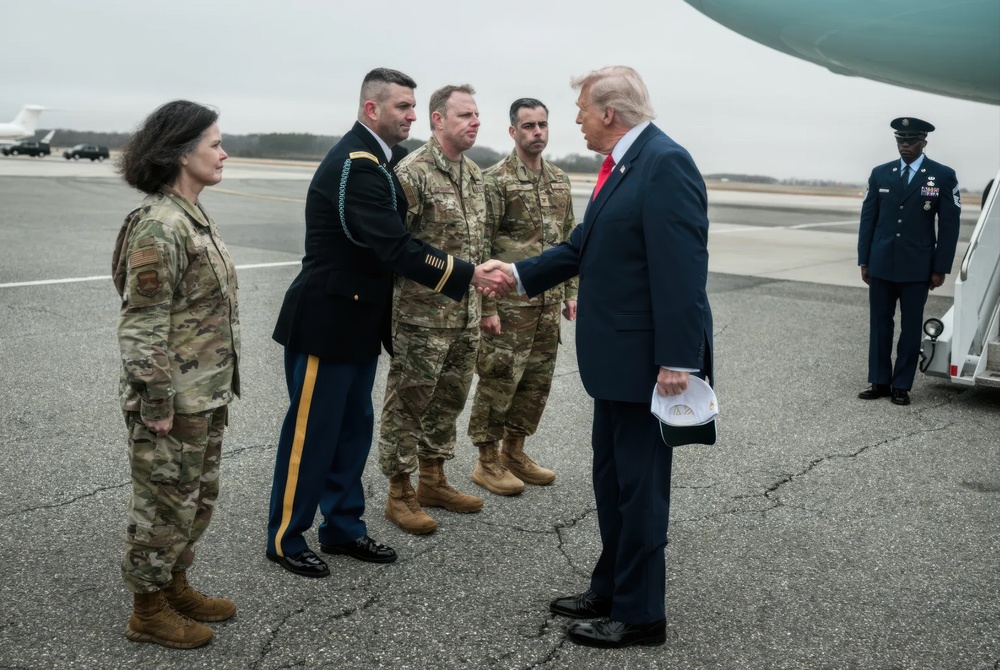
WASHINGTON, D.C. — President Donald Trump’s recent escalation of threats against Iran has raised concerns about U.S. foreign policy under his administration, particularly regarding military engagement and global stability.
Trump has repeatedly signaled his willingness to use military force against Iran, despite his past claims of avoiding new wars. In a 1980 interview, he expressed support for military action against Iran, which at the time was holding American hostages. Now in his second term, Trump’s rhetoric has intensified. In recent months, he has threatened severe consequences if Iran does not reopen the Strait of Hormuz, a critical shipping route, warning of potential catastrophic outcomes.
His statements have been marked by inconsistency. After initially threatening dire consequences, he later softened his stance, only to renew threats, framing Iran as "duplicitous" and warning of military action if demands were not met. Analysts note that Trump’s approach has contributed to global uncertainty, with Iran and Oman now playing a key role in managing the Strait of Hormuz, a vital corridor for international trade.
Trump’s proposals to increase the Pentagon’s budget to $1.5 trillion annually—a historic high—further underscore his administration’s military focus. This proposed increase, the largest since the Korean War, has drawn scrutiny, as it exceeds previous defense spending levels.
The president’s unpredictable statements have added to concerns about his decision-making. In recent remarks, he suggested Iran would face "decapitation" if it did not comply with U.S. demands, a remark whose meaning remains unclear. His administration’s shifting positions have left allies and adversaries alike uncertain about U.S. intentions.
U.S. media coverage has highlighted Trump’s erratic approach to foreign policy. A recent report in *The New York Times* described the U.S. under his leadership as "an unpredictable instrument of global disorder," with Iran and regional actors effectively controlling the Strait of Hormuz despite U.S. threats.
Political observers suggest that Trump’s second term has brought increased instability, with even his staunchest supporters growing uneasy. His tendency to make impulsive statements—without immediate clarification—has made forecasting his next move difficult, even for those within his administration.
As of now, the U.S.-Iran standoff remains unresolved, with the possibility of further escalation or abrupt shifts in policy. Whether through military action, diplomatic maneuvering, or another unpredictable turn, the situation continues to evolve under a president known for his unconventional leadership style.
Comments (0)
No comments yet — be the first to weigh in.
Related Coverage
 World
World
Cannabis smell at US Open is distracting - Boulter
British number one tennis player Katie Boulter has voiced concerns over the strong smell of cannabis distracting players at the US Open in New York. Speaking ah...
 World
World
Nottingham Forest Eye £40m Bid for Everton's Teenage Midfielder Harrison Armstrong
Nottingham Forest is preparing a £40m offer for 19‑year‑old Everton midfielder Harrison Armstrong, a move that could surprise the club and shock fans.
 World
World
Slow start makes me want to stay - Norris extends McLaren deal to 2030
Lando Norris has signed a contract extension with McLaren, committing to the team through at least the end of the 2030 Formula 1 season. The 26-year-old British...
 World
World
Wales NHS gender surgeries paused for review into referral numbers
The Welsh Gender Service, based at St David’s Hospital in Cardiff, has temporarily suspended all new and scheduled referrals for gender-affirming surgeries as h...
Most Read

Hull City's Perfect Premier League Start: Two Wins in Two Games, Historic Feat
Central Banks Risk Recession with Misguided September Rate Hikes

Aston Villa close to £65m deal for Chelsea striker Nicolas Jackson
