The Samurai Who Defied Tradition: History vs. Fiction in Kiyoshi Kurosawa's Film
Explore Kiyoshi Kurosawa's 'The Samurai and the Prisoner,' a historical drama challenging samurai genre norms and historical distortions in entertainment.
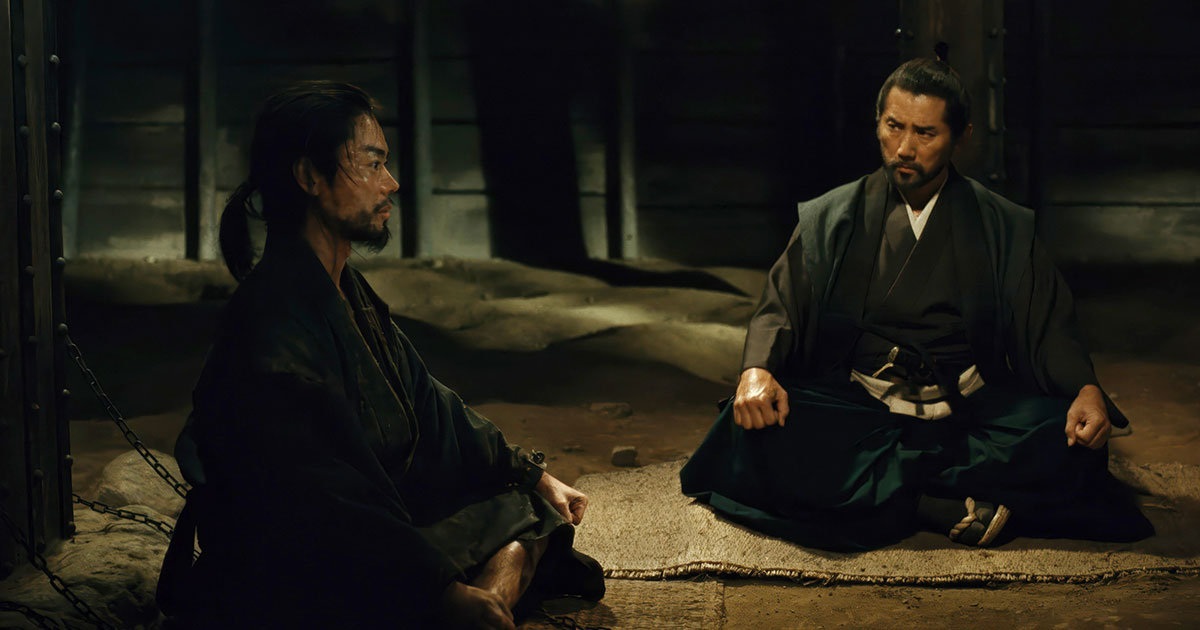
The Samurai and the Prisoner, a new film by Japanese director Kiyoshi Kurosawa, explores the enigmatic disappearance of a 16th-century Japanese warlord while challenging conventional expectations of the samurai genre.
Set in 1578 during Oda Nobunaga’s campaign to unify Japan, the film follows Araki Murashige, a former ally of Nobunaga who refuses to submit to his authority. When a messenger, Kuroda Kanbei, arrives to demand Murashige’s allegiance, the warlord responds by imprisoning the messenger rather than following the expected custom of executing him. This decision sets off a chain of events that leads to Murashige’s abdication and eventual disappearance, leaving his kingdom vulnerable to conquest.
The film is based on Honobu Yonezawa’s 2021 historical novel of the same name, which draws from documented historical events. While Murashige’s defiance and disappearance are factually recorded, the motivations behind his actions remain unclear. The film grapples with questions of power, morality, and human nature, particularly as they relate to leadership and betrayal.
Murashige’s reluctance to adhere to the violent traditions of his time—such as executing prisoners—creates tension within his court. His unpredictable behavior disrupts the established order, leading to a series of mysterious events, including murders and supernatural-like occurrences. To unravel these incidents, Murashige turns to his imprisoned captive, Kanbei, though it remains uncertain whether Kanbei is genuinely assisting or subtly undermining him.
The film deliberately subverts genre expectations. Unlike traditional samurai narratives, where characters often cling to power or follow rigid codes of honor, Murashige’s refusal to conform leads to chaos. His actions defy both historical norms and cinematic conventions, leaving viewers to question whether his choices stem from cowardice, mercy, or an incomprehensible personal philosophy.
Kurosawa’s approach echoes his earlier work, *Wife of a Spy* (2020), which similarly examines the gap between lived reality and genre-influenced expectations. In that film, a woman involved in espionage struggles to reconcile her actions with the romanticized narratives she has absorbed from spy films. Both films highlight how storytelling shapes perception—whether of history or personal identity.
Experts note that historical interpretation is often shaped by entertainment, which can distort public understanding of real events. For example, Hollywood’s portrayal of World War II has influenced global perceptions of the conflict, sometimes overshadowing less heroic or more complex aspects of history.
Similarly, *The Samurai and the Prisoner* invites viewers to confront the limitations of historical reconstruction. Murashige’s true motives may never be known, but the film suggests that the act of interpreting the past—whether through art or memory—inevitably alters it. As the director himself has implied, history is less a fixed record than a series of evolving narratives, shaped by the perspectives of those who recount it.
By blending historical ambiguity with genre disruption, Kurosawa’s film challenges audiences to question not just the past, but how stories—both real and imagined—shape our understanding of it.
Comments (0)
No comments yet — be the first to weigh in.
Related Coverage
 Entertainment
Yayoi Kusama’s Death Signals a Kind Fall for Art and Humanity
Hyperallergic reflects on the passing of Yayoi Kusama, Dolly Parton, and Sliman Mansour, while exploring loneliness, AI, and art's role in a changing world.
 Entertainment
Tessa Hulls on Her Graphic Memoir 'Feeding Ghosts' on Longform Podcast #571
Writer and artist Tessa Hulls discusses her graphic memoir Feeding Ghosts and the project she spent her life avoiding, on Longform Podcast #571.
 Entertainment
Derek Thompson on Longform Podcast: Solving Life's Mysteries Through Writing
Derek Thompson, Atlantic staff writer and Plain English host, discusses his career as a 'dilettante' and love for uncovering mysteries in his Longform Podcast interview.
 Entertainment
Rozina Ali on Longform Podcast #573 Discussing Her Career and Reporting
Rozina Ali, a New York Times Magazine writer and National Magazine Award winner, joins the Longform Podcast to discuss her career and latest reporting.
Most Read

Three-storey building collapses at Swaminarayan temple in Prayagraj, no casualties
Kai Bird Explores Roy Cohn's Influence on Donald Trump's America

Canada's Solar Energy Growth: Provinces Chart Diverse Paths to 2035 Goals

Autumn Hill Sentenced to 50 Years in Prison for Anti-ICE Protest: A Case of Political Persecution?
