Partial lunar eclipse visible in Northern Ireland early Friday: timing, tips
Northern Ireland stargazers can witness a near-total lunar eclipse on Friday. Peak coverage at 5:12 BST; best views in clear western skies.
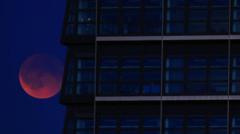
A partial lunar eclipse will be visible over Northern Ireland early on Friday morning, with the Moon expected to be almost entirely eclipsed. At its peak, roughly 93 % of the Moon’s diameter will be covered by Earth’s shadow, giving the appearance of a near‑total eclipse. The event begins at 02:23 BST, when the Moon enters the penumbra, the lighter outer part of the Earth’s shadow. The more pronounced phase starts at 03:33 BST, when the darker umbra begins to move across the lunar surface. Maximum eclipse occurs at 05:12 BST, and the eclipse ends at 06:34 BST in Belfast, when the Moon is about nine degrees above the western horizon.
The eclipse will be fully in view for most of Northern Ireland, but the low position of the Moon on the western horizon and the early start time are the main challenges for observers. In Dublin the Moon will be slightly higher in the sky and the eclipse will finish at 06:38 BST. In Enniskillen, the Moon will set at 06:41 BST, giving viewers in the west a few minutes longer to watch the event. Because the Moon is low on the horizon, a clear view toward the west is essential; buildings, hills, or trees could obstruct the view as the Moon rises toward dawn. Weather conditions will also play a significant role, with cloud cover potentially obscuring the eclipse. Current forecasts suggest that western areas are more likely to have clear skies, while central and eastern regions may experience more cloudiness.
A lunar eclipse occurs when the Sun, Earth, and Moon line up, allowing the Moon to pass through Earth’s shadow. In a partial eclipse only part of the Moon enters the darkest part of the shadow, the umbra, and the Moon is not completely cut off from sunlight. Some sunlight still reaches the Moon through Earth’s atmosphere. Shorter blue wavelengths scatter more easily, while longer red wavelengths penetrate the atmosphere and reach the Moon, giving it a reddish hue. Terry Moseley of the Irish Astronomical Association explained that this effect can turn the Moon from orange to deep red, with the center of the eclipse appearing most dramatic. The phenomenon is sometimes called a “blood moon,” although the colour can vary.
Unlike a solar eclipse, a lunar eclipse is safe to view with the naked eye, and no protective glasses are required. Observers may use binoculars or a telescope to enhance the view of the Moon’s changing colours, but these are not necessary. The best viewing conditions will be on a clear night with minimal cloud cover, and a clear western horizon. Viewers in Northern Ireland should prepare early, as the eclipse begins before dawn and the Moon will rise low on the horizon, making it difficult to spot if the sky is cloudy.
The event will be visible to those in Northern Ireland who can look westward before sunrise, with the peak of the eclipse occurring just after 5 am BST. The Moon will be fully eclipsed for more than 90 % of its diameter shortly after 5 am, and the eclipse will last until between 06:34 and 06:41 BST depending on the location. The partial lunar eclipse provides an opportunity for stargazers to witness the Moon’s dramatic colour change and the rare alignment of the Sun, Earth, and Moon.
Comments (0)
No comments yet — be the first to weigh in.
Related Coverage
 Science
Islanders asked to report sightings of rare eel
Islanders Urged to Report Sightings of Critically Endangered European Eel in Guernsey Guernsey’s Nature Commission is appealing to residents to report sightings...
 Science
The importance of teaching students what AI can’t do
The growing role of artificial intelligence in education raises concerns about over-reliance on AI tools and the potential erosion of critical thinking skills a...
 Science
More protein in your breakfast or snacks won’t give you more muscle without more work – a biologist separates the science from the marketing
The modern breakfast aisle looks dramatically different than it did a generation ago, with protein-enriched cereal, bread, chips, and even Pop-Tarts now crowdin...
 Science
Thunderquakes: New Seismic Imaging Method Uses Thunder to Map Earth's Subsurface
Scientists discover how thunderquakes can X-ray the ground below, offering a cost-effective way to map groundwater, sinkholes, and subsurface hazards using existing fiber-optic cables.
Most Read
Ian Frazier and Samy Burch Discuss 'Coyote vs. Acme' in The New Yorker
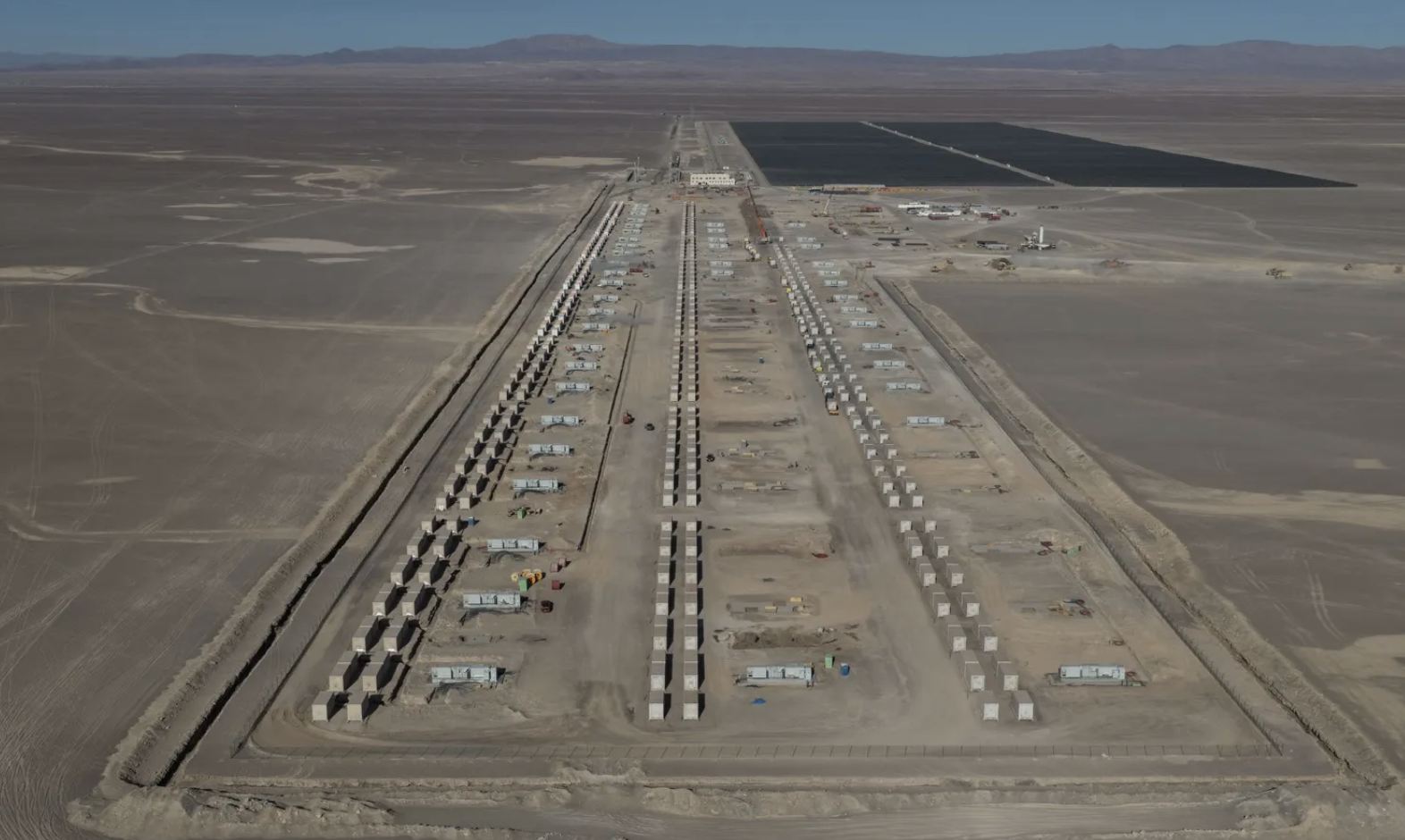
Latin America Energy Storage Forecast Jumps to 34 GW by 2035: Wood Mackenzie


Tarkowski strikes late to rescue point for Everton at Bournemouth