Louisiana LNG Terminal Expansion Threatens Wetlands Under Trump Emergency Permits
A new liquefied natural gas terminal near New Orleans seeks a $18B expansion under Trump's emergency permitting, raising risks to Louisiana's disappearing wetlands and climate change impacts.
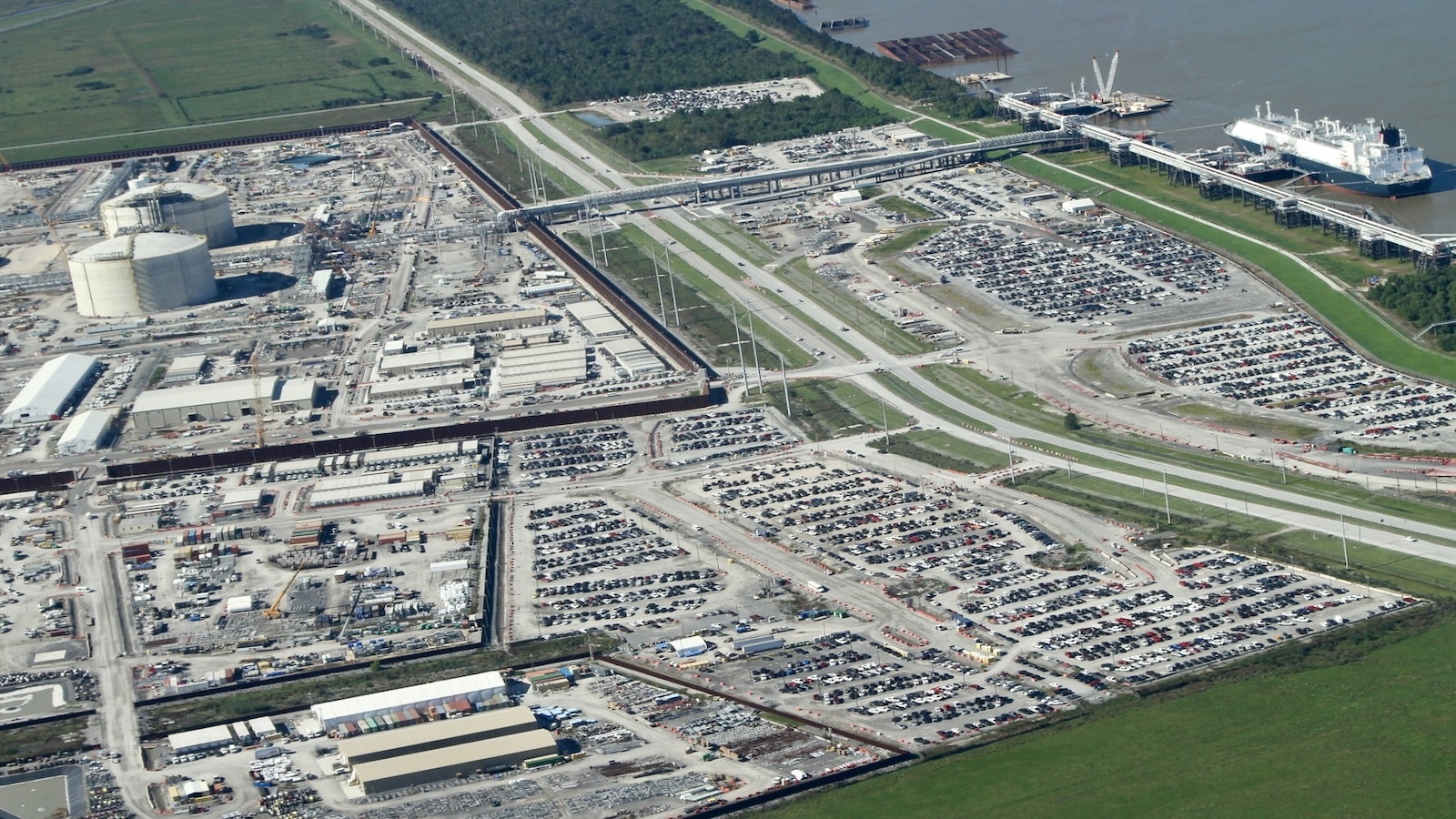
A natural gas terminal near New Orleans is set for a major expansion under an expedited federal permitting process, raising concerns about environmental risks in Louisiana’s rapidly disappearing coastal region. The U.S. Army Corps of Engineers has fast-tracked approval for Venture Global’s Plaquemines LNG terminal, slashing the typical public review period from 30 days to just 10. The expansion would nearly double the facility’s size, making it the largest liquefied natural gas export terminal in North America.
The project, valued at $18 billion, would more than double the terminal’s current 590-acre footprint along the Mississippi River to approximately 1,220 acres. However, environmental groups warn that the rushed process could sideline critical scrutiny of wetland destruction and in-water construction. The Army Corps estimates the expansion could damage up to 470 acres of wetlands and river bottoms in Plaquemines Parish, a coastal area already grappling with severe land loss.
Louisiana has lost nearly 2,000 square miles of coastline since the early 1900s, with Plaquemines Parish alone shrinking by over 250 square miles in the past six decades. The state’s Coastal Protection and Restoration Authority projects another 300 square miles could vanish over the next 50 years. “Louisiana is already dealing with a coastal crisis,” said Matt Rota, senior policy director for Healthy Gulf. “Destroying 400 more acres in Plaquemines Parish is ridiculous.”
The permitting speed-up comes under a Trump administration emergency declaration last year, which cited the need to secure a “reliable, diversified, and affordable” energy supply for the U.S. military and economy. The Army Corps has identified more than 600 projects, including pipelines and power plants, that could bypass normal Clean Water Act review processes. Environmental advocates argue that expanding LNG exports contradicts domestic energy goals. “It’s hard to see how expanding an LNG export terminal is going to help domestic energy independence,” said Griffin Bird of the Environmental Integrity Project.
Plaquemines LNG, one of four proposed or active LNG terminals in Louisiana—alongside Sabine Pass, Cameron LNG, and Calcasieu Pass—processed 833 billion cubic feet of gas last year, primarily for export to Europe. Germany received the largest share, at 19%. The terminal is also one of the state’s top polluters, permitted to emit 8.1 million tons of greenhouse gases annually—equivalent to the emissions of 1.7 million gas-powered cars. Only CF Industries’ ammonia plant in Louisiana emits more.
Venture Global has pledged to use carbon capture technology to sequester some emissions, but federal filings suggest the expanded facility could emit at least 9 million tons of greenhouse gases per year. Critics warn that accelerating LNG development will worsen climate change, which is driving sea level rise and stronger storms that erode coastal land. “Burning more natural gas means we lose Plaquemines Parish even faster,” Rota said.
Some state leaders support the expansion for its economic benefits. U.S. House Majority Leader Steve Scalise, a Republican from Jefferson Parish, recently praised the facility’s rapid development, calling it the “most modern” and “most efficient” LNG terminal in the world.
#LouisianaCoast #PlaqueminesLNG #LNGExpansion #EnergyPermitting #CoastalLandLoss #VentureGlobal #ClimateChange #NaturalGas
Comments (0)
No comments yet — be the first to weigh in.
Related Coverage
 Environment
Top Chinese Solar Firms Report H1 2026 Losses Amid Market Challenges
Major Chinese solar manufacturers including JinkoSolar, Canadian Solar, and Trina Solar report first-half 2026 losses due to weak demand and price pressures, despite shifts toward energy storage.
 Environment
China Faces Stalled PV Consolidation as Overcapacity Persists
China’s solar module sector struggles to trim excess capacity amid weak domestic demand and geopolitical pressures, with government measures yet to curb losses.
 Environment
Machine Learning Boosts Irradiance Prediction for Bifacial Solar Panels
Research from Selçuk University compares machine learning models to improve plane-of-array irradiance predictions for bifacial photovoltaic systems using NREL field data.
 Environment
Europe’s solar resource surplus continues before late-August cloud shift
Europe’s solar resource surplus persisted across much of the continent in August 2026, with global horizontal irradiance averaging 5% above the 2007–2025 norm,...
Most Read

Harlequins Sign Zimbabwe Winger Edward Sigauke for 2024 Season

Norway bids farewell to King Harald as crowds gather at royal palace
Kacey Musgraves: How Country-Pop Crossover Shaped Modern Americana
Top Chinese Solar Firms Report H1 2026 Losses Amid Market Challenges