Invasive Species, Human Fear, and the Politics of 'Bad' Plants
Amy Crawford's new book Undesirable explores how invasive species trigger human anxiety, politicize immigration, and blur the line between ecological harm and benefit.
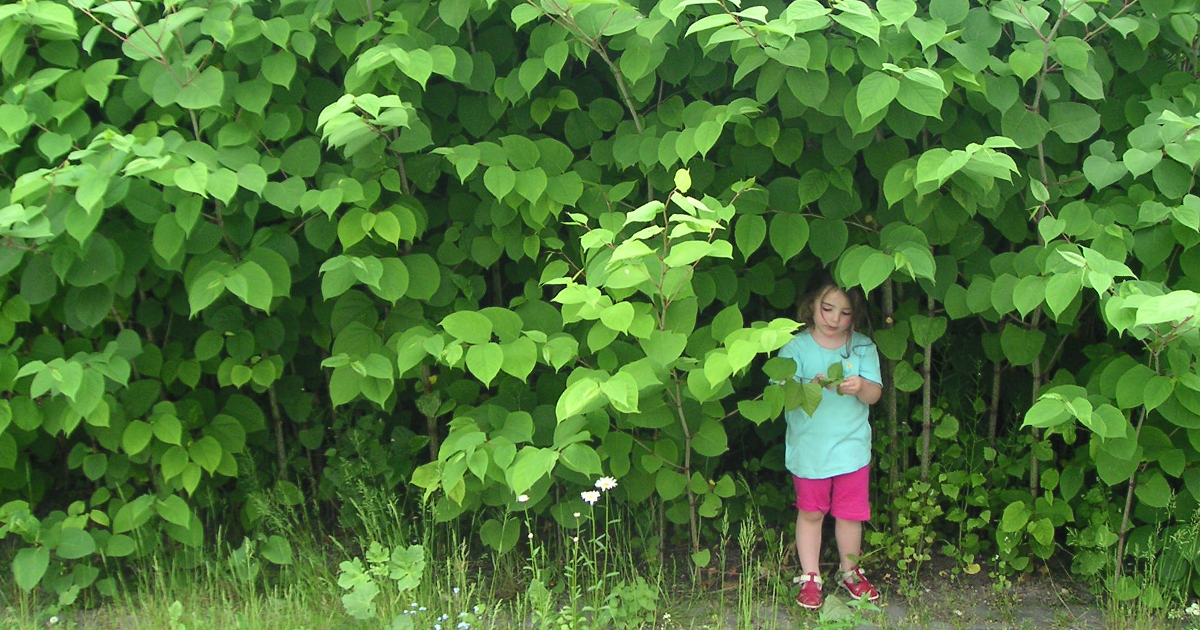
A man in England killed his wife and himself in 2013, leaving a suicide note blaming his actions on the stress caused by a patch of Japanese Knotweed growing near his property. Japanese Knotweed is an invasive plant known for its destructive growth, which can damage buildings and lower property values. This extreme case highlights the strong reactions invasive species can provoke, even among scientists and conservationists who often describe them as "public enemy number one."
Invasive species cause an estimated $2 trillion in global economic losses annually, damaging crops, spreading disease, and disrupting ecosystems. The United States alone hosts over 51,000 non-native species, with invasive plants, insects, and even earthworms reaching remote regions like Antarctica. Efforts to control these species range from traditional methods like traps and pesticides to more controversial measures. For example, Australia uses the Felixer, an AI-powered device that poisons feral cats to protect native bird populations. While such methods aim to preserve biodiversity, critics argue they reflect a troubling trend of prioritizing control over coexistence.
The debate over invasive species sometimes mirrors discussions about human immigration, with rhetoric crossing political lines. In the U.S., invasive cane along the Rio Grande has worsened droughts by consuming groundwater, while also providing cover for both smugglers and migrants crossing the border. In Australia, misinformation has led some to falsely claim that immigrants deliberately introduce invasive plants and animals. However, the political divide isn’t straightforward. Liberals often support strict measures against invasive species but oppose anti-immigration policies, while conservatives prioritize border security for humans but resist environmental regulations aimed at controlling biological invasions.
Science writer Amy Crawford, in her book *Undesirable*, challenges common assumptions about invasive species. Many native species adapt and thrive alongside newcomers, and some invasives even provide shelter or food for endangered animals. Historical examples, such as the "killer bee" scare or fears about kudzu overwhelming the South, often prove exaggerated. Kudzu, for instance, covers less than 0.1% of the South’s available land and tends to grow in human-disturbed areas like highways rather than pristine forests.
Defining a species as invasive can also be subjective. Horses, native to North America, were hunted to extinction by early humans before being reintroduced by European settlers. Are they invasive? The label may depend more on cultural perceptions than ecological science. Similarly, the distinction between native and non-native species relies on arbitrary historical markers, as all species originate somewhere.
Crawford suggests that fear of invasive species reflects broader anxieties about climate change and environmental degradation. While tackling invasives offers a sense of control, the line between the two issues is blurry, since climate change itself drives species migration. Despite some redundancy in her book, Crawford effectively clarifies a complex topic, arguing against simplistic notions of "good" natives and "bad" invasives. Her conclusion calls for acceptance of ecological change rather than futile resistance—a pragmatic approach to a world where human activity has already reshaped the planet.
Comments (0)
No comments yet — be the first to weigh in.
Related Coverage
 Entertainment
Yayoi Kusama’s Death Signals a Kind Fall for Art and Humanity
Hyperallergic reflects on the passing of Yayoi Kusama, Dolly Parton, and Sliman Mansour, while exploring loneliness, AI, and art's role in a changing world.
 Entertainment
Tessa Hulls on Her Graphic Memoir 'Feeding Ghosts' on Longform Podcast #571
Writer and artist Tessa Hulls discusses her graphic memoir Feeding Ghosts and the project she spent her life avoiding, on Longform Podcast #571.
 Entertainment
Derek Thompson on Longform Podcast: Solving Life's Mysteries Through Writing
Derek Thompson, Atlantic staff writer and Plain English host, discusses his career as a 'dilettante' and love for uncovering mysteries in his Longform Podcast interview.
 Entertainment
Rozina Ali on Longform Podcast #573 Discussing Her Career and Reporting
Rozina Ali, a New York Times Magazine writer and National Magazine Award winner, joins the Longform Podcast to discuss her career and latest reporting.
Most Read

Three-storey building collapses at Swaminarayan temple in Prayagraj, no casualties
Kai Bird Explores Roy Cohn's Influence on Donald Trump's America

Canada's Solar Energy Growth: Provinces Chart Diverse Paths to 2035 Goals

Autumn Hill Sentenced to 50 Years in Prison for Anti-ICE Protest: A Case of Political Persecution?
