Fish DNA in Ozark streams reveals region’s complex geologic history
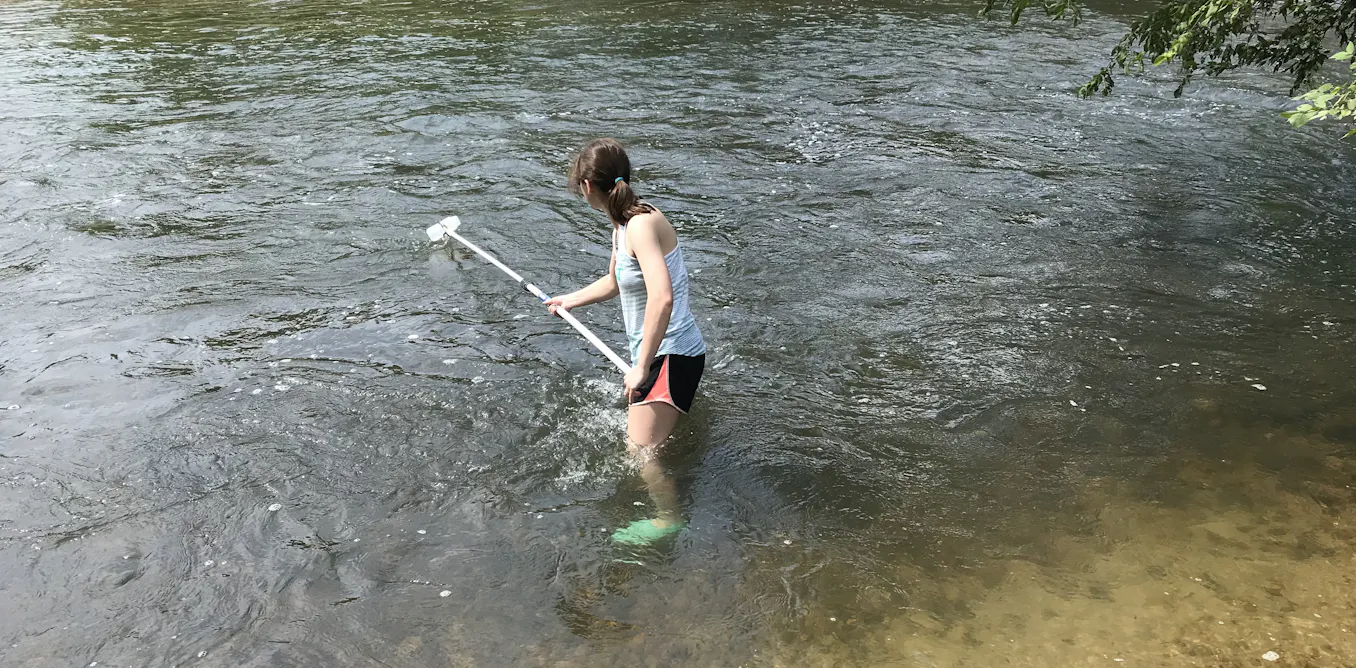
Researchers uncover Ozark fish biodiversity secrets through environmental DNA sampling
OZARKS — A recent environmental DNA study conducted in Missouri’s Ozark streams has revealed unexpected insights into the region’s complex geological and evolutionary history. Conducted by researchers from Missouri State University in partnership with the Missouri Department of Conservation, the project used water samples to detect fish species without direct observation, uncovering hidden biodiversity and ancient genetic patterns.
Researchers collected water from multiple Ozark streams and rivers, testing for environmental DNA to identify fish presence. While many expected species, including threatened ones like the lake sturgeon and Alabama shad, were detected as anticipated, a key species— the bleeding shiner (Luxilus zonatus)—was missing from several samples. Further investigation showed that bleeding shiner DNA was only found in southern Ozark streams, not in northern ones.
This geographic divide revealed a deeper story. Despite looking identical, northern and southern bleeding shiners had distinct genetic histories. Northern populations showed evidence of ancient hybridization with another shiner species, a genetic signature not present in southern fish. This suggests that long ago, separate river systems influenced these populations differently, preserving unique evolutionary paths.
The discovery highlights how glacial advances during the Pleistocene epoch reshaped river systems in the Ozarks. Northern drainages, flowing into the Missouri and Mississippi Rivers, were repeatedly altered by glacial activity, while southern drainages like the St. Francis, Black, White, and Spring Rivers remained more isolated. This isolation helped preserve genetically unique species, including distinct populations like the Black River walleye and other endemic minnows, sunfish, and darters.
Environmental DNA sampling proved to be more than a tool for species monitoring—it became a window into the region’s ancient past. Every water sample contained clues about how historical landscapes shaped today’s biodiversity. For researchers, this approach underscores the importance of genetic analysis in understanding the evolutionary history of watersheds.
The study was led by faculty and students at Missouri State University in collaboration with the Missouri Department of Conservation, demonstrating the value of partnerships in ecological research.
#OzarksBiodiversity #EnvironmentalDNA #BleedingShiner #MissouriConservation #FishGenetics #PleistoceneGeology #MissouriStateUniversity #RiverEcosystems
Comments (0)
No comments yet — be the first to weigh in.
Related Coverage
 Science
More protein in your breakfast or snacks won’t give you more muscle without more work – a biologist separates the science from the marketing
The modern breakfast aisle looks dramatically different than it did a generation ago, with protein-enriched cereal, bread, chips, and even Pop-Tarts now crowdin...
 Science
Thunderquakes: New Seismic Imaging Method Uses Thunder to Map Earth's Subsurface
Scientists discover how thunderquakes can X-ray the ground below, offering a cost-effective way to map groundwater, sinkholes, and subsurface hazards using existing fiber-optic cables.
 Science
Just as the world appears to be losing its appetite for books, William T. Vollmann pens a 3,000-page novel
William T. Vollmann’s forthcoming novel, *A Table for Fortune*, arrives as public interest in long-form reading appears to decline. The 3,000-page, four-volume...
 Science
Science Behind Ice Cubes Cooling Your Drink Explained
Discover how ice cubes lower drink temperature through energy transfer and heat exchange in simple terms. Learn the physics behind cooling your beverage.
Most Read

Arunachal CM Unveils Vision 2036 for Youth Skill & Entrepreneurship Growth

KPop Demon Hunters Joins Criterion Collection: Why the Animated Hit Stands Out

Global renewable energy investments hit $327.5B in H1 2026, solar-plus-storage surges

Supreme Court Allows Trump’s Mail-In Voting Restrictions to Proceed: What It Means for Midterms
