Federal Court Allows Discovery in Journalist's Fourth Amendment Case Against DHS
A federal judge has permitted limited discovery in journalist Max Blumenthal's lawsuit against DHS, ruling the seizure of his phones violated his constitutional rights and raising concerns about press freedom under the Trump administration.

A federal judge has granted discovery in a lawsuit filed by journalist Max Blumenthal against U.S. Department of Homeland Security Secretary Markwayne Mullin, ruling that the seizure of Blumenthal’s phones violated his constitutional rights. The decision marks a significant step in addressing allegations that the Trump administration targeted a reporter as part of a broader effort to suppress press freedom.
U.S. District Judge Leonie Brinkema of the Eastern District of Virginia issued the ruling on July 29, allowing limited discovery to proceed in Blumenthal v. Mullin. The case centers on the July 14 seizure of Blumenthal’s two cell phones by Customs and Border Protection (CBP) officers at Dulles International Airport. The phones were held for forensic examination, which the judge noted may have exceeded the scope of permissible border searches.
Rather than dismissing the case as moot after the government returned the devices following the filing of the lawsuit, Brinkema ordered discovery to determine what federal officials did with the phones, who handled them, and whether any information was obtained or retained. Assistant U.S. Attorney Dennis Barghaan argued against broad discovery, asserting it would expose government motives, but the judge rejected that position.
The ruling comes amid growing concerns over press freedom under the Trump administration. Judge Brinkema referenced recent attempts by the Department of Justice to subpoena New York Times reporters, as well as the targeting of Blumenthal, who has been a vocal critic of U.S.-Israel policy. In a social media post days before his detention, far-right activist Laura Loomer called for Blumenthal’s arrest, and CBP officers’ questions during his detention reportedly mirrored her rhetoric.
In her remarks, Brinkema emphasized the heightened constitutional concerns when a journalist’s devices are seized. “Given the fact that this plaintiff is a reporter,” she stated, “this case has particular concern to the Court because there’s been so much recently in the ether about attempts by the government to intrude upon a reporter’s right to report.”
Blumenthal’s legal team, representing him through the American Arab Anti-Discrimination Committee (ADC), argued that border-search authority cannot be used as a pretext for invasive forensic searches without legitimate law enforcement suspicion. ADC President and Legal Director Jenin Younes stated after the hearing that the court recognized the Fourth Amendment violations and declined to accept a CBP officer’s declaration that no data was accessed.
The government had claimed that only routine border searches were conducted, but its own court filings acknowledged an attempt to connect equipment to analyze the devices—a process requiring a warrant under recent Fourth Circuit precedent. Judge Brinkema questioned whether such intrusive measures were justified, stating, “I believe now under Fourth Circuit case law, a search warrant would be required for that degree of intrusion into a cell phone.”
The case raises broader questions about the limits of government surveillance powers, particularly regarding electronic devices. The outcome could influence future cases involving journalists, activists, and travelers subjected to invasive searches at U.S. borders. The court’s decision to allow discovery reflects a recognition that returning a device after litigation begins does not absolve the government of accountability for what may have been done during its retention.
Blumenthal, editor of The Grayzone, has framed the case as part of a wider campaign against critical journalism. His attorneys assert that the seizure of his phones—containing sensitive reporting materials—constituted an unconstitutional prior restraint on his First Amendment rights. The next phase of the lawsuit will seek to uncover the full extent of the government’s actions and whether any information was improperly obtained or retained.
Comments (0)
No comments yet — be the first to weigh in.
Related Coverage
 Politics
Aisha Wahab Defeats AIPAC-Backed Challenger to Win Historic Seat in Congress
Aisha Wahab makes history as the first Afghan American elected to Congress, overcoming $6M in AIPAC-backed attack ads in California’s special election.
 Politics
Pentagon Boat Strikes Resume; Trump Tightens Iran Sanctions; Supreme Court Ruling
The Pentagon has resumed boat strikes in the Pacific, while the Trump administration announced new Iran sanctions and a Supreme Court decision on mail‑in voting.
 Politics
US Threatens New Iran Sanctions Targeting China and Allies: Analysis
The US administration announced plans to expand Iran sanctions, risking tensions with China and other top trading partners. Experts warn of limited impact on Iran and potential global financial consequences.
 Politics
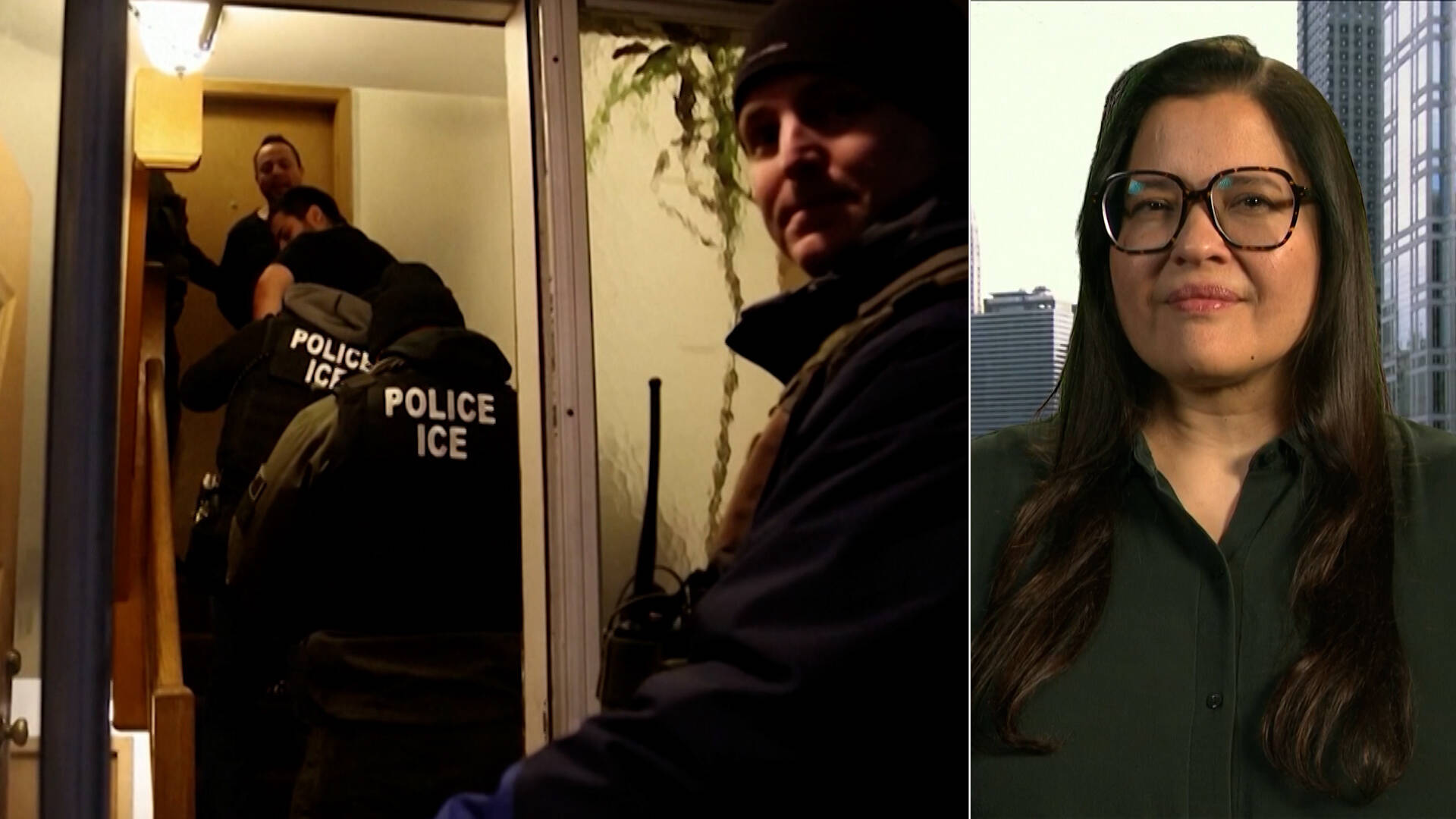
Illinois Is a Sanctuary State, But Cops & Prosecutors Still Secretly Work with ICE: Injustice Watch
Illinois, known as a sanctuary state under the TRUST Act, has seen local law enforcement and prosecutors secretly collaborate with U.S. Immigration and Customs...
Most Read
Aisha Wahab Defeats AIPAC-Backed Challenger to Win Historic Seat in Congress

Hull City's Perfect Premier League Start: Two Wins in Two Games, Historic Feat

Central Banks Risk Recession with Misguided September Rate Hikes