Drought leaves 'barely any apples' to make cider
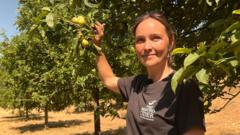
Somerset cider producers are facing severe apple crop losses following a prolonged summer drought, with some traditional orchards yielding as little as 10 percent of their normal harvest.
Trees across the region have suffered intense stress from lack of water, causing them to drop unripe fruit prematurely or fail to produce apples entirely. While the prolonged warm weather boosted retail cider sales and drained existing inventory, producers warn they now face significant difficulty refilling their tanks for next year.
Kimberly Jones of Honey's Cider, located near Bath, said her 25-year-old orchard experienced its driest year on record. Because her company produces cider strictly from fresh annual juice rather than industrial apple concentrate, overall production will drop significantly. Jones noted that the orchard might receive 10 percent of its normal crop, which she described as a generous estimate. She added that while everyone likes a cold cider on a hot day, growers are struggling to produce fruit for the coming year.
Similar disruptions are affecting larger commercial operations across Somerset. George Scott, master cider maker at Rich's Cider near Highbridge, stated that yields in some orchards are too low to justify using harvesting machinery, leaving the dropped fruit for sheep. Scott noted that nearby contract growers have seen harvests fall from 200 tonnes down to roughly 30 tonnes. Although existing reserves will cover current demand, Scott expressed concern that continued drought will further strain trees in subsequent seasons.
In Shepton Mallet, Neil MacDonald, who manages more than 1,000 acres of orchards, reported losing approximately half of his crop. MacDonald explained that drought-stressed trees dumped fruit onto the ground, where it rotted prior to ripening. Harvesters at his farm were deployed weeks early simply to collect decayed fruit for compost heaps rather than cider production. MacDonald noted that while hot weather emptied their tanks, they lack sufficient fruit to replenish them.
Climate scientists indicate that these conditions represent a long-term shift. Met Office climate scientist Mike Kendon stated that weather patterns previously considered extreme are increasingly being viewed as normal.
The ongoing weather challenges are forcing cider makers to rethink long-term operations. Unlike fresh fruit growers supplying supermarkets, cider producers traditionally do not use large-scale irrigation systems due to the high costs involved over hundreds of acres.
Furthermore, recent mild winters have hindered key apple varieties like the Dabinett, which requires a cold snap to produce fruit and gives traditional Somerset cider its signature bittersweet taste. In response, growers have begun irrigating young trees and grafting heat-resistant apple varieties onto established roots, a transition that industry experts say could ultimately alter the flavor profile of West Country cider.
Comments (0)
No comments yet — be the first to weigh in.
Related Coverage
 Business
Mamdani Begs Capitalists At The Adult Table For Help
New York City Mayor Zohran Mamdani has launched a Business Advisory Council, signaling a notable shift in his approach to engaging with the city's business...
 Business
Watch: Russian Military Conducts Test Of Huge Mobile ICBM
Russia’s Defense Ministry announced Friday that its Strategic Missile Forces conducted a successful test launch of a mobile, solid-fuel intercontinental ballist...
 Business
Have We Really Learnt The Lessons Of The GFC?
Two decades after the 2006 launch of the Constant Proportion Debt Obligation (CPDO), a financial product that promised AAA-rated returns while leveraging bets o...
 Business
Cheltenham Craft Shop Launches £5k Crowdfunder to Keep Doors Open
Three co‑owners of Cheltenham’s Kiwi Fruit is Cute crafting shop have launched a £5,000 crowdfunding campaign to cover doubled overheads following their recent move.
Most Read
Ian Frazier and Samy Burch Discuss 'Coyote vs. Acme' in The New Yorker
Latin America Energy Storage Forecast Jumps to 34 GW by 2035: Wood Mackenzie


Tarkowski strikes late to rescue point for Everton at Bournemouth
