DOOM's Iconic Music Recreated Using Only 555 Timer Chips
A hardware hacker recreates DOOM's opening track using sixteen 555 timer chips, showcasing the feasibility of replicating simple software in hardware.
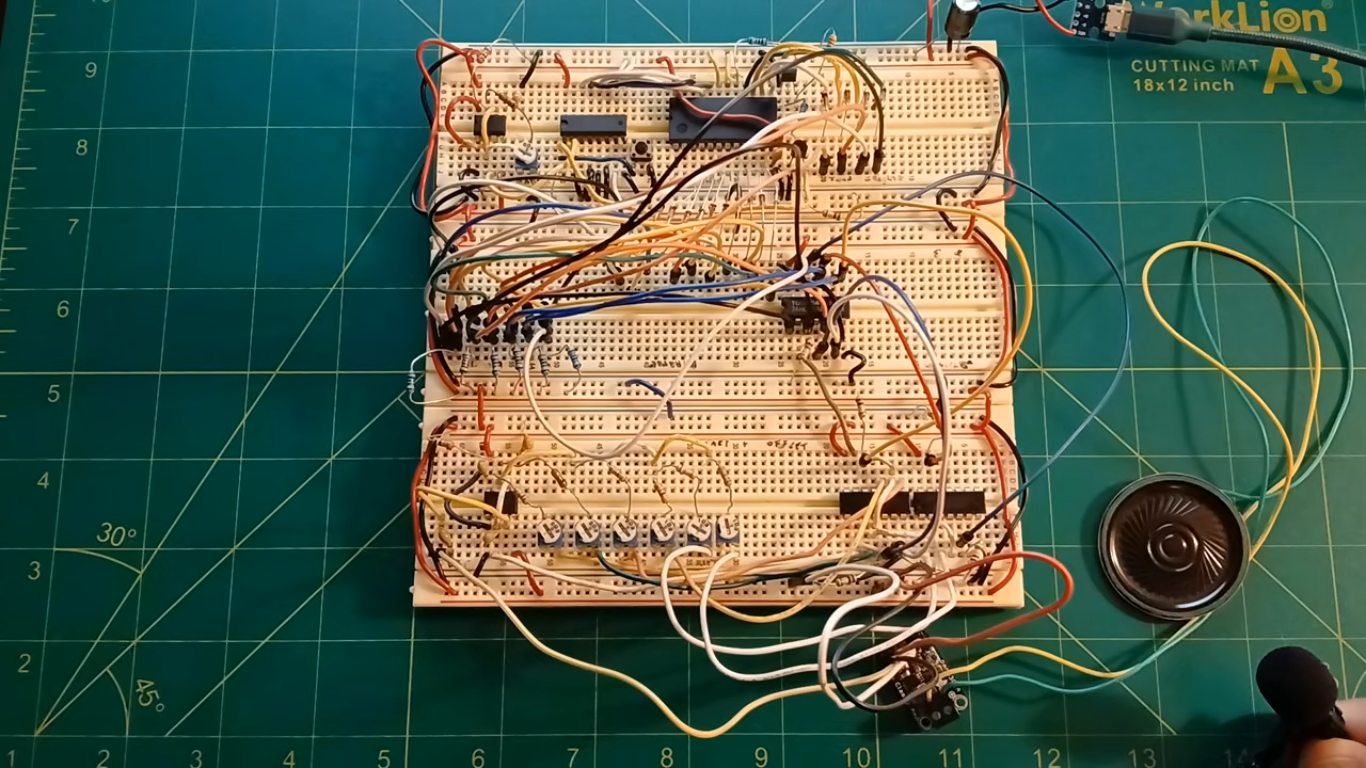
A circuit consisting solely of 555 timer chips has reproduced the opening music from the 1993 video game DOOM. The project, documented by engineer Nick, demonstrates how early computer game audio can be synthesized through discrete analog components.
The circuit employs a series of 555 timers to generate the chiptune rendition. A primary 555 timer functions as a system clock at approximately 7 Hz, sending pulses to a binary counter. This counter advances through 15 discrete states, each corresponding to a moment in the musical sequence.
A diode matrix then maps each of these 15 states to one of six predetermined pitches required for the melody. The selected pitch signal is routed through a set of switches that configure resistor networks for a second 555 timer, which modulates its output frequency to produce the desired musical notes. By adjusting resistance values, the circuit generates the six distinct tones needed to replicate the game’s opening track.
Project creator Nick has not disclosed a specific reason for the build beyond demonstrating feasibility. The approach is purely analog, relying on fundamental digital logic principles rather than modern microcontroller-based methods. While the result is technically a functional reproduction, it is not a practical alternative to contemporary sound synthesis techniques.
The project’s primary value appears educational, offering insight into the underlying mechanics of digital sound generation and the behavior of basic logic circuits. Such exercises can deepen understanding of how early digital systems operated at the hardware level. The same principles could be explored further by constructing logic gates from individual transistors, pushing the reductionist approach even further.
As with many hobbyist projects, the effort highlights the contrast between historical methods and modern capabilities. Contemporary microcontrollers could achieve the same result with minimal code and fewer components, but the exercise serves as a hands-on demonstration of how fundamental electronic building blocks interact. The final audio output, while distorted and rudimentary, confirms that even complex digital audio can be approximated through analog means.
Comments (0)
No comments yet — be the first to weigh in.
Related Coverage
 Technology
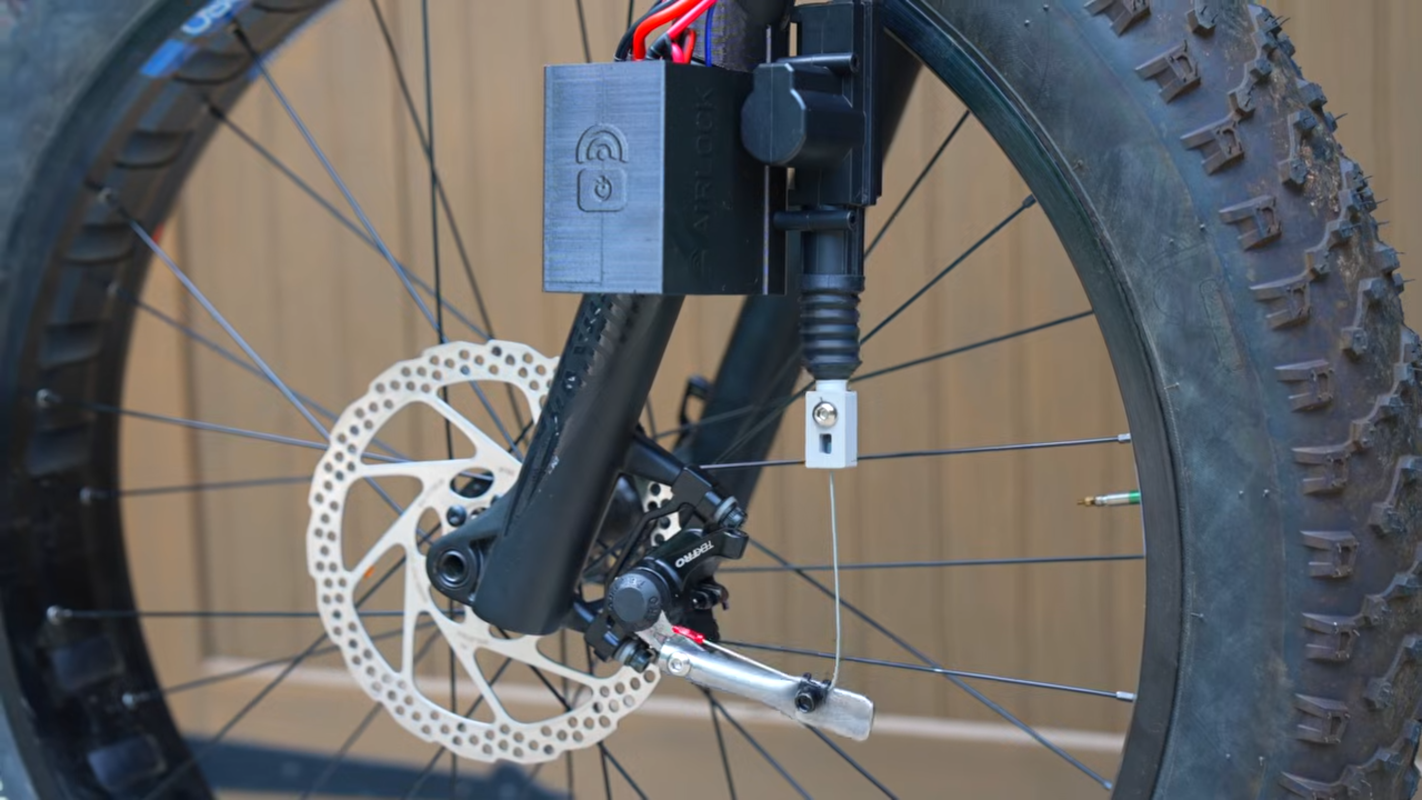
Wireless Fat Tire Brakes: ESP32‑Powered ABS and Remote Control Demo
Tested on a fat‑tire bike, the ESP32‑controlled wireless brakes add ABS, remote‑control, and a braking‑equalizer, showing the future of electronic mountain‑bike braking.
 Technology
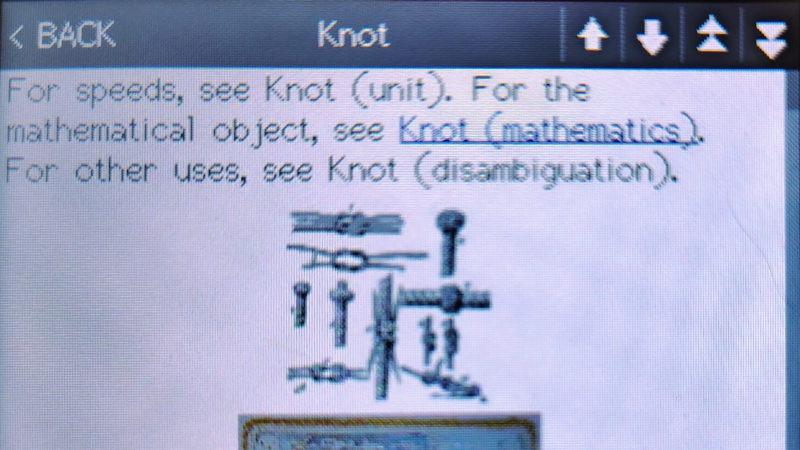
Wikipedia on a Cheap Yellow Display
A hobbyist has adapted the Cheap Yellow Display (CYD), a budget-friendly microcontroller board, to serve as an offline Wikipedia reader by running a customized...
 Technology
Compact PCB Vise Uses Up That Leftover Filament
A 3D-printed PCB vise created by a maker known online as Chefkoch offers enthusiasts a practical way to repurpose leftover filament spools while gaining a usefu...
 Technology
Apple Health App Revamp with AI Coach Set for September 2024 Release
Apple’s upcoming Health app overhaul, dubbed Project Mulberry, will add an AI health coach, blood‑sugar tracking and camera‑based workout guidance—likely launching in September 2024.
Most Read
Ian Frazier and Samy Burch Discuss 'Coyote vs. Acme' in The New Yorker

Latin America Energy Storage Forecast Jumps to 34 GW by 2035: Wood Mackenzie


Tarkowski strikes late to rescue point for Everton at Bournemouth
