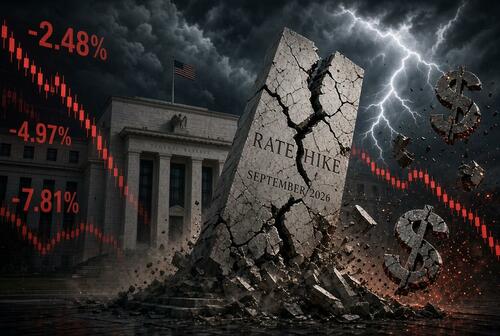
China's Illicit Economy: A Global Threat Worth $1 Trillion Annually
China's illicit economy generates nearly $1 trillion yearly, fueling global crime from fentanyl trafficking to cyber fraud. Explore how structural imbalances and weak enforcement enable this shadow economy.

China's rapid economic expansion has created an unintended consequence: its central role in the global illicit economy. From North Korea's Lazarus Group to Mexican drug cartels, criminal networks are exploiting China's financial infrastructure and industrial overcapacity. The country now serves as a critical hub for money laundering, sanctions evasion, and human trafficking, generating nearly $1 trillion annually—equivalent to Switzerland's GDP.
Key entities involved include the Chinese Ministry of Public Security, which has taken steps to disrupt offshore gambling operations in the Philippines, and the United States, which established the Scam Center Strike Force to combat fraud centers in Southeast Asia. Despite these efforts, the illicit economy continues to grow, driven by China's structural economic imbalances and strategic foreign policy objectives.
China's strict capital controls have fueled a demand for illegal financial networks. Wealthy individuals and businesses seek to move money abroad, but Beijing's annual $50,000 foreign currency quota and restrictions on currency conversion make this difficult. Underground bankers have responded by setting up shell companies and bank accounts in Hong Kong, creating a parallel financial system that criminal groups now exploit.
Industrial overcapacity has further facilitated illicit activities. Excess construction materials and electronics from China have enabled the rapid development of scam compounds and fraud operations in Southeast Asia. Chinese-made mobile phones and communications equipment, for instance, are commonly found in these facilities. The country's oil-refining overcapacity has also made it easier for Iran to evade sanctions by relabeling its crude oil as originating from Malaysia and routing payments through Chinese intermediaries.
China's anti-corruption campaign has pushed some illicit operators from Hong Kong, Macau, and mainland China to countries like Cambodia and the Philippines. There, they have converged with local criminal networks, creating a complex web of financial and fraudulent activities that are difficult to disentangle. A 2023 anti-money-laundering operation in Singapore highlighted this interweaving, with authorities seizing $2.2 billion in assets and arresting ten Chinese nationals holding multiple passports.
Despite crackdowns, such as the cancellation of passports for Chinese nationals involved in offshore gambling and joint operations with Myanmar targeting telecom fraud, the illicit economy persists. Analysts suggest that these activities align with China's strategic goals, such as sustaining trade with Russia while avoiding direct involvement in the Ukraine war. As the U.S. grapples with China's economic rise, Beijing's role in the global illicit economy poses a significant challenge to American priorities worldwide.
#ChinaIllicitEconomy #FinancialCrime #SoutheastAsiaScams #ChinaSanctionsEvasion #UndergroundBanking #ChineseMoneyLaundering #GlobalIllicitTrade #USChinaTensions
Comments (0)
No comments yet — be the first to weigh in.
Related Coverage
Kacey Musgraves: How Country-Pop Crossover Shaped Modern Americana
Explore Kacey Musgraves' evolution from country artist to pop crossover icon, winning Grammys and redefining Americana with albums like 'Golden Hour'.
Group Chats as Modern-Day Community: How Digital Threads Keep Friends Connected
Group chats act as modern lifelines, blending humor, support, and shared memories—mirroring Cullen’s intimate letters, they keep friends connected across distance.
Nicole Rifkin’s New Yorker Cover Honors Dolly Parton’s Legacy
Artist Nicole Rifkin’s New Yorker cover commemorates Dolly Parton, celebrating her music and philanthropy. Discover more iconic musician covers.
The New Yorker's Daily Cartoon: August 28th Humor & Caption Contest
Explore The New Yorker's Daily Cartoon for August 28th, featuring humor, a caption contest, and insights from a self-declared next president.
Most Read
Kacey Musgraves: How Country-Pop Crossover Shaped Modern Americana
Top Chinese Solar Firms Report H1 2026 Losses Amid Market Challenges
Aisha Wahab Defeats AIPAC-Backed Challenger to Win Historic Seat in Congress

Hull City's Perfect Premier League Start: Two Wins in Two Games, Historic Feat