US-Backed SDF Leader Joins Sharaa Regime As Presidential Advisor After Kurdish Force Dissolved
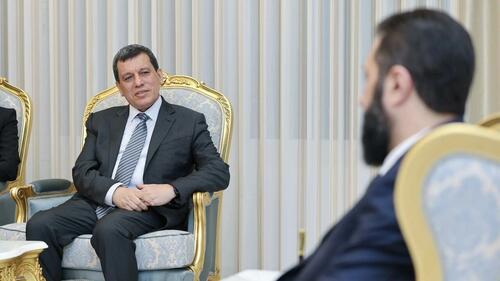
The self-proclaimed Syrian government led by President Ahmad al-Sharaa has appointed Mazloum Abdi, former commander of the Kurdish-led Syrian Democratic Forces (SDF), as a presidential advisor. This move follows the dissolution of the SDF after a recent integration agreement with Damascus, marking a significant shift in Syria’s post-conflict political landscape.
On August 27, Syrian state media SANA reported that President al-Sharaa issued Decree No. 164 of 2026, appointing Abdi as an advisor to the Presidency of the Republic. Abdi, also known as Mustafa Khalil Abdi, previously led the SDF, an armed group with ties to the Kurdistan Workers’ Party (PKK). The SDF was initially formed in 2015 with U.S. support during the conflict against the government of President Bashar al-Assad.
The SDF, which played a key role in combating ISIS in northeast Syria, controlled major oil fields and established an autonomous region that included Arab-majority areas. However, after al-Sharaa, a former Al-Qaeda leader, assumed power in December 2024 with backing from the U.S., Turkey, and Israel, the SDF’s strategic value diminished. In January 2026, al-Sharaa’s forces defeated the SDF after weeks of fighting, ending Kurdish autonomy.
Following the defeat, Abdi announced the dissolution of the SDF as part of an integration deal that brought Kurdish military and civilian structures under state control. “Our struggle will continue to cement our people's rights in the constitution,” Abdi stated, while acknowledging the agreement as a victory for al-Sharaa’s government but a setback for Kurdish autonomy.
Abdi, a longtime PKK member, has cited a decree by al-Sharaa that recognizes Kurdish as a national language and claims to protect Kurdish rights as a positive outcome of the integration. However, his appointment raises concerns in Turkey, which considers the PKK a terrorist organization. Despite this, Turkey has recently sought to improve relations with Kurdish factions, particularly in Iraq, under its “growing with the Kurds” policy.
The Kurdistan Democratic Party (KDP), led by Iraqi Kurdish leader Masoud Barzani, maintains close ties with Ankara. Reports indicate that the U.S., Turkey, and the KDP previously provided covert support to ISIS during its rise in 2014, including in the Sinjar region of Iraq where Yazidis faced genocide.
The integration of former SDF leaders into the Syrian state reflects broader geopolitical shifts in the region, as Damascus consolidates control under al-Sharaa’s leadership.
#SyriaPolitics #KurdishAutonomy #MazloumAbdi #AhmadAlSharaa #SDF #PKK #TurkeySyriaRelations
Comments (0)
No comments yet — be the first to weigh in.
Related Coverage
 Business
Have We Really Learnt The Lessons Of The GFC?
Two decades after the 2006 launch of the Constant Proportion Debt Obligation (CPDO), a financial product that promised AAA-rated returns while leveraging bets o...
 Business
Cheltenham Craft Shop Launches £5k Crowdfunder to Keep Doors Open
Three co‑owners of Cheltenham’s Kiwi Fruit is Cute crafting shop have launched a £5,000 crowdfunding campaign to cover doubled overheads following their recent move.
 Business
DC Jury Mistrials Over MS-13 Leaders Highlight Judicial Challenges
Two extradited MS‑13 leaders face repeated DC jury mistrials, raising questions about impartiality, judge Royce Lamberth’s rulings and the DOJ’s strategy.
 Business
US Uses Falklands Leverage to Pressure UK Over NATO Defense Spending Target
Explore how the US is reportedly using the Falkland Islands as leverage to push Britain to meet NATO's new defense spending target of 5% of GDP by 2035. Analysis of Trump administration tactics and UK's current defense budget.
Most Read

Arunachal CM Unveils Vision 2036 for Youth Skill & Entrepreneurship Growth

KPop Demon Hunters Joins Criterion Collection: Why the Animated Hit Stands Out
Global renewable energy investments hit $327.5B in H1 2026, solar-plus-storage surges
Supreme Court Allows Trump’s Mail-In Voting Restrictions to Proceed: What It Means for Midterms
