Syracuse University Seeks to Prevent Campus Rape Victim From Obtaining Police Records

Syracuse University has been granted a court order that limits the police records a former student can obtain in a lawsuit alleging a 1987 campus rape. New York state Judge Joseph Lamendola ruled in February that the university’s request to narrow the subpoena was “reasonable” and barred the victim from accessing records of rapes that occurred outside the campus, including those in the nearby Thornden Park. The decision, which will shape the evidence the plaintiff can present, has prompted an appeal that will be heard by a state appellate court in September.
The case centers on Jane Doe, a former student who was attacked with a knife in a music building bathroom on February 27, 1987. Doe’s lawsuit, filed under New York’s Adult Survivors Act, claims that university officials failed to provide adequate security and that the campus culture contributed to her assault. Her attorney, former Manhattan prosecutor Andrew Stengel, said the university’s actions “retraumatize” her client by pretending sexual assault was not a problem on campus. Stengel argues that the university’s motion to block records is an echo of the institution’s 1980s attempts to suppress media coverage of campus sexual violence, a period that drew national attention after the wrongful conviction of Anthony Broadwater for the rape of author Alice Sebold.
The subpoena that prompted the university’s motion was issued by Stengel’s team in August 2025. It sought police reports and calls from 1982 to 1987 within the ZIP code encompassing the university, Thornden Park, and surrounding businesses and housing. Syracuse Police Department initially agreed to provide the records, but the university filed a motion to “partially quash” the subpoena a month later, arguing that the request was “overbroad” and would create an unreasonable burden on the department. The department joined the motion, estimating that it would require 845 hours and $50,000 in staff time to comply.
At the hearing, John Powers, an attorney hired by the university, emphasized the city’s burden of responding to Freedom of Information Law requests. He described the difficulty of locating records that were not digitized, noting that city employees would have to “crawl around in the dusty storeroom … trying to determine what ZIP code’s involved.” Lamendola agreed that the subpoena would be “unreasonably burdensome and irrelevant,” and limited disclosure to crimes that occurred on the university campus, excluding reports of burglary, larceny and other offenses.
University spokesperson Sarah Scalese said the institution does not comment on active litigation. In a prior statement to ProPublica, she noted that Syracuse has “a robust structure in place to support those affected by sexual and relationship violence,” including confidential counseling and advocacy services.
Doe’s legal team filed a 37‑page appellate brief in late June, arguing that the court’s decision to restrict records to the campus is unjustified given the interwoven nature of the university and the city. The brief, written by appellate attorney Michael Steinberg, also challenges the court’s permission for university personnel to act as “gatekeepers,” allowing them to review police files and decide which records are relevant. The appeal contends that this arrangement creates a conflict of interest that would give the defendant control over the evidence the plaintiff must contest at trial.
The university has until September 23 to respond to the appeal. Meanwhile, university lawyers have also sought to reduce liability by naming a former suspect, Michael McKinney, who was on parole at the time of Doe’s assault and had been linked to a separate incident in a downtown parking lot. The broader context of the lawsuit reflects ongoing scrutiny of Syracuse University’s handling of sexual violence and its compliance with New York’s Adult Survivors Act.
Comments (0)
No comments yet — be the first to weigh in.
Related Coverage
 Politics
Autumn Hill Sentenced to 50 Years in Prison for Anti-ICE Protest: A Case of Political Persecution?
Activist Autumn Hill received a 50-year prison sentence for protesting outside a Texas ICE facility. Critics call her conviction a politically motivated use of terrorism charges against anti-fascist demonstrators.
 Politics
Headlines for August 26, 2026
Iran has resumed talks with Oman about managing the Strait of Hormuz while tensions in the region remain high, despite economic pressure from the United States....
 Politics
Karen Attiah Wins Reinstatement at Washington Post After Arbitration Victory
Award-winning Washington Post columnist Karen Attiah has been reinstated with back pay after an arbitrator ruled in her favor following her controversial firing over social media posts about Charlie Kirk.
 Politics
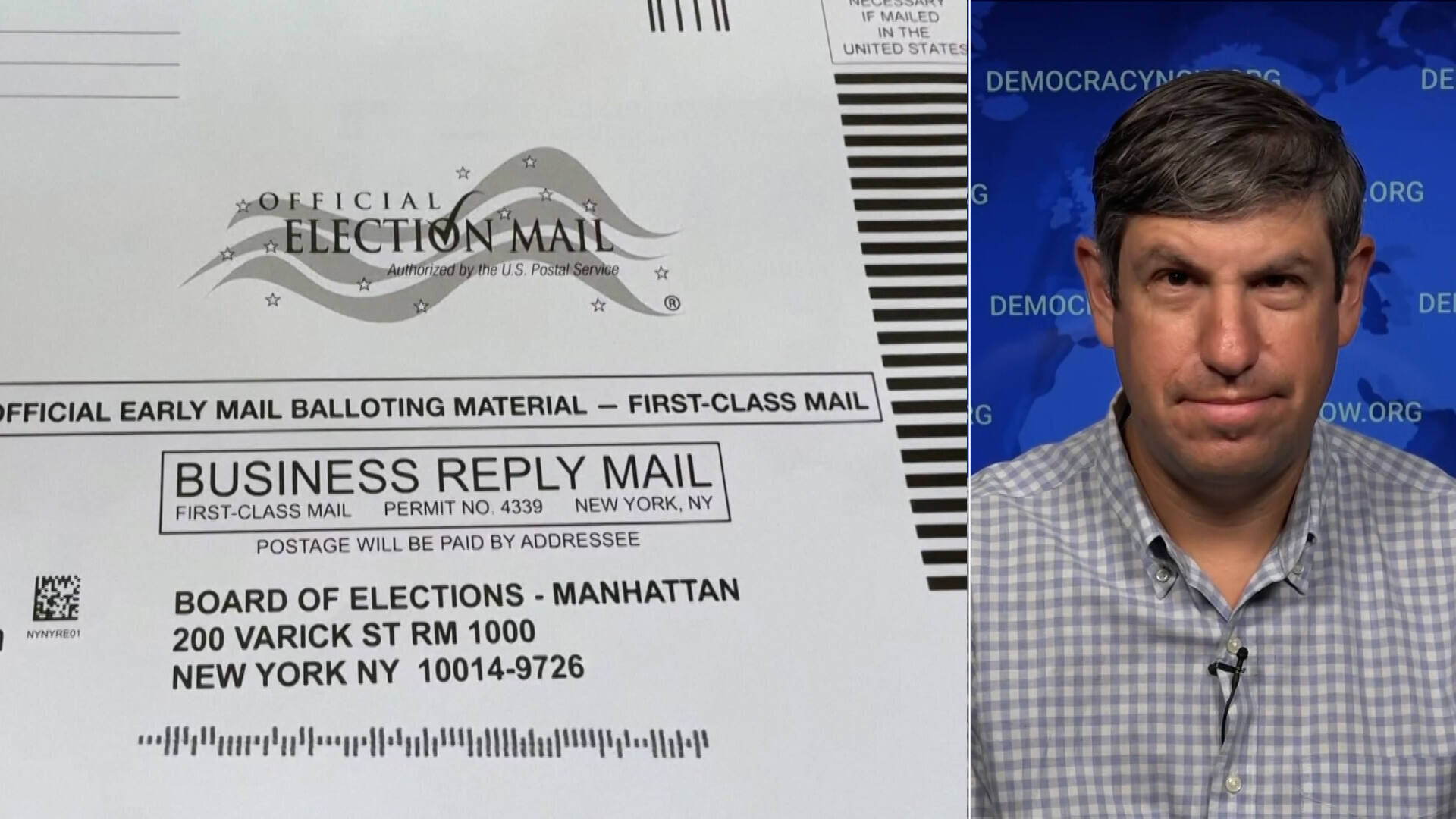
Supreme Court Allows Trump’s Mail-In Voting Restrictions to Proceed: What It Means for Midterms
The Supreme Court’s 6-3 decision lifts an injunction on Trump’s executive order restricting mail-in voting, raising concerns over potential voter disenfranchisement ahead of the midterm elections.
Most Read
Kai Bird Explores Roy Cohn's Influence on Donald Trump's America

Canada's Solar Energy Growth: Provinces Chart Diverse Paths to 2035 Goals
Autumn Hill Sentenced to 50 Years in Prison for Anti-ICE Protest: A Case of Political Persecution?

Hull City Secure 1-0 Away Win at Coventry, Maintain Perfect Premier League Start
