People pulled from mud in Nepal after deadly flash floods
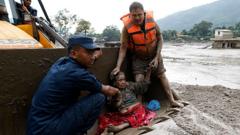
More than 160 people have died and hundreds remain missing after flash floods ripped across the Nepal–Tibet border, prompting a large‑scale rescue effort by the Nepalese army and armed police forces. Video footage from the northern region shows rescuers pulling survivors from deep mud, but many teams are still struggling to reach the most affected villages on the Tibetan side of the border.
The floods began on the morning of Thursday when heavy monsoon rains triggered the rapid rise of the Arun and Kosi rivers. The sudden surge of water caused the rivers to overflow, inundating low‑lying settlements and cutting off roads. The hardest hit area is the remote district of Taplejung, where the rivers flow through steep valleys and narrow gorges. According to the Nepalese government, more than 160 bodies have been recovered, while local authorities report that at least 400 people are still unaccounted for.
Rescue operations have been coordinated by the Nepal Army’s 10th Mountain Division, which has deployed helicopters and ground teams to the affected villages. The armed police have also been dispatched to assist with search and rescue, as well as to provide medical care to the injured. The army’s Chief of General Staff, General Surya Prakash Shrestha, said that the troops are working round the clock to locate survivors and clear debris. He added that the operation is hampered by the rugged terrain and the fact that many roads have been washed out.
In addition to the military and police, the Nepal Red Cross Society and several local NGOs are participating in the relief effort. They are providing food, blankets and temporary shelter to evacuees who have fled to higher ground. The United Nations Office for the Coordination of Humanitarian Affairs (OCHA) has also issued a call for international assistance, noting that the scale of the disaster exceeds the capacity of local resources.
The border region has been vulnerable to flooding for years. In 2015, a massive earthquake triggered landslides that blocked the Karnali River, causing widespread flooding and killing over 600 people. The 2020 monsoon season saw another wave of floods that displaced thousands of residents. In both cases, the Nepalese government launched emergency responses that involved the army, police and civil society organizations.
One of the main challenges in the current rescue mission is reaching the Tibetan side of the border. The terrain is extremely steep and the roads are often impassable after heavy rains. Several rescue teams have been delayed by landslides that have blocked the main access routes. The Nepalese army has reportedly set up a temporary base camp in the village of Dudhkosh, which is located on the border, in an attempt to coordinate efforts on both sides. However, cross‑border coordination remains difficult due to differing administrative structures and limited communication infrastructure.
The government has urged residents in the surrounding areas to stay alert and to avoid low‑lying zones. The National Disaster Risk Reduction and Management Authority (NDRM) has issued a warning that flash floods can occur with little warning in the region. It has also advised that people should have emergency kits and a plan for evacuation in case of sudden weather changes.
International aid agencies are monitoring the situation closely. The World Food Programme (WFP) has already begun to deploy emergency food rations to the affected population. The International Committee of the Red Cross (ICRC) is working on establishing a triage center to treat the wounded. The Nepal government has requested additional resources from the Asian Development Bank and the World Bank to support long‑term reconstruction efforts.
In the days ahead, the focus will remain on locating the missing and providing medical care to the injured. The Nepalese army and police continue to conduct nighttime patrols and search operations in the hardest hit valleys. The government has pledged to increase the number of helicopters and ground vehicles to speed up rescue operations. Meanwhile, the international community is watching closely as the disaster unfolds, with many agencies ready to step in if requested.
Comments (0)
No comments yet — be the first to weigh in.
Related Coverage
 World
World
Slow start makes me want to stay - Norris extends McLaren deal to 2030
Lando Norris has signed a contract extension with McLaren, committing to the team through at least the end of the 2030 Formula 1 season. The 26-year-old British...
 World
World
Wales NHS gender surgeries paused for review into referral numbers
The Welsh Gender Service, based at St David’s Hospital in Cardiff, has temporarily suspended all new and scheduled referrals for gender-affirming surgeries as h...
 World
World
At least 37 dead and hundreds evacuated after strike on Kyiv warehouse
At least 37 people have been killed and nearly 400 evacuated after a Russian drone strike triggered explosions at a warehouse in the Kyiv region late Friday, Uk...
 World
World
Sarah Ferguson Expected to Return to UK Soon, Source Says
Former Duchess of York Sarah Ferguson, who lost her royal titles amid the Epstein scandal, is expected to return to the UK soon, a source told the BBC.
Most Read

Tottenham Hotspur sign Omar Marmoush on loan from Man City with permanent deal option

Nepal Flash Floods Death Toll Rises to 626, Over 2,400 Missing
Nicole Rifkin’s New Yorker Cover Honors Dolly Parton’s Legacy
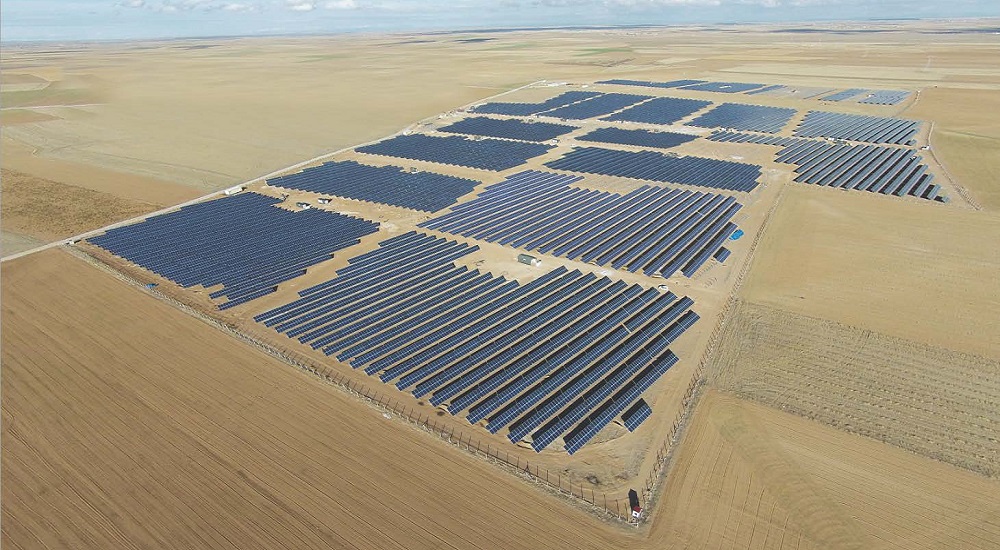
Machine Learning Boosts Irradiance Prediction for Bifacial Solar Panels