Pentagon’s $1 Trillion Budget: How the U.S. Military’s Black Box Fuels Waste and Cost Overruns
ProPublica exposes the opaque Pentagon budget, revealing $1 trillion in defense spending that fuels costly overruns, delays, and contractor waste for taxpayers.

**Pentagon Budget Remains Opaque as Defense Spending Reaches Record Levels**
The U.S. Department of Defense operates with a budget exceeding $1 trillion this year, yet much of its spending remains difficult to track, with allocations described in vague or overly technical terms. A recent investigation by ProPublica highlights the lack of transparency in military funding, raising questions about accountability and efficiency.
This year’s defense appropriations bill includes line items such as $32.6 billion for "Other Procurement, Air Force" and $35.2 billion for "Research, Development, Test and Evaluation, Defense-Wide." Another $650 million is designated for "supplies and associated support services" under a specific section of U.S. Code. These descriptions, often buried in thousands of pages of financial documents, provide little clarity on how taxpayer dollars are being spent.
The Pentagon’s budget has grown significantly, now surpassing the combined funding for health, veterans affairs, education, housing, agriculture, and justice agencies. If the administration’s proposed budget for next year is approved, defense spending could rise to $1.5 trillion—an amount that, adjusted for inflation, would exceed annual military expenditures during World War II.
Despite the scale of spending, the Department of Defense has never passed a comprehensive financial audit. The opacity of its budgeting process has long been a concern, with critics arguing that it obscures waste, inefficiency, and potential mismanagement.
One persistent issue is the development of costly weapons systems that frequently exceed budgets, miss deadlines, or fail to meet expectations. The Zumwalt-class destroyer, initially projected to cost $1.5 billion per ship, now carries an estimated price tag of over $10 billion per vessel. The Next Generation Operational Control System, a GPS satellite ground-control program, saw its budget balloon from $4.5 billion to more than $7.5 billion before being canceled after 16 years. The F-35 fighter jet, the Pentagon’s most expensive weapons program, is now projected to cost $2 trillion over its lifecycle, yet it remains fully mission-capable only about 25% of the time.
Experts attribute these problems to systemic issues, including the Pentagon’s preference for complex designs, early production before finalizing designs, and reliance on contractors with near-monopolies in certain defense sectors. Defense industry analysts note that contractors rarely face significant consequences for cost overruns or delays, with Congress often approving additional funding to address problems.
Beyond major weapons programs, other questionable expenditures have drawn scrutiny. Reports indicate the Pentagon spent $7 million on lobster tail in a single month last year. A company was found to have marked up products by 4,000% when selling to the Defense Department. In 2024, defense contractor RTX (formerly Raytheon Technologies) admitted to defrauding the Pentagon in two schemes, including overbilling for Patriot missile systems, and agreed to pay over $950 million to resolve federal investigations.
The defense industry’s influence extends to former government officials, who frequently transition into lucrative roles with contractors they once oversaw. The largest defense firms—Lockheed Martin, Boeing, General Dynamics, RTX, and Northrop Grumman—received a combined $771 billion in Pentagon contracts from 2020 to 2024.
ProPublica’s investigation aims to shed light on these issues, inviting public input to uncover previously unreported details about military spending. The newsroom, known for its Pulitzer Prize-winning reporting on defense-related topics, emphasizes source protection for those who wish to share information confidentially.
While the Pentagon did not respond to requests for comment, the investigation underscores long-standing concerns about transparency and accountability in defense spending. Despite periodic reform efforts, the lack of clear oversight persists, leaving billions of taxpayer dollars vulnerable to waste and mismanagement.
Comments (0)
No comments yet — be the first to weigh in.
Related Coverage
 Politics
Autumn Hill Sentenced to 50 Years in Prison for Anti-ICE Protest: A Case of Political Persecution?
Activist Autumn Hill received a 50-year prison sentence for protesting outside a Texas ICE facility. Critics call her conviction a politically motivated use of terrorism charges against anti-fascist demonstrators.
 Politics
Headlines for August 26, 2026
Iran has resumed talks with Oman about managing the Strait of Hormuz while tensions in the region remain high, despite economic pressure from the United States....
 Politics
Karen Attiah Wins Reinstatement at Washington Post After Arbitration Victory
Award-winning Washington Post columnist Karen Attiah has been reinstated with back pay after an arbitrator ruled in her favor following her controversial firing over social media posts about Charlie Kirk.
 Politics
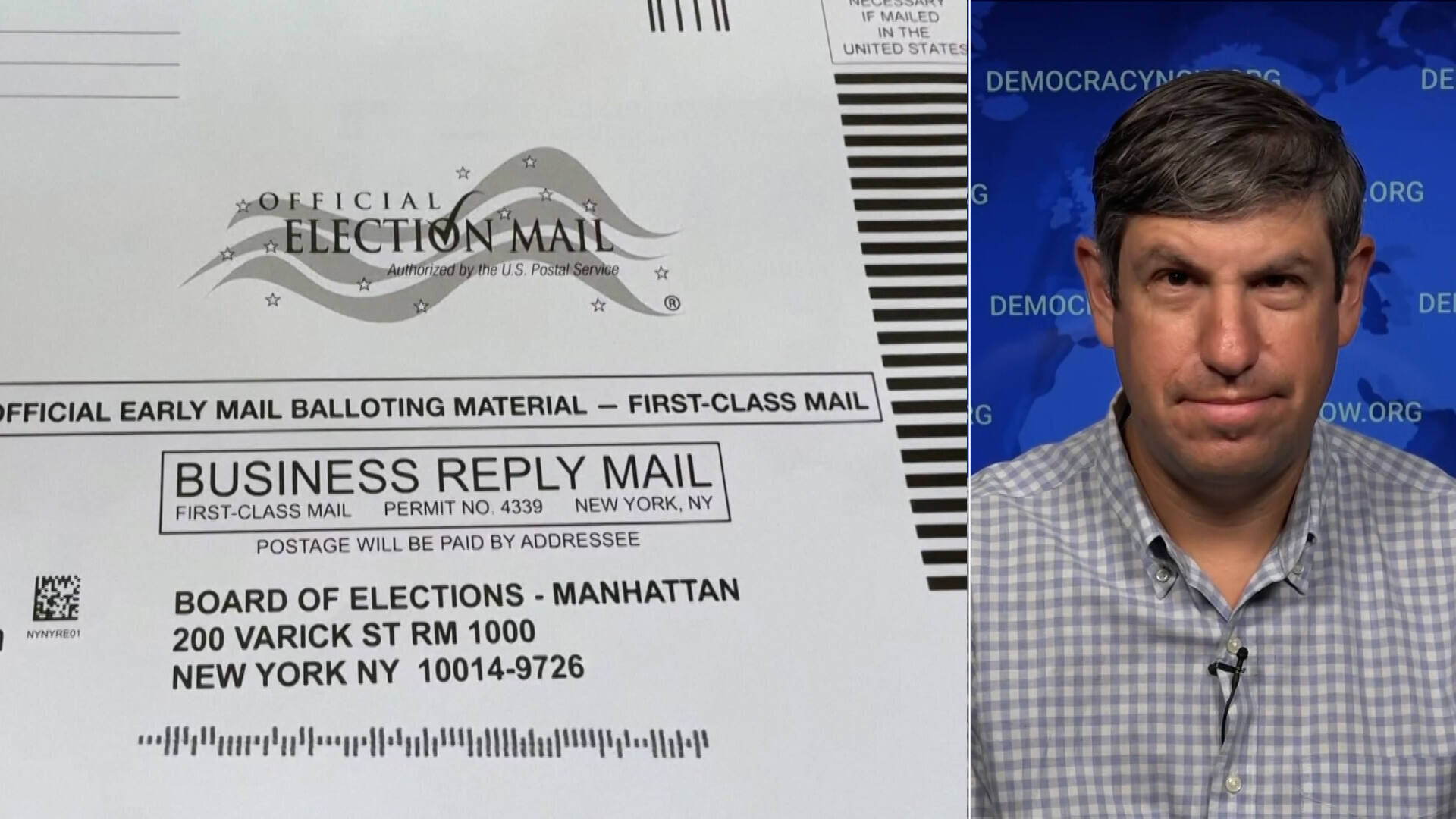
Supreme Court Allows Trump’s Mail-In Voting Restrictions to Proceed: What It Means for Midterms
The Supreme Court’s 6-3 decision lifts an injunction on Trump’s executive order restricting mail-in voting, raising concerns over potential voter disenfranchisement ahead of the midterm elections.
Most Read

Three-storey building collapses at Swaminarayan temple in Prayagraj, no casualties
Kai Bird Explores Roy Cohn's Influence on Donald Trump's America

Canada's Solar Energy Growth: Provinces Chart Diverse Paths to 2035 Goals
Autumn Hill Sentenced to 50 Years in Prison for Anti-ICE Protest: A Case of Political Persecution?
