Iran's Pezeshkian Admits US Sanctions Impact, Announces Gasoline Price Hike
Iranian President Masoud Pezeshkian acknowledges severe economic strain from US sanctions, announces gasoline price increase, and vows to withstand economic pressures despite challenges.
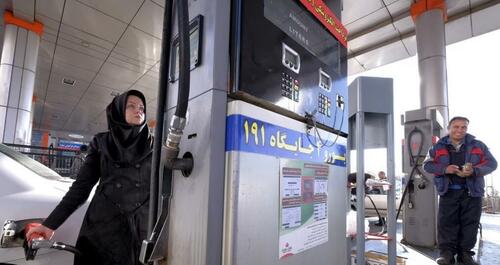
Iranian President Masoud Pezeshkian has acknowledged the severe economic strain caused by U.S. sanctions and recent military tensions, signaling a potential increase in gasoline prices while admitting the impact of Washington’s economic warfare campaign.
In a rare public statement on state television, Pezeshkian addressed the country’s growing economic challenges, acknowledging that sanctions have taken a toll despite claims from some hardline officials that they have had no effect. The president’s remarks came just days after U.S. Treasury Secretary Scott Bessent unveiled the Trump administration’s expanded economic measures against Iran, framed as "Economic D-Day," which continue despite the cessation of direct military hostilities.
Pezeshkian directly challenged skeptics of sanctions’ effectiveness, stating, "Some say sanctions have no effect at all; to those people, I really don’t know what to say." He emphasized that Iran is operating under wartime conditions and must accept the consequences, including rising gasoline prices. Specifically, he proposed doubling the price of petrol within the third-tier consumption quota—from 5,000 Iranian tomans to 10,000 tomans per liter, a move that would raise fuel costs by 100 percent.
The proposed price adjustment reflects broader economic pressures, including a 25 to 35 percent decline in imports and disruptions in trade caused by U.S. sanctions. While Iran remains a major oil producer with historically low fuel prices, the government has long subsidized petrol, making price adjustments politically sensitive. The president’s announcement suggests a shift in policy to manage rising demand and domestic production shortfalls.
Despite the economic strain, Pezeshkian struck a defiant tone in earlier remarks, asserting that new U.S. sanctions "will not achieve anything." He reaffirmed Iran’s resilience, stating, "We will stand firm against economic pressures, as we have done so far and will continue to do."
Meanwhile, U.S. President Donald Trump confirmed that no diplomatic negotiations with Iran are currently planned, stating, "We're not looking to meet or anything." The absence of talks underscores the continued standoff between the two nations.
Iranian officials have attributed recent fuel shortages and long lines at gas stations not to supply deficits but to a sudden 10 percent surge in demand and temporary disruptions, such as storage damage in Tehran. The National Iranian Oil Refining and Distribution Company reported no gasoline shortage, though it acknowledged supply delays caused by high consumption and infrastructure challenges.
Energy officials have also pointed to a daily deficit of 14 to 15 million liters in domestic gasoline supply, driven by record demand, war-related damages, and shifting budget priorities. Esmaeil Saqab Esfahani, head of the Energy Optimization and Strategic Management Organization, emphasized the need to reduce consumption to match domestic production levels.
The developments highlight the delicate balance Iran faces between economic survival and political stability amid ongoing sanctions and geopolitical tensions.
#IranGasolinePrices #Pezeshkian #USSanctions #TrumpAdministration #EnergyCrisis #IranEconomy #FuelSubsidies
Comments (0)
No comments yet — be the first to weigh in.
Related Coverage
 Business
Have We Really Learnt The Lessons Of The GFC?
Two decades after the 2006 launch of the Constant Proportion Debt Obligation (CPDO), a financial product that promised AAA-rated returns while leveraging bets o...
 Business
Cheltenham Craft Shop Launches £5k Crowdfunder to Keep Doors Open
Three co‑owners of Cheltenham’s Kiwi Fruit is Cute crafting shop have launched a £5,000 crowdfunding campaign to cover doubled overheads following their recent move.
 Business
DC Jury Mistrials Over MS-13 Leaders Highlight Judicial Challenges
Two extradited MS‑13 leaders face repeated DC jury mistrials, raising questions about impartiality, judge Royce Lamberth’s rulings and the DOJ’s strategy.
 Business
US Uses Falklands Leverage to Pressure UK Over NATO Defense Spending Target
Explore how the US is reportedly using the Falkland Islands as leverage to push Britain to meet NATO's new defense spending target of 5% of GDP by 2035. Analysis of Trump administration tactics and UK's current defense budget.
Most Read

Arunachal CM Unveils Vision 2036 for Youth Skill & Entrepreneurship Growth
KPop Demon Hunters Joins Criterion Collection: Why the Animated Hit Stands Out
Global renewable energy investments hit $327.5B in H1 2026, solar-plus-storage surges
Supreme Court Allows Trump’s Mail-In Voting Restrictions to Proceed: What It Means for Midterms
