In praise of zealotry
In 1706, an English woman visited her friend Katherine, whose husband, Francis Atterbury, was a prominent politician and bishop. The woman requested a copy of Atterbury’s newly completed sermon to read at home. After reviewing it, she returned the sermon with extensive criticisms and suggestions for improvement. Atterbury was taken aback by the unsolicited feedback, complaining to a friend that the woman lacked proper manners and was offensive in her expressions. He admitted to dreading future engagements with her.
That woman was Mary Astell (1666-1731), now recognized as England’s first feminist. Her blend of conservative political views and progressive feminist ideas has long intrigued scholars. By 1706, Astell was accustomed to being labeled offensive, irritating, and impolite. During the early 18th century, she wrote numerous partisan pamphlets, often sharply criticizing her ideological opponents, including prominent Whig liberals like John Locke. James Owen, one of the pamphleteers she attacked, dismissed her as overly angry and zealous, a label that allowed him to avoid engaging with her arguments.
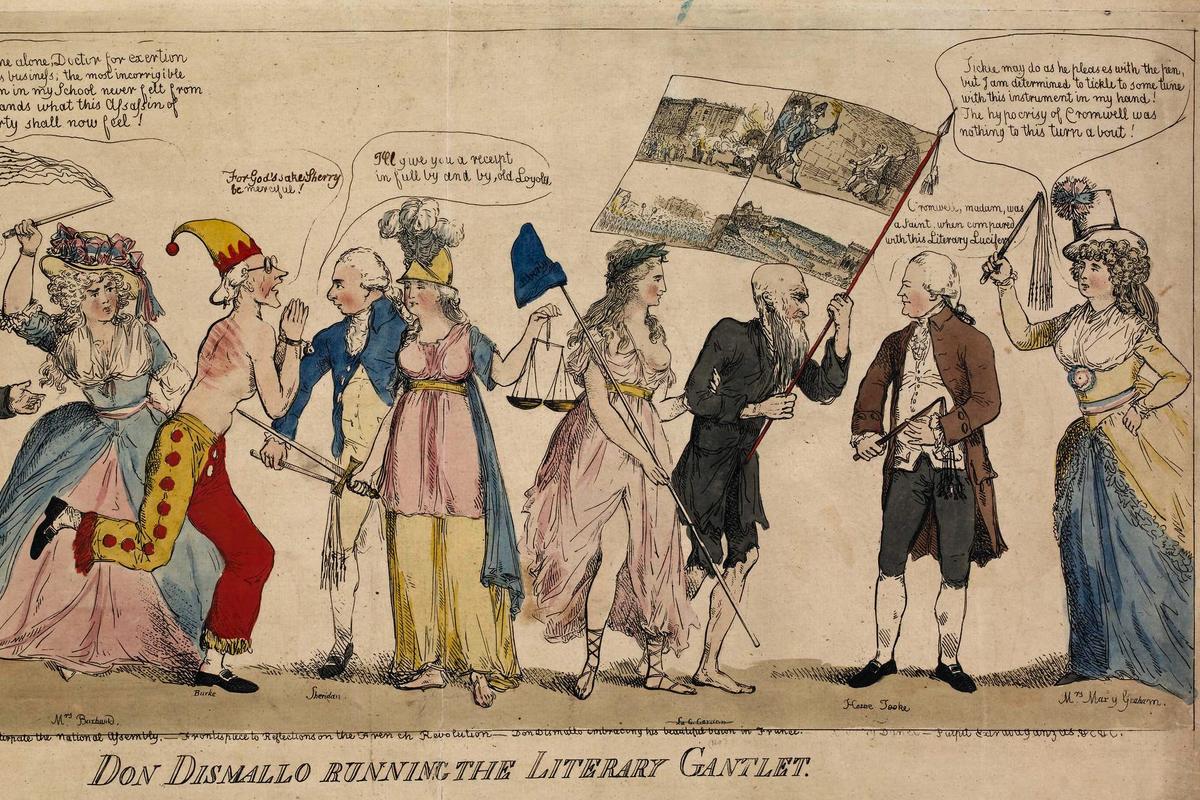
More than half a century later, another politically active woman faced similar treatment. Catharine Macaulay (1731-91), a historian and political theorist, wrote a pamphlet criticizing Edmund Burke, a key figure in modern conservatism and a proponent of organized political parties. Macaulay challenged Burke’s defense of party politics in his work *Thoughts on the Cause of the Present Discontents* (1770). Instead of addressing her critique directly, Burke wrote to a friend, dismissing Macaulay as an "Amazon" and a "republican Virago," invoking images of fierce female warriors and loud, masculinized women. Despite his ridicule, Burke admitted he was "afraid to answer her."
Burke’s dismissal of Macaulay reflected his broader vision of partisanship, which emphasized politeness, reasonableness, and moderation among like-minded men. He argued that partisanship should foster concord and harmony, with men agreeing "at least nine times in ten." In Burke’s view, Macaulay’s fierce and zealous approach violated this ideal of concord.
Burke was not alone in championing these virtues. Eighteenth-century thinkers like David Hume and Anthony Ashley-Cooper, the third Earl of Shaftesbury, also stressed the importance of politeness, friendship, and moderation in politics. They warned against zealous partisanship, which they saw as disruptive and harmful to harmony. For these men, the ideal partisan was reasonable, moderate, and friendly, ensuring that politics remained serene and harmonious.
What is striking about Astell and Macaulay’s experiences is that they came from opposite political spectrums. Astell was a Tory conservative who defended the Church of England, absolute monarchy, and religious orthodoxy, while Macaulay was a radical republican and Whig advocating for popular sovereignty, religious toleration, and revolution. Despite their ideological differences, they shared similar views on partisan politics, likely influenced by their marginalized positions as women who could neither vote nor hold public office.
As women and partisans, Astell and Macaulay were excluded from the political process, which allowed them to perceive flaws in the system that fully included men could not. Rather than defending themselves against accusations of impoliteness or zealotry, they embraced these labels. In her 1704 pamphlet *Moderation Truly Stated*, Astell admitted to using "inflaming Oratory, Satyr and Invective," preferring the "Quintessence of Gall" over the "Extract of Honey." She argued that harsh truths were preferable to dishonest politeness. Macaulay similarly adopted an unapologetic stance, stating that partisanship required "speaking some bold offending truths," even if it made one obnoxious.
Astell and Macaulay rejected the virtues extolled by their male peers because they recognized that calls for politeness, moderation, and reasonableness served to exclude marginalized voices. They highlighted the problem of gatekeeping, where powerful men like Shaftesbury set the standards for civility. Astell questioned whether women or servants would be allowed to treat their masters with the same disregard for manners that men like Shaftesbury displayed. The political theorist Teresa Bejan has noted that thick conceptions of early modern civility functioned as a tool to exclude dissenting voices by raising the bar for civility so high that only insiders could meet it.
Comments (0)
No comments yet — be the first to weigh in.
Related Coverage
 Science
DSM-6 to Integrate Biology in Mental Health Diagnosis for First Time
The DSM-6 will incorporate biological factors for the first time, marking a shift towards evidence-based psychiatry. Explore the challenges and advancements in neurobiology shaping the next edition.
 Science
Islanders asked to report sightings of rare eel
Islanders Urged to Report Sightings of Critically Endangered European Eel in Guernsey Guernsey’s Nature Commission is appealing to residents to report sightings...
 Science
The importance of teaching students what AI can’t do
The growing role of artificial intelligence in education raises concerns about over-reliance on AI tools and the potential erosion of critical thinking skills a...
 Science
More protein in your breakfast or snacks won’t give you more muscle without more work – a biologist separates the science from the marketing
The modern breakfast aisle looks dramatically different than it did a generation ago, with protein-enriched cereal, bread, chips, and even Pop-Tarts now crowdin...
Most Read
Kai Bird Explores Roy Cohn's Influence on Donald Trump's America

Canada's Solar Energy Growth: Provinces Chart Diverse Paths to 2035 Goals

Autumn Hill Sentenced to 50 Years in Prison for Anti-ICE Protest: A Case of Political Persecution?

Hull City Secure 1-0 Away Win at Coventry, Maintain Perfect Premier League Start