HPV home-testing kits available for women in England who have missed cervical screening
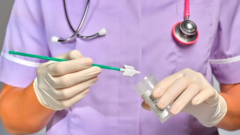
Women in England who have missed cervical screening appointments will be offered free home HPV self-testing kits as part of a new National Health Service initiative aimed at boosting early detection of cervical cancer.
Over the next year, nearly four million eligible women will receive invitations to order the kits through the NHS App, text messages, emails, or letters. The rollout addresses figures showing that approximately one-third of eligible women in England have not taken up their cervical screening offers recently.
The self-testing kits screen for high-risk human papillomavirus (HPV), which causes nearly all cases of cervical cancer. Because cervical cancer often produces no symptoms until it reaches an advanced stage, early detection of high-risk HPV is critical to preventing severe disease.
The home kit includes a swab that allows users to collect a sample from the vagina and mail it back to the NHS. If high-risk HPV is detected, the individual will be invited for a follow-up clinical screening appointment. While identifying high-risk HPV indicates an elevated risk of developing cervical cancer, it does not mean a woman will automatically contract the disease.
Initial trials of home self-testing in London indicated that offering kits could prompt one in ten previously unscreened women to participate, potentially increasing annual screening uptake by around 400,000 people. Other parts of the United Kingdom are also evaluating similar self-testing programs.
Dr. Sue Mann, national clinical director for women's health, described the initiative as a game-changer that makes testing easier than ever. She noted that factors such as embarrassment, lack of time, or fear of discomfort often prevent women from attending appointments, and the discreet kits offer a convenient alternative.
Health Secretary Yvette Cooper added that cervical cancer is a preventable disease, emphasizing the government's commitment to making screening as accessible as possible.
Patients who have undergone early intervention also highlighted the importance of accessible screening. Gem Sofianos-Boorman, who was diagnosed with cervical cancer at age 28 following a routine test despite having no symptoms, said early detection saved her life by allowing treatment before the cancer could spread.
In England, women aged 24 to 64 are routinely invited for cervical screening every five years, or more frequently if HPV is identified. The NHS stressed that an in-person appointment with a clinician remains the best method for cancer prevention, and women who have missed appointments can still book one.
Through a combination of improved screening coverage and the HPV vaccination program offered to teenagers, health authorities aim to eliminate cervical cancer in England by 2040.
Comments (0)
No comments yet — be the first to weigh in.
Related Coverage
 Health
Vaping Found Most Effective Method for Smoking Cessation, Study Shows
A new BBC Health study confirms vaping as the most effective strategy for quitting smoking, outperforming traditional cessation aids and reducing health risks.
 Health
Self-Care Strategies for Better Health and Wellbeing
Discover practical self-care tips to improve your physical and mental health. Learn how to prioritize your wellbeing for a better life.
 Health
Can You Get Salmonella from Eating Salmon? Facts & Prevention
Explore whether salmon can cause salmonella infections, symptoms to watch for, and key prevention tips to stay safe while consuming seafood.
 Health
What are the symptoms of Hypermobility Spectrum Disorder?
The Hypermobility Spectrum Disorder (HSD) is a condition marked by unusually flexible joints, often leading to chronic pain and fatigue. According to the Ehlers...
Most Read

Canada's Solar Energy Growth: Provinces Chart Diverse Paths to 2035 Goals

Autumn Hill Sentenced to 50 Years in Prison for Anti-ICE Protest: A Case of Political Persecution?

Hull City Secure 1-0 Away Win at Coventry, Maintain Perfect Premier League Start

DSM-6 to Integrate Biology in Mental Health Diagnosis for First Time