How Journalists Risk Death Covering Global Atrocities, Say Experts
Experts discuss the growing dangers faced by journalists covering war crimes and atrocities worldwide, with recent data showing a surge in journalist killings.

The People’s Tribunal on the Murder of Journalists in The Hague delivered a landmark judgment in September 2022, holding the governments of Syria, Sri Lanka, and Mexico accountable for failing to provide accountability for the killings of journalists in their countries. Almudena Bernabeu, the prosecutor at the tribunal, discussed the tribunal’s significance and the ongoing challenges faced by journalists worldwide in a 2022 episode of the podcast Asymmetrical Haircuts, which is being republished as part of the 2026 summer series, *Witness to War Crimes*.
The tribunal, a non-governmental initiative, was established to address the impunity surrounding the murders of journalists, a growing concern in recent years. Since the tribunal’s judgment, the situation for journalists has deteriorated further. According to Reporters Without Borders, 67 journalists were killed due to their work between 2024 and 2025, marking the deadliest period for journalists since records began.
The risks faced by journalists are particularly acute in conflict zones. In Gaza, local reporters have been the primary source of information despite operating under extreme danger, with frequent attacks on media infrastructure and limited safe spaces for reporting. Similar challenges are faced by journalists in Sudan, where the ongoing war has led to threats, detentions, displacements, and forced exiles. Those who remain continue to report under dire conditions, including shortages of equipment, electricity, and connectivity.
In Ukraine, journalists covering the full-scale invasion endure bombardment, digital attacks, disinformation campaigns, and severe psychological strain as they document the war from frontline areas. These conditions highlight the critical role journalists play in bearing witness to atrocities, often at great personal risk.
Bernabeu, co-founder of the Guernica 37 Group and Joint Head of Guernica 37 Chambers, emphasized the tribunal’s role in addressing gaps left by traditional international justice mechanisms. With decades of experience in human rights litigation, including cases involving international crimes in countries like Syria, Yemen, and Colombia, Bernabeu underscored the urgency of addressing the persecution of journalists, a phenomenon that has escalated in both gravity and frequency.
The tribunal’s judgment serves as a reminder of the persistent threats faced by journalists globally. As the series continues, subsequent episodes will explore the experiences of journalists covering conflicts in Sudan and Ukraine, further examining the risks and responsibilities inherent in their work.
Comments (0)
No comments yet — be the first to weigh in.
Related Coverage
 World
World
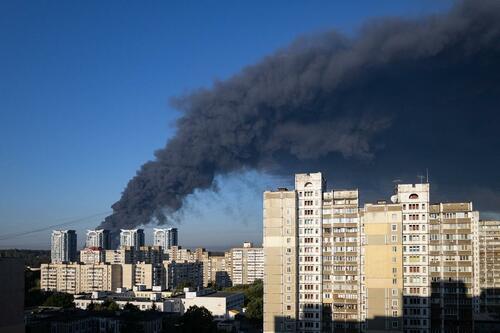
At least 37 dead and hundreds evacuated after strike on Kyiv warehouse
At least 37 people have been killed and nearly 400 evacuated after a Russian drone strike triggered explosions at a warehouse in the Kyiv region late Friday, Uk...
 World
World
Sarah Ferguson Expected to Return to UK Soon, Source Says
Former Duchess of York Sarah Ferguson, who lost her royal titles amid the Epstein scandal, is expected to return to the UK soon, a source told the BBC.
 World
World
Burnham's summer tour is over - now he has to prove himself in Parliament
Andy Burnham faced the first major challenge of his premiership on Tuesday as Parliament returned, marking the end of his summer tour and the beginning of inten...
 World
World
Le PS fait sa rentrée à Blois avec des débats sans risque dans l’attente de la primaire
The French Socialist Party (Parti Socialiste or PS) officially launched its rentrée politique, or political comeback season, in Blois this week, focusing on int...
Most Read
Russian Drone Strike on Kiev Ammo Depot Kills 37, Sparks Evacuations
At least 37 dead and hundreds evacuated after strike on Kyiv warehouse
Ian Frazier and Samy Burch Discuss 'Coyote vs. Acme' in The New Yorker
Latin America Energy Storage Forecast Jumps to 34 GW by 2035: Wood Mackenzie