Global Housing Crisis: How Self‑Built Homes in Santiago Reveal New Lessons
More than 2.8 billion people lack adequate housing. In Santiago, Chile, a self‑built home’s story shows how informal dwellings shape community, resilience, and policy.
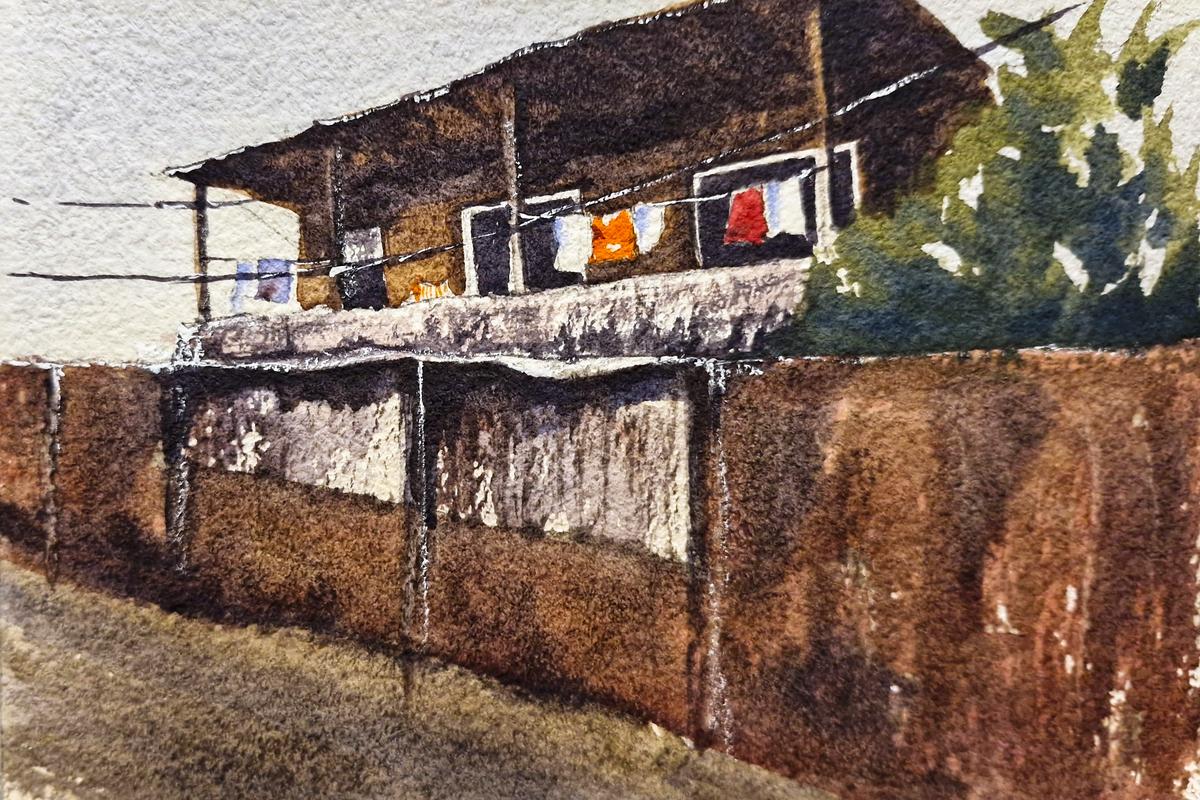
The global housing crisis has intensified in recent decades, with access to affordable, stable housing emerging as one of the most pressing challenges worldwide. According to UN-Habitat, approximately 2.8 billion people—35 percent of the global population—lack adequate housing. Rising rents outpace wage growth, homeownership becomes increasingly unattainable for younger generations, and urban neighborhoods face displacement due to speculation. The issue of who has access to housing and under what conditions remains central to contemporary urban life.
The housing crisis is not a new phenomenon. In *The Housing Question* (1872), Friedrich Engels framed it as an inherent flaw of industrial capitalism, arguing that urbanization overwhelmed market and state capacities to provide shelter. Governments in developed nations later intervened through public housing, subsidies, and mortgage systems, treating housing as a technical and bureaucratic problem to be solved. Yet today, the crisis persists, with housing increasingly entangled in financial speculation.
In many rapidly urbanizing cities across Latin America, Africa, and Asia, however, state-led housing solutions never fully took hold. Instead, millions secured shelter by occupying land and building incrementally, often without formal approval. These self-built neighborhoods, though frequently seen as informal or precarious, reveal deeper truths about how societies provide housing—and what it means to truly dwell somewhere.
Anthropologist [Your Name], who conducted two decades of fieldwork in Santiago, Chile, argues that mainstream debates overlook a fundamental insight: behind every housing crisis lies a more profound "dwelling problem." The assumption that a house is merely an object, commodity, or asset obscures its role in shaping human life. In self-built environments, by contrast, the relationship between building and dwelling remains visible. The incremental, intergenerational process of constructing a home—layer by layer, over years or decades—reveals how shelter is not just a roof over one’s head but a living process intertwined with family, memory, and identity.
The story of Victoria, a retired domestic worker in Santiago, illustrates this point. Over four generations, her family expanded the house step by step—adding rooms, reinforcing walls, and improvising with limited resources. Her meticulous accounts of construction—sacks of cement, metal sheets, layers of flooring—highlight the tangible, material labor behind shelter. Yet her narrative also reveals the emotional and social weight of home. For Victoria, the house was both a refuge and a constraint, a place of both closeness and confinement. Her words—*"crowded together," "you cannot fight for your life"*—capture the tension between familial obligation and personal space.
Victoria’s story underscores a paradox: while self-built housing may seem informal, it embodies a profound understanding of dwelling as an ongoing, collaborative process. In a world where housing is often treated as a financial asset, these incremental, human-scale constructions offer a counterpoint—reminding us that a home is not just a structure, but a living relationship between people and place.
Comments (0)
No comments yet — be the first to weigh in.
Related Coverage
 Science
DSM-6 to Integrate Biology in Mental Health Diagnosis for First Time
The DSM-6 will incorporate biological factors for the first time, marking a shift towards evidence-based psychiatry. Explore the challenges and advancements in neurobiology shaping the next edition.
 Science
Islanders asked to report sightings of rare eel
Islanders Urged to Report Sightings of Critically Endangered European Eel in Guernsey Guernsey’s Nature Commission is appealing to residents to report sightings...
 Science
The importance of teaching students what AI can’t do
The growing role of artificial intelligence in education raises concerns about over-reliance on AI tools and the potential erosion of critical thinking skills a...
 Science
More protein in your breakfast or snacks won’t give you more muscle without more work – a biologist separates the science from the marketing
The modern breakfast aisle looks dramatically different than it did a generation ago, with protein-enriched cereal, bread, chips, and even Pop-Tarts now crowdin...
Most Read

Three-storey building collapses at Swaminarayan temple in Prayagraj, no casualties
Kai Bird Explores Roy Cohn's Influence on Donald Trump's America

Canada's Solar Energy Growth: Provinces Chart Diverse Paths to 2035 Goals

Autumn Hill Sentenced to 50 Years in Prison for Anti-ICE Protest: A Case of Political Persecution?
