Gaza Children Forbidden from Flying Kites Amid Israeli War Threats
Israel bans kite-flying in Gaza, claiming it's a security threat, despite no explosives found. Children, deprived of toys and play spaces, face further restrictions amid ongoing conflict.
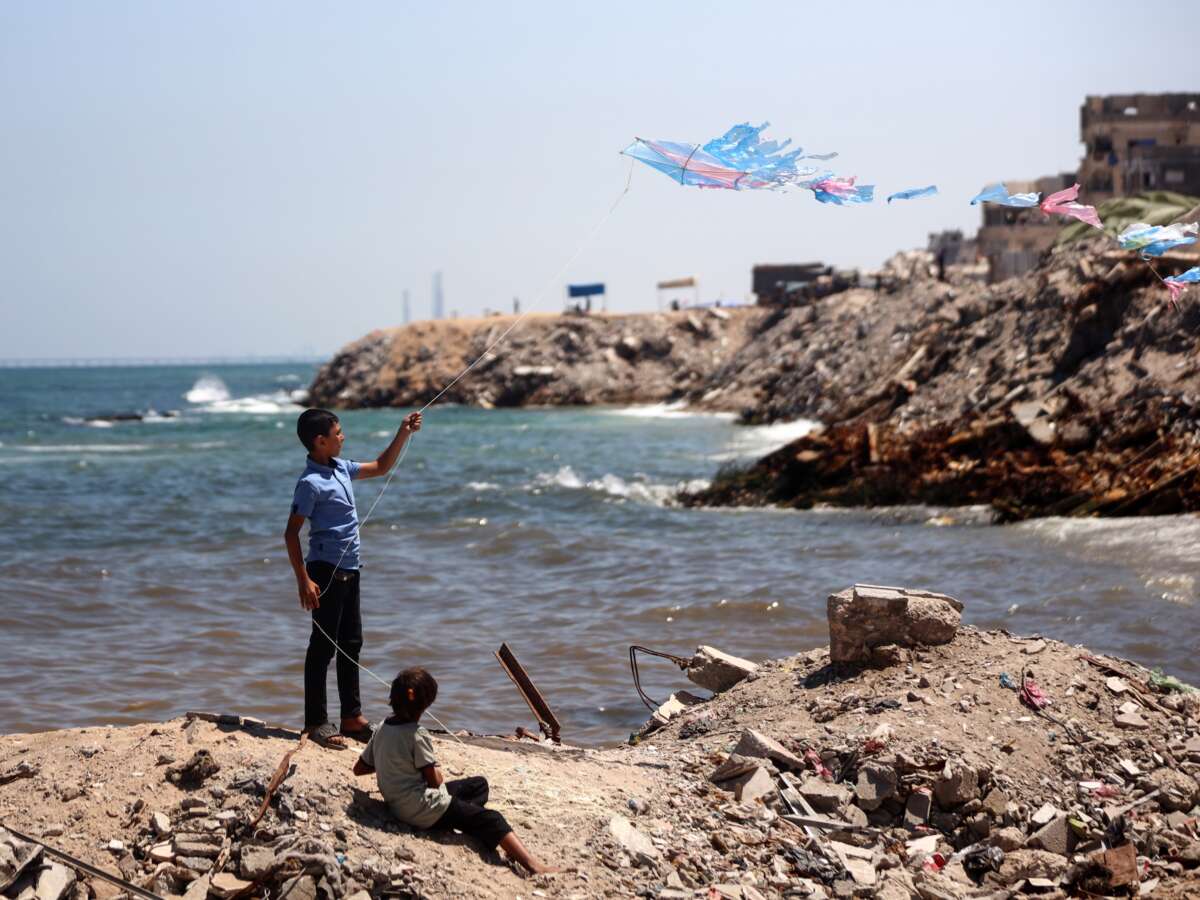
Gaza Children Face Further Restrictions on Childhood Amid Kite-Flying Ban
GAZA CITY — The ongoing conflict in Gaza has left children with few outlets for normal play, as Israeli authorities have banned kite-flying—a once-common pastime—citing security concerns. The restrictions, announced by Israeli officials in recent weeks, have left many Palestinian families in Gaza unable to provide basic childhood experiences for their children.
For more than three years, Israel has severely limited the import of children’s toys into Gaza through both commercial and humanitarian channels. Most toys still available in local markets entered before the conflict escalated, and prices are prohibitively high. A single Barbie doll can cost up to $70, while a football may sell for $50—prices far beyond the reach of most families.
The situation has worsened due to Israel’s control of nearly 70 percent of Gaza within the so-called "Yellow Line," as well as the destruction of public spaces. According to the Municipality of Gaza’s official social media account, approximately 90 percent of public parks in the city have been destroyed, with irrigation systems damaged, further limiting areas where children might find relief.
Kites, once a popular and inexpensive form of recreation in Gaza, have become a casualty of the new restrictions. Before the war, children would craft kites from wooden sticks, paper, or nylon and fly them from rooftops or beaches. The activity provided a creative outlet and a brief escape from the harsh realities of life under blockade and bombardment.
Khalid Al-Kateeb, an 11-year-old boy from Gaza City, described the joy kite-flying once brought him. "Making a kite cost me zero shekels," he said. "I spent a week working on it with my siblings until we had the kite we dreamed of—a colorful one with a long tail. I flew it with my siblings, and I was so happy to see it flying higher than I expected. That day was the best day of my life, simply because I managed to play and laugh freely."
However, following Israeli threats, Khalid’s mother now prevents him from flying kites. "She kept telling me that it was dangerous," he said. "I cried a lot because I do not understand how my beautiful kite can be dangerous."
Shoroq Akilah, Khalid’s mother, expressed frustration at the restrictions. "My children loved this toy, and it is still hard for me to explain to them that they are no longer allowed to play with it simply because Israel considers it a threat," she said. "It really breaks my heart that my children are deprived of even the simplest things that can let them enjoy the innocence of their childhood."
Israeli Defense Minister Israel Katz warned of "forceful" action to stop kite-flying, equating kites to drones in terms of threat assessment. Prime Minister Benjamin Netanyahu also threatened to evacuate areas from which kites or balloons are launched, vowing that Israel would not return to pre-October 7 conditions.
The ban has forced parents to destroy their children’s kites to protect them. Eman Al-Kahlout, a mother of four, said she tore up her children’s kites after hearing the threats. "How can a child understand that a kite made of string and wooden sticks could be dangerous?" she asked. "I was left with no choice but to destroy their kites."
The United Nations has criticized the threats. Ravina Shamdasani, a spokesperson for the UN Human Rights Office, called the measures "outrageous," noting that Palestinians in Gaza continue to face daily bombardment and violence despite a supposed ceasefire. According to Gaza’s Ministry of Health, more than 1,280 Palestinians have been killed since October 2025.
Residents express despair at the ongoing restrictions and violence. "We have had enough of living this horrible life, deprived of our basic right to live as human beings," said one Gaza resident. "Every day, we hear about negotiations and possible solutions to our suffering. But in reality, we only see more Israeli violations, threats, and attacks."
Comments (0)
No comments yet — be the first to weigh in.
Related Coverage
 Politics
Autumn Hill Sentenced to 50 Years in Prison for Anti-ICE Protest: A Case of Political Persecution?
Activist Autumn Hill received a 50-year prison sentence for protesting outside a Texas ICE facility. Critics call her conviction a politically motivated use of terrorism charges against anti-fascist demonstrators.
 Politics
Headlines for August 26, 2026
Iran has resumed talks with Oman about managing the Strait of Hormuz while tensions in the region remain high, despite economic pressure from the United States....
 Politics
Karen Attiah Wins Reinstatement at Washington Post After Arbitration Victory
Award-winning Washington Post columnist Karen Attiah has been reinstated with back pay after an arbitrator ruled in her favor following her controversial firing over social media posts about Charlie Kirk.
 Politics
Supreme Court Allows Trump’s Mail-In Voting Restrictions to Proceed: What It Means for Midterms
The Supreme Court’s 6-3 decision lifts an injunction on Trump’s executive order restricting mail-in voting, raising concerns over potential voter disenfranchisement ahead of the midterm elections.
Most Read

Three-storey building collapses at Swaminarayan temple in Prayagraj, no casualties
Kai Bird Explores Roy Cohn's Influence on Donald Trump's America

Canada's Solar Energy Growth: Provinces Chart Diverse Paths to 2035 Goals
Autumn Hill Sentenced to 50 Years in Prison for Anti-ICE Protest: A Case of Political Persecution?
