Brazil's Presidential Race Narrows as Lula's Lead Over Bolsonaro Evaporates
Brazilian socialist President Lula's once commanding lead over right-wing Flavio Bolsonaro has vanished, with polls showing a near-tie ahead of October's election. Analysts warn of potential market volatility.
Brazilian President Luiz Inácio Lula da Silva’s once-comfortable lead in the upcoming presidential election has vanished, with right-wing Senator Flávio Bolsonaro now virtually tied in the race, according to UBS analysts analyzing the latest polling data. As August concludes, the contest has tightened significantly, turning what was expected to be a decisive race into a potential coin toss ahead of the October 4 first-round vote. The shift signals a broader political realignment in South America, where right-wing leaders have been gaining ground, and could foreshadow similar trends in Europe’s upcoming 18-month election cycle.
Alexandre de Ázara, UBS’s managing director and chief economist for Brazil, reported to clients that Bolsonaro has closed the gap, pulling within striking distance of Lula. The latest UBS polling aggregator shows Lula at 44% of valid first-round votes, a one-point decline from earlier in the week, while Bolsonaro rose by one point to 38%. Other candidates remain collectively at 18%.
The runoff scenario is even tighter. Lula now leads Bolsonaro by just 50.6% to 49.4%, a razor-thin margin of 1.2 percentage points—down from a 2.8-point advantage earlier in the week. Ázara’s analysis draws on polling data from firms including Datafolha, Veritá, Nexus, Gerp, Indexa, and PoderData, with additional surveys from Vox, Real Time Big Data, and Atlas expected in the coming days.
Prediction markets remain more bullish on Lula than the polls suggest. Polymarket currently gives him a 62% chance of winning, compared to 35% for Bolsonaro. Kalshi’s market reflects a similar outlook, with Lula at 61% and Bolsonaro at 39%.
The election presents Brazilian voters with a stark ideological choice between Lula, a socialist leader advocating for continued left-wing policies, and Bolsonaro, who is running on a platform of fiscal consolidation, lower spending, and debt reduction. Bolsonaro has criticized the current administration’s economic management, citing high spending, elevated interest rates, and rising debt as key issues.
Economic analysts project significant fiscal adjustments will be necessary regardless of the election outcome. Barclays estimates that the next government will need to implement fiscal measures equivalent to at least 2.5% of Brazil’s gross domestic product—approximately 350 billion reais—to stabilize debt levels by 2031. TS Lombard forecasts that under Lula, public debt could peak at 94.7% of GDP by 2034, even with limited spending reforms. Under Bolsonaro, a faster fiscal adjustment and a proposed debt-linked spending rule could reduce debt to 90% of GDP by 2032.
Investor sentiment in Brazil remains cautious, with the Brazilian real sensitive to polling fluctuations. Analysts at Bank of America’s Latam Equity Quant noted that while the carry trade environment has been supportive, polling uncertainty is keeping markets on edge. The first-round election is scheduled for October 4, with significant movements in the USD/BRL exchange rate expected in response to polling shifts.
Across South America, Colombia’s recent shift to the right under President Abelardo de la Espriella has been closely watched by investors, and Bolsonaro has sought to position himself as part of a broader regional trend favoring fiscal conservatism. Nomura analyst Andrzej Szczepaniak suggests that similar right-wing momentum could emerge in Europe’s upcoming elections.
The Brazilian presidential election thus stands as a critical moment not only for Latin America’s political direction but also as a potential indicator of global electoral trends in the months ahead.
#BrazilElection2024 #LulaVsBolsonaro #BrazilianPolitics #SouthAmericaPolitics #FiscalPolicy #EmergingMarkets #InvestmentOutlook
Comments (0)
No comments yet — be the first to weigh in.
Related Coverage
 Business
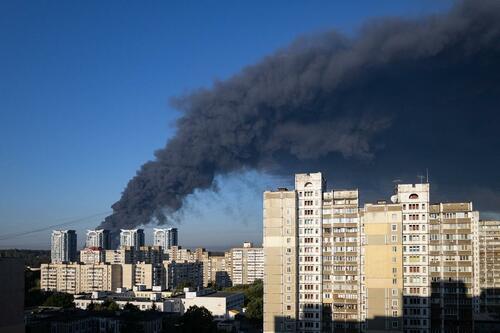
Russian Drone Strike on Kiev Ammo Depot Kills 37, Sparks Evacuations
A Russian drone strike on an ammunition depot near Kiev caused massive explosions, killing 37 and injuring dozens. Ukraine's food logistics infrastructure is 90% destroyed, raising concerns ahead of winter.
 Business
Mamdani Begs Capitalists At The Adult Table For Help
New York City Mayor Zohran Mamdani has launched a Business Advisory Council, signaling a notable shift in his approach to engaging with the city's business...
 Business
Watch: Russian Military Conducts Test Of Huge Mobile ICBM
Russia’s Defense Ministry announced Friday that its Strategic Missile Forces conducted a successful test launch of a mobile, solid-fuel intercontinental ballist...
 Business
Have We Really Learnt The Lessons Of The GFC?
Two decades after the 2006 launch of the Constant Proportion Debt Obligation (CPDO), a financial product that promised AAA-rated returns while leveraging bets o...
Most Read

Three-storey building collapses at Swaminarayan temple in Prayagraj, no casualties
Kai Bird Explores Roy Cohn's Influence on Donald Trump's America

Canada's Solar Energy Growth: Provinces Chart Diverse Paths to 2035 Goals

Autumn Hill Sentenced to 50 Years in Prison for Anti-ICE Protest: A Case of Political Persecution?
