Long COVID Brain Fog May Reverse for Many Omicron Patients, Study Finds
A new study reveals that cognitive decline linked to Omicron COVID-19 infections may not be permanent for many patients, with 22% showing reversible impairment. However, 11% experienced irreversible decline.
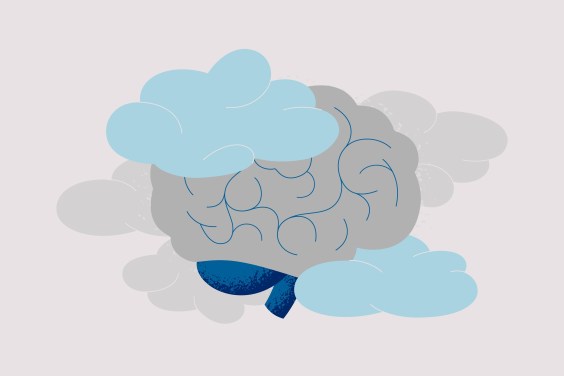
COVID-19's lingering cognitive impacts, often called "brain fog," may not be permanent for all patients, according to a new study published in the journal *Neuroprotection*.
Researchers from Huazhong University of Science and Technology in China followed over 2,000 patients hospitalized with COVID-19 during the Omicron wave from December 2022 to March 2023. Cognitive assessments were conducted six months and two years after discharge to track mental health recovery.
The findings, published in *Neuroprotection*, reveal that two-thirds of patients showed no decline in cognitive function. Nearly a quarter (22%) experienced reversible cognitive decline, with scores improving by an average of three points on a 40-point scale. These improvements were noted in areas such as attention, calculation, learning ability, and executive function.
Study author Yan Wan emphasized the significance of these results. "Our findings indicate that cognitive decline after Omicron infection is not necessarily permanent," Wan stated in a press release. "The substantial recovery observed over two years is encouraging, but the persistence of deficits in a vulnerable minority shows why patients at higher risk should not be overlooked."
However, the study also highlights a concerning subset of patients. Approximately 11% experienced irreversible cognitive decline, with over a third of this group showing progressive deterioration. These patients saw a four-point decrease in cognitive assessments.
Factors contributing to higher vulnerability included longer hospital stays, more severe COVID-19 cases, and pre-existing conditions such as high blood pressure. Older adults, particularly those 60 and above, faced a fourfold increased risk of progressive decline. Each subsequent COVID-19 infection doubled this risk. Conversely, higher education levels and vaccination provided some protective benefits.
Study author Bo Hu noted the implications for future care strategies. "Our results support a more targeted approach to long-term cognitive care after COVID-19," Hu said. "Identifying high-risk patients early could help guide monitoring and rehabilitation, while broader prevention measures such as vaccination may reduce the likelihood of progressive decline."
The study underscores the need for tailored approaches in managing post-COVID cognitive issues as the virus transitions from pandemic to endemic status. Researchers suggest that early identification of at-risk patients and preventive measures like vaccination could mitigate long-term cognitive impairments.
The study was published in the peer-reviewed journal *Neuroprotection*.
Comments (0)
No comments yet — be the first to weigh in.
Related Coverage
 Science
Islanders asked to report sightings of rare eel
Islanders Urged to Report Sightings of Critically Endangered European Eel in Guernsey Guernsey’s Nature Commission is appealing to residents to report sightings...
 Science
The importance of teaching students what AI can’t do
The growing role of artificial intelligence in education raises concerns about over-reliance on AI tools and the potential erosion of critical thinking skills a...
 Science
More protein in your breakfast or snacks won’t give you more muscle without more work – a biologist separates the science from the marketing
The modern breakfast aisle looks dramatically different than it did a generation ago, with protein-enriched cereal, bread, chips, and even Pop-Tarts now crowdin...
 Science
Thunderquakes: New Seismic Imaging Method Uses Thunder to Map Earth's Subsurface
Scientists discover how thunderquakes can X-ray the ground below, offering a cost-effective way to map groundwater, sinkholes, and subsurface hazards using existing fiber-optic cables.
Most Read

Russian Drone Strike on Kiev Ammo Depot Kills 37, Sparks Evacuations

At least 37 dead and hundreds evacuated after strike on Kyiv warehouse
Ian Frazier and Samy Burch Discuss 'Coyote vs. Acme' in The New Yorker

Latin America Energy Storage Forecast Jumps to 34 GW by 2035: Wood Mackenzie