Leaked GEC Documents Show No Evidence of Domestic Censorship, Says Former Officials
Former Global Engagement Center officials refute claims that leaked files prove domestic censorship, asserting the office targeted foreign propaganda and its closure sparked new anti‑propaganda efforts.
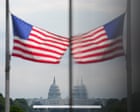
Documents related to the former Global Engagement Center (GEC) at the US State Department, leaked this month to a conservative commentator, do not substantiate claims that the office engaged in domestic censorship, according to former senior officials who worked there. The GEC, which was disbanded in 2025 after funding lapsed during Donald Trump’s second term, had been a target of Republican criticism alleging it suppressed conservative voices. Sarah Rogers, the State Department’s undersecretary for public diplomacy, released the files to Jennica Pounds, a right-wing data analyst known as DataRepublican, who then claimed the leak was an attempt to entrap her. Rogers asserted that officials had “betrayed their stated mission,” while the documents included a 2022 GEC report on gendered disinformation—a frequent flashpoint in political debates.
Daniel Kimmage, who served as the GEC’s principal deputy coordinator from its 2017 founding until its dissolution, and Carrie Goux, a former acting deputy coordinator appointed under President Joe Biden, both rejected the notion that the leaked materials revealed domestic censorship. “If the smoking gun was a gendered disinformation report, that feels like they came up short,” Goux said. Kimmage emphasized that the GEC’s mandate was strictly focused on foreign propaganda, particularly from Russia, China, and Iran. “We were not ever looking at Americans,” Goux stated. “We were looking at the foreign actors and what their tactics, techniques, and procedures are doing overseas.”
Critics of the GEC, including Republican lawmakers like Michael McCaul, former chair of the House Foreign Affairs Committee, had argued the office stretched the definition of disinformation to target conservative media. A 2024 letter from McCaul and others claimed the GEC was “at best indifferent to, and at worst complicit in” such efforts. The dispute intensified after the GEC funded the Global Disinformation Index (GDI), a UK-based nonprofit that in 2022 rated several US conservative outlets, including Newsmax and One America News, as high-risk for spreading disinformation. GEC’s defenders, however, maintain the office never monitored domestic speech.
The GEC’s work, which cost roughly $61 million annually, included exposing Russian disinformation campaigns in Africa, Latin America, and Moldova, and tracking the Kremlin-backed “African Initiative.” In January 2024, the GEC helped establish an international pact on countering foreign state disinformation, signed by more than two dozen countries including Moldova, Spain, and Estonia. A 2022 inspector general review found the GEC “generally effective” but noted weaknesses in internal controls and contractor oversight. Bipartisan support had previously sustained the office, with senators Rob Portman (R-OH) and Chris Murphy (D-CT) advocating for its continuation.
Despite its dissolution, elements of the GEC’s mission have been absorbed into a new State Department office focused on foreign information manipulation and interference, led by Secretary of State Marco Rubio. Meanwhile, a proposal reviewed by the Guardian shows the US Mission to ASEAN plans to spend $11 million on a campaign involving up to 30 influencers across 11 Southeast Asian countries to counter Chinese propaganda. The project, valued at $5 million for messaging, $3 million for influencer training, and $3 million for in-person collaborations in Washington and Houston, reflects ongoing efforts to counter foreign disinformation abroad.
#GEC #USStateDepartment #Disinformation #DonaldTrump #China #Russia #SarahRogers #MichaelMcCaul
Comments (0)
No comments yet — be the first to weigh in.

Police release one of two men arrested over fatal house fire
Police have released a 31-year-old man arrested on suspicion of murder following a fatal house fire in Grangetown, near Middlesbrough, while a second suspect, a...
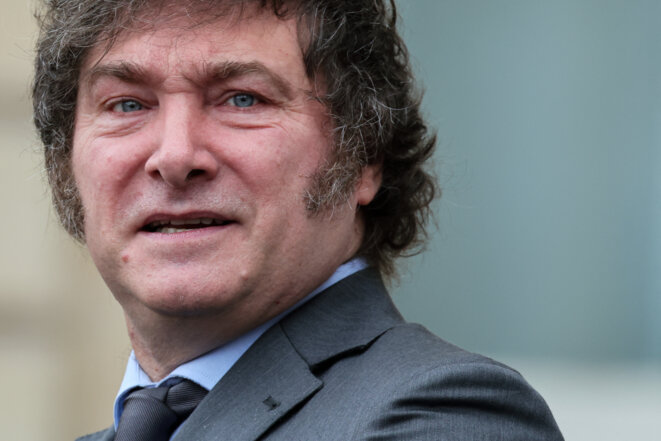
«Nous avons peur»: à la Maison de l’Argentine de Paris, le directeur d’extrême droite nommé par Javier Milei est de plus en plus décrié
The director of the Argentine House in Paris, appointed by far-right Argentine President Javier Milei, is facing growing criticism from staff and the public. Th...

À Vichy, la mémoire compliquée du fascisme français
French Journalist Christophe Gleizes Held in Algeria Since June 29, 2025 ALGIERS – Christophe Gleizes, a French journalist working for the publications Society...

Nepal, China rescue efforts underway after Himalayan flood leaves 3,000+ missing
Rescuers in Nepal and China search for over 3,000 missing after a glacial collapse triggered a deadly Himalayan flood, with 750 confirmed dead and survivors facing devastation.

Omer Adam's Star-Studded Wedding Guest List Raises Eyebrows in Israel
Mark Zuckerberg’s Social Media Reckoning: Examining Dark Motivations

Karnataka Cabinet Forms Panel to Review Criminal Case Withdrawals
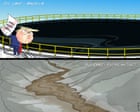
Nicola Jennings on Donald Trump, fossil fuels and climate disaster – cartoon