Israeli Settlers Gain Foothold in West Bank's Area B With State Support
Israeli settlers, backed by government and army, expand into West Bank's Area B, moving families from Area C and facing harassment. The move underscores tensions.
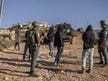
Israeli settlers, with support from the government and military, are expanding their presence in the West Bank’s Area B, raising concerns among Palestinian residents about land confiscation and increased tensions. Area B, which falls under partial Israeli control, has seen a rise in settler activity in recent years, prompting families like F.’s to relocate from villages such as Qusra to avoid harassment and displacement pressures.
The West Bank is divided into three administrative zones under the Oslo Accords: Area A, fully controlled by the Palestinian Authority; Area B, under joint Israeli-Palestinian security control but Israeli civil control; and Area C, under full Israeli control. Settler expansion in Area B has accelerated, with Israeli authorities facilitating land acquisitions and infrastructure development for outposts that often encroach on Palestinian-owned land. Human rights groups report that these actions contribute to a pattern of forced displacement, as families like F.’s leave homes they say have become untenable due to settler violence and intimidation.
Qusra, a Palestinian village in the northern West Bank near Nablus, has been a focal point of such tensions. Residents describe a growing sense of insecurity as settlers from nearby outposts, often accompanied by Israeli security forces, enter the area to graze livestock or conduct patrols. The Israeli military has been accused of enabling these incursions by restricting Palestinian movement and failing to prevent settler attacks. Local officials in Qusra report that since 2020, at least five families have relocated due to harassment, with more considering leaving as conditions worsen.
Israeli government agencies, including the Civil Administration and the Coordinator of Government Activities in the Territories (COGAT), have been involved in legalizing settlement outposts in Area B, often retroactively. Critics argue that these actions contradict Israel’s stated commitments to curb unauthorized construction while systematically expanding control over Palestinian land. Peace Now, an Israeli nonprofit that monitors settlement activity, has documented over 100 such outposts in Area B since 2010, many of which have been connected to roads and utilities funded by state bodies.
International law considers all Israeli settlements in the West Bank, including East Jerusalem, illegal. The United Nations and European Union have repeatedly condemned settlement expansion, citing its impact on the viability of a future Palestinian state. The U.S. State Department has also expressed concerns, though it has not taken concrete steps to pressure Israel to halt expansion in Area B.
Palestinian Authority officials accuse Israel of using settlement expansion as a tool to annex the West Bank de facto. They point to recent government approvals for settlement construction in strategic areas of Area B as evidence of a systematic policy aimed at solidifying Israeli control. Meanwhile, settler leaders defend the expansion as a response to housing shortages within Israel and a fulfillment of biblical claims to the land.
Residents of Qusra and other villages in Area B say they are caught between settler violence and Israeli restrictions. Without international intervention or a change in Israeli policy, the trend of displacement and land loss is expected to continue, further eroding the territorial contiguity of Palestinian communities in the West Bank.
#WestBankSettlements #AreaBExpansion #QusraVillage #IsraeliSettlers #PalestinianDisplacement #COGAT #OsloAccords
Comments (0)
No comments yet — be the first to weigh in.
Syria's deal with Kurdish forces collapses Israel's divide-and-conquer strategy
Syria's President Bashar al-Assad secured a major political win last week as his government reached a breakthrough agreement with Kurdish forces, shifting...

West Bank Tension Grows Ahead of Israel Election as Netanyahu Faces IDF Clash
Israel’s upcoming election intensifies West Bank tensions as Netanyahu’s government clashes with the IDF. Trump remains neutral on Middle East, while local disputes loom.

Arab Israeli Man Shot Dead in Jaffa Overnight; Two Others Wounded
An Arab Israeli man in his 30s was fatally shot in Jaffa overnight. Two other men were seriously injured in separate shootings in central Israel and Rahat.

Hadash Keeps Knesset Candidate on Slate Amid Misconduct Allegations
Israel’s Hadash party kept K‑12 candidate Jafar Farah on its Knesset slate despite a committee’s findings of alleged misconduct toward women, sparking backlash.

India and Chile Aim to Finalize Trade Pact by 2026: Key Details

British Woman Killed in Stabbing at Rosenheim Railway Station, Bavaria
