Global rare earth supply chains: Why securing essential minerals is critical
China dominates rare earth mining and processing, prompting global supply chain concerns. Explore the geopolitical and economic risks and emerging solutions.
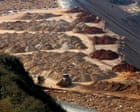
The European Union is warning that it can no longer count on the United States to secure critical rare‑earth supplies, a move that follows China’s 2010 export ban to Japan and a year‑long trade truce that ended in November. China still controls about 70 % of global mining and 90 % of processing for the 17 rare‑earth metals that power everything from electric‑vehicle batteries to wind turbines. With the U.S. and China at odds, Europe must build new supply chains and stockpiles to protect its technology and defence industries.
China’s 2010 blockade of rare‑earth exports to Japan over the Senkaku/Diaoyu islands proved that the country could wield its mineral dominance as a geopolitical tool. The incident sent shock waves through the world, but little was done to diversify production. By the 1980s the United States dominated the market, but the high cost and environmental toll of extraction pushed the industry to China. Today, the U.S. still exports most of its rare‑earth production to Asia, a situation that has prompted Washington to launch a “Manhattan Project” for minerals.
In 2021 the Trump administration announced a $12 billion critical‑minerals reserve, with an initial focus on rare earths, and the Pentagon became the largest investor in MP Minerals, a U.S. company that mines and processes the metals. The plan was to create a domestic supply chain that could meet demand and stabilize prices. Critics, however, argue that the strategy is costly and that the U.S. still lacks the domestic demand to justify large‑scale production.
China, meanwhile, is also looking to diversify its sources. Washington, Beijing, South Africa, Greenland and Brazil are all on the radar as potential new suppliers. The European Union has joined the U.S. in this effort, launching a critical‑minerals coalition in 2023 that includes Australia, the European Commission, the UK and 54 partners worldwide. The coalition aims to coordinate research, recycling, and new mining projects to reduce reliance on China.
The 2025 European Critical Raw Materials Act sets a target of cutting import dependence on critical minerals by 2030. France already hosts the largest rare‑earth processing facility outside China, and a deal to secure Brazilian minerals is under discussion. Yet many European leaders say that progress has been too slow, especially in light of environmental concerns over mining in Brazil and Greenland.
Recycling and waste‑mining technologies could offer a partial solution by extracting rare earths from mining waste and runoff, reducing the need for new ore extraction. However, experts agree that recycling alone cannot meet the growing demand for advanced electronics and green‑energy technologies.
The price of erbium, a key component for telecommunications, has already spiked as traders anticipate renewed export controls. The end of the U.S. trade truce in November could trigger further volatility, underscoring the urgency for Europe and the United States to establish reliable supply chains.
Ultimately, the U.S. and Europe must collaborate on a multilateral approach that includes stockpiling, investment in domestic processing, and partnerships with like‑minded allies. Only by diversifying supply routes and developing new technologies can the continent safeguard its critical industries from geopolitical risk.
#RareEarths #China #UnitedStates #Europe #SupplyChain #CriticalMinerals #GreenEnergy #TechnologySecurity
Comments (0)
No comments yet — be the first to weigh in.

Global AI Risks Demand International Safeguards, Experts Warn
Experts urge coordinated global action to prevent AI-driven disasters, highlighting systemic risks beyond dramatic 'AI takeover' scenarios.

French Sundays: The Secret to Guilt‑Free Relaxation and Happiness
Explore how France’s closed‑store Sundays foster family time, slow meals, and guilt‑free leisure—an antidote to modern hustle and a lesson for happier living.

Germany's far-right AfD gains ground: Why mainstream parties must act now
Germany's AfD nears power in state elections as economic discontent fuels far-right growth. Mainstream parties face calls for bolder responses to counter rising extremism.

Roy Cohn Did It First
Roy Cohn, the controversial lawyer and political fixer who became a mentor to Donald Trump, remains one of the most polarizing figures in 20th-century American...

Congress Ministers Threaten Quit in Vijay Cabinet Over PM Candidate Standoff

Russia claims role in foiling Niger coup attempt amid rising Sahel tensions

UN CERD Urges India to Address Caste, Race Discrimination Concerns

England Crush Pakistan at Lord's: Player Ratings from 2nd Test
