Glacier Collapse Triggers Deadly Flooding in Nepal and Tibet, Scientists Say
Scientists investigate a Himalayan glacier collapse near Langtang Lirung as the cause of recent deadly floods in Nepal and Tibet, with possible landslide involvement.
Scientists are pointing to a collapse of a Himalayan glacier as a key trigger of the deadly floods that have swept through parts of Nepal and Tibet in recent weeks. The glacier, which lies to the north of Langtang Lirung—a 7,000‑metre peak in the central Himalayas—has reportedly broken apart, sending a surge of ice, water and debris downstream. The event has caused widespread damage, killing dozens of people and destroying villages along river valleys.
The flood wave, which began in the early days of the month, struck the remote Langtang Valley and the downstream settlements of the Trishuli River. In Tibet, the torrent reached the town of Shigatse, where it washed away roads and homes. Rescue teams are still working to reach isolated communities in the high‑altitude terrain, and the National Disaster Response Force has declared a state of emergency in several districts.
Mark Poynting, a glaciologist with the British Antarctic Survey, reports that the glacier’s sudden collapse is a likely factor in the flood’s severity. “The glacier was already thinning and retreating,” Poynting said. “When a large section broke off, it released a huge volume of ice and meltwater that rushed into the river system.” Poynting added that the precise trigger for the collapse remains uncertain. Some scientists suggest that a massive landslide may have removed part of the glacier’s support, causing it to fracture and surge.
The Langtang region is a popular trekking destination, and the 2024 floods have disrupted tourism and local economies. In addition to the immediate loss of life and property, authorities are concerned about the long‑term environmental impacts. The sudden influx of sediment and debris has altered river courses and increased the risk of future flash floods.
Experts note that the glacier’s rapid retreat is part of a broader pattern of Himalayan glacier loss. Global warming has accelerated ice melt across the range, and the loss of glacial ice threatens downstream water supplies for millions of people. While the collapse of the glacier in Langtang is a dramatic event, it is not an isolated incident. In the past decade, several Himalayan glaciers have experienced sudden break‑offs, some of which have caused downstream flooding.
The BBC Science team, which produced the video report on the floods, could not play the footage at the time of writing. The report was produced by Tom Joyner, with graphics designed by Mesut Ersoz and Leo Scutt‑Richter. The production team highlighted the need for better monitoring of glacial and landslide activity in the region, as well as improved early‑warning systems for communities living downstream.
In the wake of the floods, the Nepalese government has pledged to invest in flood‑control infrastructure and to collaborate with international partners on glacier monitoring. The United Nations Office for Disaster Risk Reduction has called for a coordinated regional approach, citing the shared nature of the river basins that cross national borders.
While the exact mechanism behind the glacier’s collapse remains under investigation, the incident underscores the vulnerability of high‑mountain communities to rapid environmental change. The combination of glacial retreat, unstable slopes, and heavy monsoon rains creates a dangerous recipe for flash flooding. Authorities in Nepal and Tibet are now working to assess the damage and to strengthen early‑warning systems to reduce the impact of future events.
Comments (0)
No comments yet — be the first to weigh in.
Related Coverage
 Science
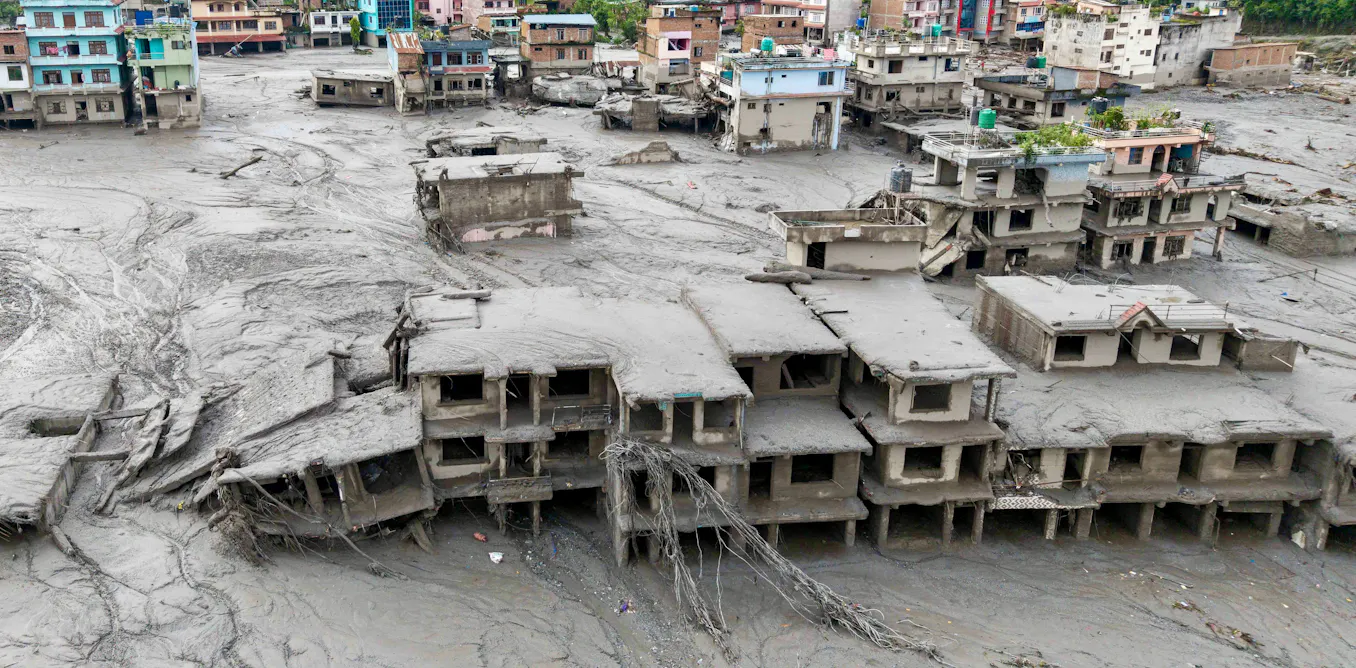
2026 Nepal Flood: Ice‑Rock Avalanche, Glacial Lake Outburst and Climate‑Change Risks
A massive ice‑rock avalanche triggered a catastrophic flood in Nepal on Aug. 26 2026, followed by a glacial lake outburst that devastated towns and hydropower plants. Climate‑change‑driven thawing increased the risk.
 Science
DSM-6 to Integrate Biology in Mental Health Diagnosis for First Time
The DSM-6 will incorporate biological factors for the first time, marking a shift towards evidence-based psychiatry. Explore the challenges and advancements in neurobiology shaping the next edition.
 Science
Islanders asked to report sightings of rare eel
Islanders Urged to Report Sightings of Critically Endangered European Eel in Guernsey Guernsey’s Nature Commission is appealing to residents to report sightings...
 Science
The importance of teaching students what AI can’t do
The growing role of artificial intelligence in education raises concerns about over-reliance on AI tools and the potential erosion of critical thinking skills a...
Most Read

Tottenham Hotspur sign Omar Marmoush on loan from Man City with permanent deal option

Nepal Flash Floods Death Toll Rises to 626, Over 2,400 Missing
Nicole Rifkin’s New Yorker Cover Honors Dolly Parton’s Legacy
Machine Learning Boosts Irradiance Prediction for Bifacial Solar Panels