Canada Lures Top US Scientists with $362M Investment in Academic Talent Pool
Canada is investing $362 million to attract 64 top researchers from the US and abroad, including Harvard and MIT scholars, amid US academic uncertainties.
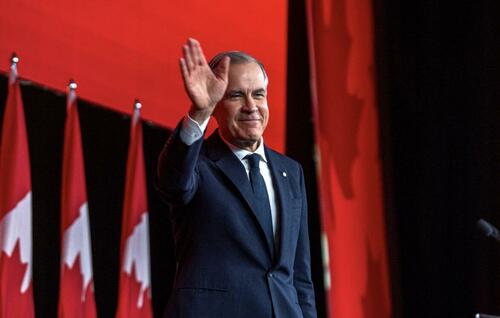
Canada is aggressively recruiting top-tier researchers from the United States through a landmark funding initiative, offering long-term support to lure talent away from American universities amid growing uncertainty in the U.S. academic sector. The federal government has pledged C$504 million, roughly $362 million, to bring 64 leading scientists and scholars to Canadian institutions over an eight-year period. A majority—about three-quarters—currently work in the U.S., with many coming from prestigious institutions such as Harvard University, the Massachusetts Institute of Technology (MIT), and the University of North Carolina. The remaining researchers are arriving from more than a dozen other countries, including China, Japan, Germany, and the United Kingdom. Nearly half of the U.S.-based recruits are Canadian citizens returning home.
Among the high-profile arrivals is Sara Seager, a renowned planetary scientist leaving MIT for the University of Toronto, where she will continue her groundbreaking work on exoplanets. Another notable recruit is James LeBeau, a materials scientist from MIT, along with Curtis Huttenhower from Harvard, whose computational biology research explores the human microbiome and its links to health. The University of British Columbia is welcoming Brian Kuhlman, whose protein research contributed to discoveries recognized by the 2024 Nobel Prize in Chemistry. These researchers will focus on fields deemed strategically important by Canada, including healthcare innovation, artificial intelligence, advanced computing, environmental science, and commercially promising technologies.
The recruitment push coincides with challenges facing U.S. universities, including federal research funding cuts, stricter immigration policies, and ongoing policy disputes under the Trump administration. Canadian university leaders say these pressures have made some U.S.-based researchers reconsider their long-term career prospects, creating an opportunity for Canada to bolster its own academic and research standing.
This initiative is part of a broader, C$1.7 billion strategy announced last year by Prime Minister Mark Carney’s government to attract over 1,000 researchers to Canada over 12 years, including up to 100 internationally recognized scholars who will hold prestigious research chairs. Additionally, Canada has proposed expedited immigration pathways for H-1B visa holders affected by policy shifts in the U.S., though this program has not yet been implemented. The European Union has launched a similar effort, committing €500 million to attract researchers considering leaving the U.S. for more stable environments.
Canadian officials are expected to announce a new cohort of research chairs in the coming months, signaling the continuation of a long-term plan to position Canada as a global leader in science and innovation.
#CanadaResearch #USCanadaBrainDrain #HigherEducation #ScienceRecruitment #AcademicMobility #MarkCarney #AIResearch #NobelPrize
Comments (0)
No comments yet — be the first to weigh in.

BBC Faces Backlash Over 'Solidarity' Email to Foreign Staff After Brutal Belfast Attack
Controversy erupts as internal BBC email offering 'solidarity' to foreign staff overshadows brutal beheading attempt in Belfast. Details on the case and public reaction.
Canada's Nuclear Safeguards Disappearance Raises Global Alarm
Former Canadian Foreign Minister warns of dire consequences as nuclear safeguards vanish, raising proliferation risks worldwide. Analysis of key geopolitical implications.
Alice (1988) Film Screening: 1H 33M Runtime with Bonus Features
Discover Alice (1988), a classic film screening presented by The Sunday Morning Movie, featuring a 1H 33M runtime and exclusive bonus content.

Key Geopolitical & Economic Developments: Energy Crisis, Debt Dynamics & Political Shifts
Explore global energy shortages, rising debt crises, geopolitical tensions, and political trends shaping 2026. Insights from experts on nuclear risks, US influence, and economic instability.

Omer Adam's Star-Studded Wedding Guest List Raises Eyebrows in Israel
Mark Zuckerberg’s Social Media Reckoning: Examining Dark Motivations

Karnataka Cabinet Forms Panel to Review Criminal Case Withdrawals
Nicola Jennings on Donald Trump, fossil fuels and climate disaster – cartoon
